
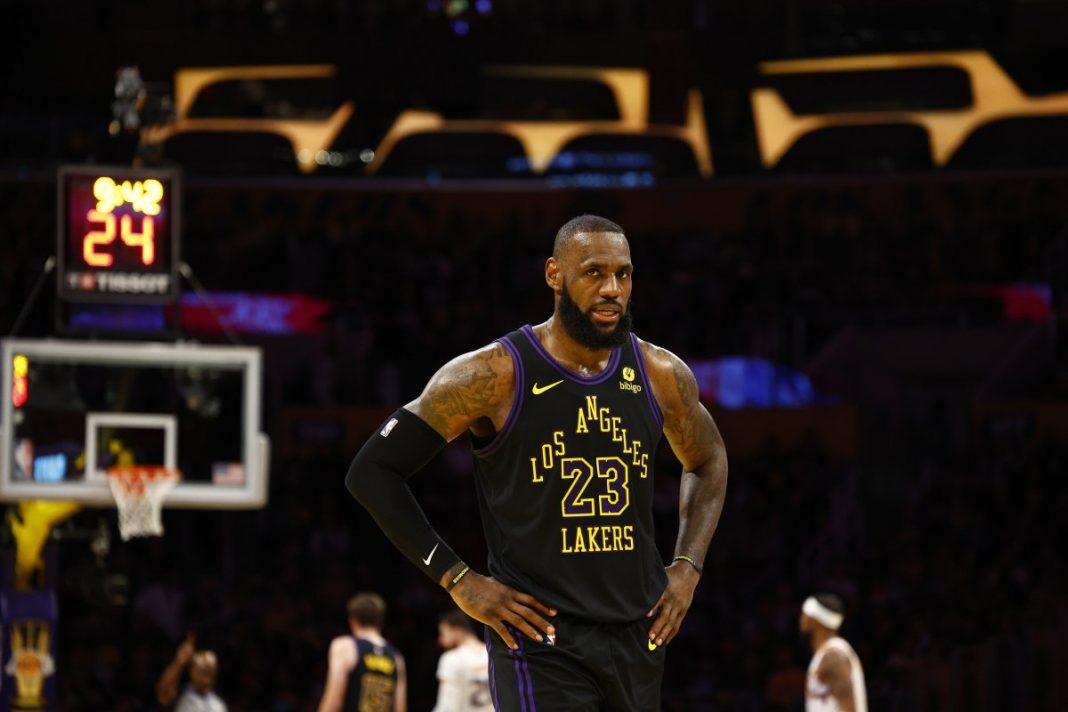

Basketball is one of the fastest-paced and dynamic sports in the world. However, if you’ve ever tuned into an NBA game or watched a college clash, you might have noticed that the action on the floor often takes far longer than the official game clock suggests. Despite regulation time being shorter than sports like rugby and soccer, factors like stoppages, timeouts, fouls and even commercial breaks stretch the experience way beyond the time on the board.
Basketball’s actual length is shaped as much by its pauses as its play. We will examine how long a basketball match really lasts, and that means looking beyond the clock and into the mechanics of how the sport is structured.
What is the length of a basketball match?
In the NBA, a basketball game is divided into four quarters of 12 minutes each. That results in 48 minutes of actual playing time. That setup is standard around the world, but there are some differences in European leagues. Some competitions opt for four 10-minute quarters at 40 minutes per game. College-level basketball in the US takes a slightly different turn with two 20-minute halves, also making up a 40-minute playing period.
- NBA: 4x 12-minute quarters (48 minutes per game)
- NCAA Men’s Basketball: 2x 20-minute halves (40 minutes per game)
- NCAA Women’s Basketball: 4x 10-minute quarters (40 minutes per game)
- EuroLeague/FIBA competitions: 4x 10-minute quarters (40 minutes)
In theory, games are quite short when compared to the length of a soccer match, for example. However, on average, a standard NBA game tends to last around two hours and 15 minutes, while college or international matches usually come in just under two hours. That means stoppages and commercial breaks add on an extra hour and 27 minutes to the average NBA game.
Why do basketball games last so long?
The reason basketball games go past the allotted 40-48 minutes is because of the number of stoppages in the game. There are several reasons that the clock stops in basketball matches:
- Timeouts – In the NBA, each team is allocated seven timeouts per game, with restrictions on when they can be used. Coaches often deploy them to halt an opponent’s momentum, bring in a key play, or rest players during crucial moments. These stoppages, usually lasting between 60 and 100 seconds, add up quickly. In international (FIBA) games, teams get fewer timeouts, which makes the overall game flow slightly quicker.
- Fouls and Free Throws – Basketball is a contact sport, and fouls are common. Every time a player is fouled during a shooting attempt, the game stops for free throws. Towards the end of close games, teams often intentionally foul opponents to stop the clock. That drags out the final few minutes. A game that should wrap up in 48 minutes can take 20 minutes of real time to complete the last two minutes of play.
- Instant Replay Reviews – With modern technology, referees can review contentious decisions. These could include instances where a decision needs to be made on whether a player’s foot was on the three-point line or if a foul occurred before the buzzer. While necessary for fairness, these reviews can take several minutes.
- TV Commercials – For NBA games broadcast live, there are set commercial breaks built into the schedule. Every quarter usually has “mandatory timeouts” that networks use for advertising. This is one of the biggest reasons NBA games are longer than FIBA or NCAA games.
- Halftime and Quarter Breaks – Between the second and third quarter, there’s a halftime break of around 15 minutes. Quarters are also separated by two to three-minute pauses. This provides players with rest and gives broadcasters more time for analysis and ads.
What is a shot clock?
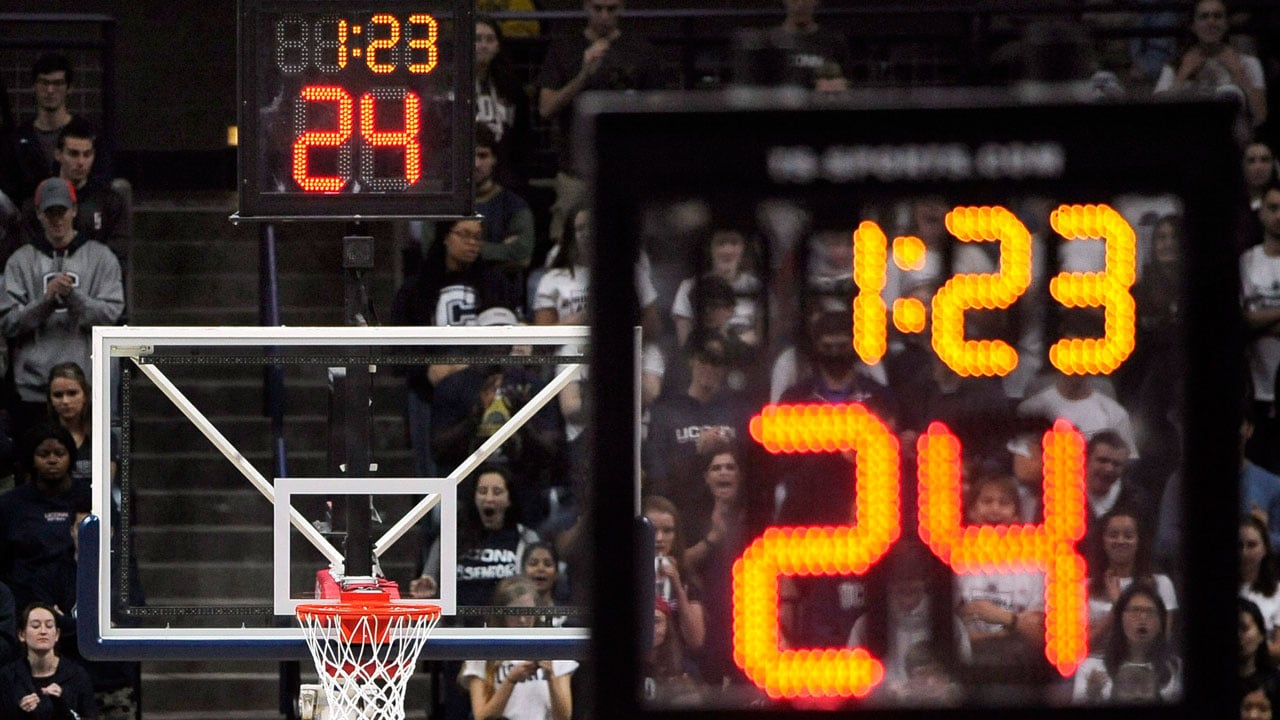
A shot clock is one of the most defining features of modern basketball, designed to keep the game fast, exciting, and free-flowing. It’s a countdown timer that limits how long a team can hold possession before attempting a shot. In the NBA and FIBA, the shot clock is set at 24 seconds. In US college basketball, it’s 30 seconds.
Once a team gains possession, a shot must be attempted that hits the rim before the clock expires. If they don’t, it’s a violation, and the ball is turned over to the opposition. The rule was first introduced in the NBA in 1954 to prevent teams from stalling and simply running down the game clock once they were ahead. Since then, it has become a cornerstone of the sport, ensuring every possession has urgency. The shot clock has contributed to basketball’s reputation as one of the quickest, most action-packed games in the world.
How long is halftime in basketball?
Halftime adds a decent chunk of time to the game experience. In the NBA, the break usually lasts 15 minutes, though in practice it often stretches a little longer once teams clear the court and broadcasters finish their analysis. This window gives players valuable recovery time after two high-intensity quarters, while coaches use it to deliver tactical tweaks or fire up their team for the run-in.
In FIBA and college basketball, halftime is typically shorter at around 10 minutes, but it serves the same dual purpose as a chance to reset physically and mentally. For fans in the arena, halftime also means entertainment, including music, contests, dance teams, and mascot performances.
How long is an NBA game?
The NBA is the most-watched basketball league in the world, so let’s look at how its timing works in practice. All NBA games consist of four quarters of 12 minutes each, totalling 48 minutes of official play. The structure looks like this:
- 1st Quarter: 12 minutes
- Break: 2–3 minutes
- 2nd Quarter: 12 minutes
- Halftime: 15 minutes
- 3rd Quarter: 12 minutes
- Break: 2–3 minutes
- 4th Quarter: 12 minutes
That makes 48 minutes of game time and around 22 minutes of scheduled breaks. However, with timeouts, fouls, and reviews, an NBA game almost always lasts between 2 hours and 15 minutes to 2 hours and 30 minutes. During the playoffs, games often run even longer because of increased fouling, strategic pauses, and more intense reviews. A dramatic playoff clash can stretch to nearly three hours.
Overtime in Basketball
One of the most exciting elements of basketball is overtime. If the scores are level after regulation time, teams play an extra 5-minute period. Unlike soccer, which can often go straight to penalties in certain competitions, basketball can have multiple overtimes until a winner emerges.
This means games can extend far beyond their scheduled time. We have seen quadruple overtime in NBA games before, taking the game way beyond its intended length. For example, the game between the Portland Trailblazers and the Denver Nuggets in 2019 ran for nearly four hours following four periods of overtime. While rare, long overtimes can make for unforgettable spectacles.
Basketball game length and delays
One of basketball’s advantages over many other sports is that it’s played indoors, eliminating the risk of weather interruptions. Unlike football or baseball, fans never have to worry about rain, wind, or snow halting play, which also adds a level of predictability when betting on basketball.
That said, delays can still occur due to technical or logistical issues. Shot clocks or scoreboards can malfunction, forcing officials to pause play, while rarer stoppages have been caused by faulty rims, slippery courts from condensation, or arena lighting problems.
The NBA has seen a handful of memorable delays over the years. In 2018, a Pelicans vs Pacers game was halted for nearly two hours due to a leaky roof at the Smoothie King Center. Even a small wet patch on the court can stop play entirely, highlighting that despite basketball’s indoor setting, unexpected delays can still extend the overall length of a game.