

Soccer is the most popular sport in the world, with over 3.5 billion yearly viewers. That means there is no shortage of state-of-the-art facilities for clubs of all sizes, and it also drives huge global interest in football betting markets. Recently, we have seen some fantastic redevelopments from clubs such as Tottenham Hotspur and Barcelona. However, do they compete with the biggest soccer stadiums in the world? This got us thinking, so we took a closer look at the largest football grounds still standing.
10. Borg El-Arab Stadium – 86,000
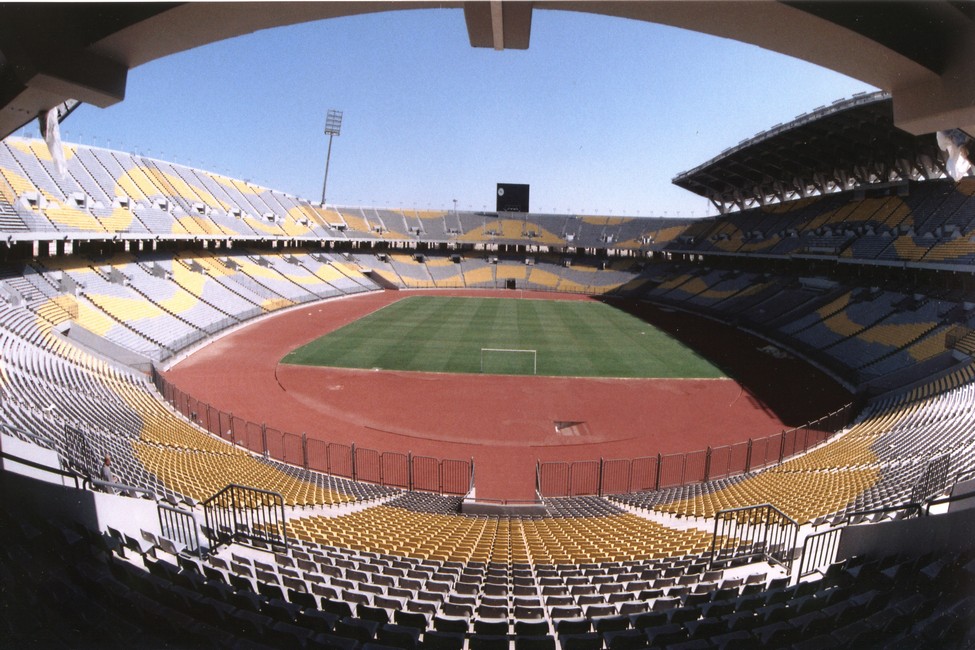
Borg El-Arab Stadium is the 10th biggest soccer stadium in the world, with a seating capacity of 86,000. Home to Al Ittihad Alexandria Club and the Egypt national football team, it stands as one of Egypt’s premier sporting venues. Located just outside Alexandria, it was originally built to support bids for major international tournaments, including the FIFA World Cup.
Positioned along the Cairo-Alexandria Desert Road, the stadium is part of a huge multi-purpose complex. The site spans roughly 609,000 square metres. It is enclosed by a 3 km perimeter fence and supported by an internal road network of 6 km. That reflects its capacity to host large-scale events.
Beyond the main stadium, the complex includes two smaller training grounds and an athletics facility. There is also a 200-room hotel for teams and officials. With dedicated media infrastructure and extensive support facilities, Borg El-Arab operates as a self-contained sports hub, combining competition, training, and hospitality at a scale rarely seen in African football.
9. Bukit Jalil National Stadium – 87,411
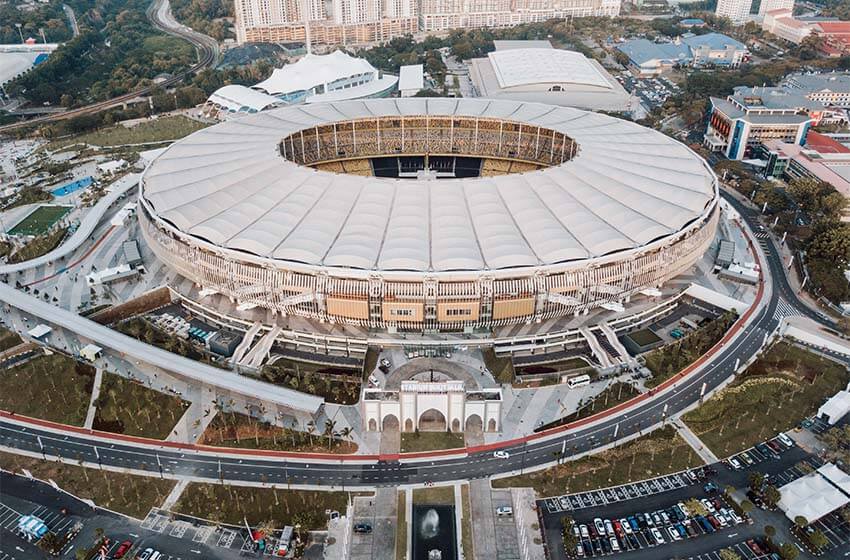
Bukit Jalil National Stadium is the biggest soccer venue in Southeast Asia and ninth on the list of the largest soccer stadiums. Also known as TM National Stadium, it was officially inaugurated by then Prime Minister of Malaysia, Mahathir Mohamad, for the Commonwealth Games in July 1998. Since then, it has hosted several international events and become the home of the Malaysia national football team and national-level domestic cup finals.
Located in Kuala Lumpur, its design features a multi-tiered seating arrangement and a partial roof structure. This helps create an intense atmosphere during high-profile matches. Bukit Jalil has also played host to a wide range of events beyond football, including athletics, regional tournaments, and large-scale ceremonies. Its modern facilities and central location make it one of the most important sporting venues in Asia, capable of handling major international competitions with ease.
8. Estadio Azteca – 87,523
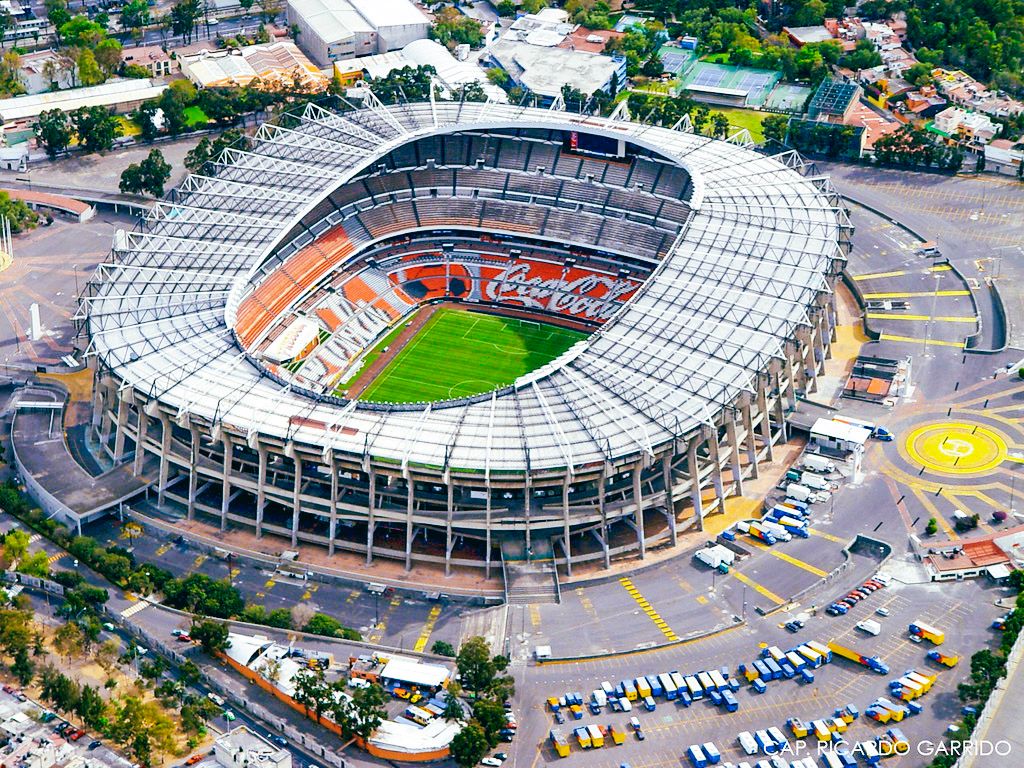
Estadio Azteca beats Bukit Jalil on the list of biggest soccer stadiums by barely 100 seats. However, the history of this venue is one of the richest in North American soccer. Opened in 1966, Estadio Azteca has hosted two FIFA World Cup finals. The first came in the 1970 FIFA World Cup and the second came in the 1986 FIFA World Cup. That made it the first stadium in history to achieve that feat.
It was also the stage for some of football’s most memorable moments. Diego Maradona’s “Hand of God” goal and his stunning solo effort against England in 1986 took place there. The stadium also hosted the “Game of the Century”, when Italy defeated West Germany 4-3 in extra time in one of the 1970 semifinal matches.
Located in Coyoacán, Mexico City, the ground is home to Club América and the Mexico national football team. Known for its vast size and electric atmosphere, it remains one of the most iconic and historically significant football venues in the world.
7. Lusail Stadium – 88,966
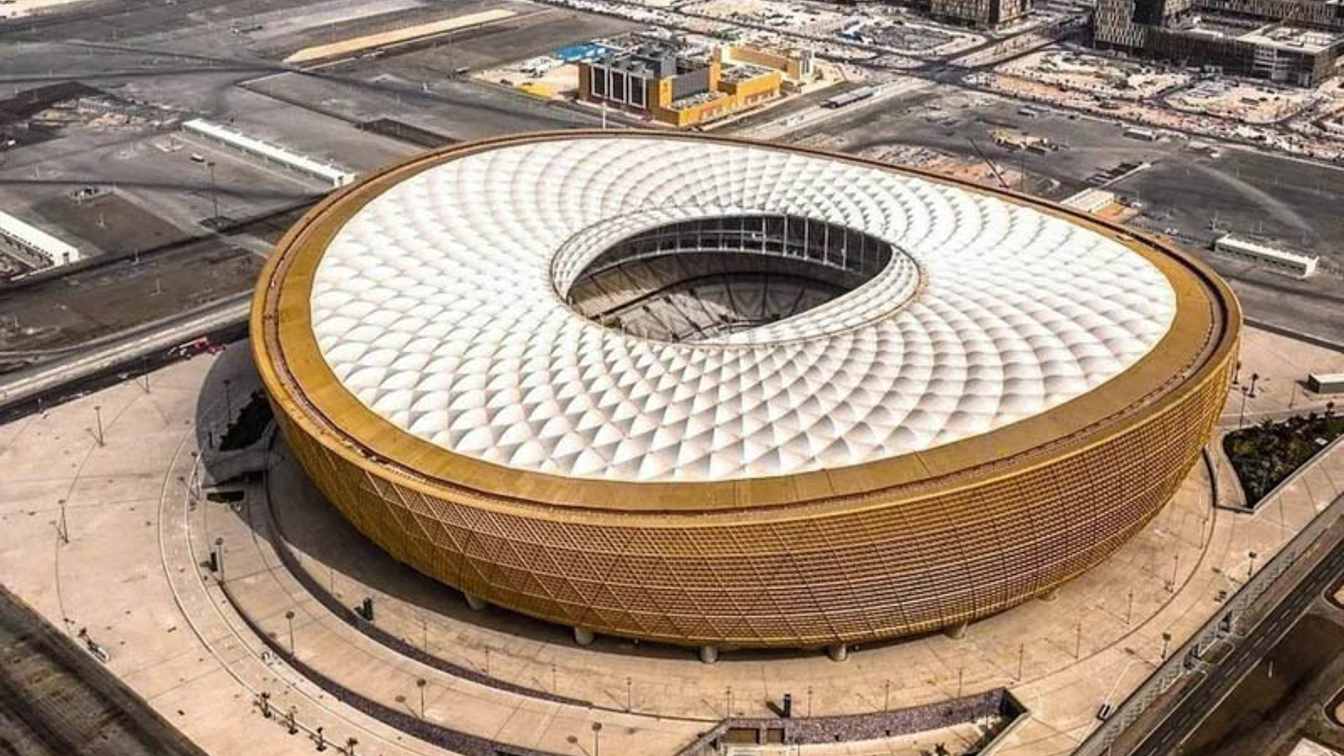
The Lusail Stadium is the largest in Qatar and the Middle East by capacity. It was purpose-built for the 2022 World Cup and hosted the 2022 FIFA World Cup final between Argentina and France on 18 December 2022. It is currently the second-largest football stadium in Asia.
Located in the modern city of Lusail, the stadium is a centrepiece of Qatar’s wider infrastructure development. Its design is inspired by traditional Arabic lanterns, featuring a striking golden exterior and a bowl-shaped interior that enhances atmosphere and acoustics during matches.
Beyond football, Lusail Stadium was designed with long-term legacy in mind. Plans for its future include partial redevelopment into a community hub with shops, schools, and leisure facilities. This forward-thinking approach ensures the venue remains a key part of the region’s sporting and cultural landscape well beyond the World Cup.
6. Wembley Stadium – 90,000
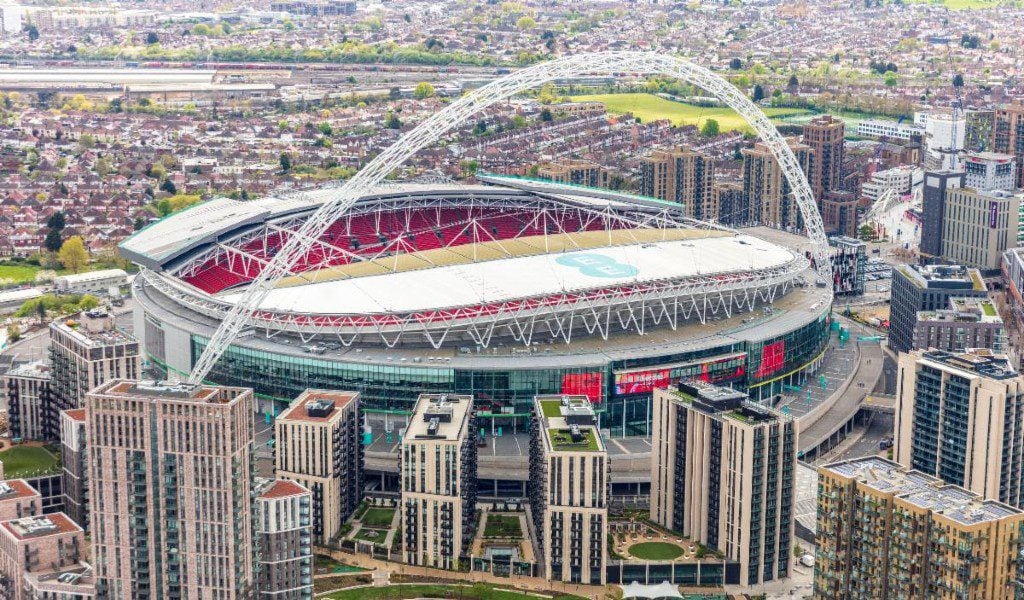
Wembley Stadium is the biggest soccer stadium in the UK. Home to the England national football team, the stadium hosts domestic English cup finals, such as the League and FA Cup. First opened in 2007 on the site of the original Wembley Stadium, it is considered one of the most well-known stadiums in world football. The attendance record was broken in the 2008 FA Cup final, when Portsmouth defeated Cardiff in front of 89,874 fans.
The stadium is instantly recognisable for its famous arch, which spans 317 metres and serves as both a structural support and a landmark across London. Designed as a modern, all-seater venue, Wembley combines world-class facilities with deep historical significance, maintaining its reputation as the “home of football.”
Beyond domestic matches, Wembley regularly hosts international fixtures, major finals, and large-scale events. The UEFA European Championship final was held there in 2021, and the maiden FIFA Women’s Champions Cup will take place there in 2026. That means we will see some of the best women’s soccer players at Wembley. Its size, atmosphere, and history make it one of the most prestigious venues in the sport and one of the biggest soccer stadiums in the world.
5. Cotton Bowl Stadium – 92,100
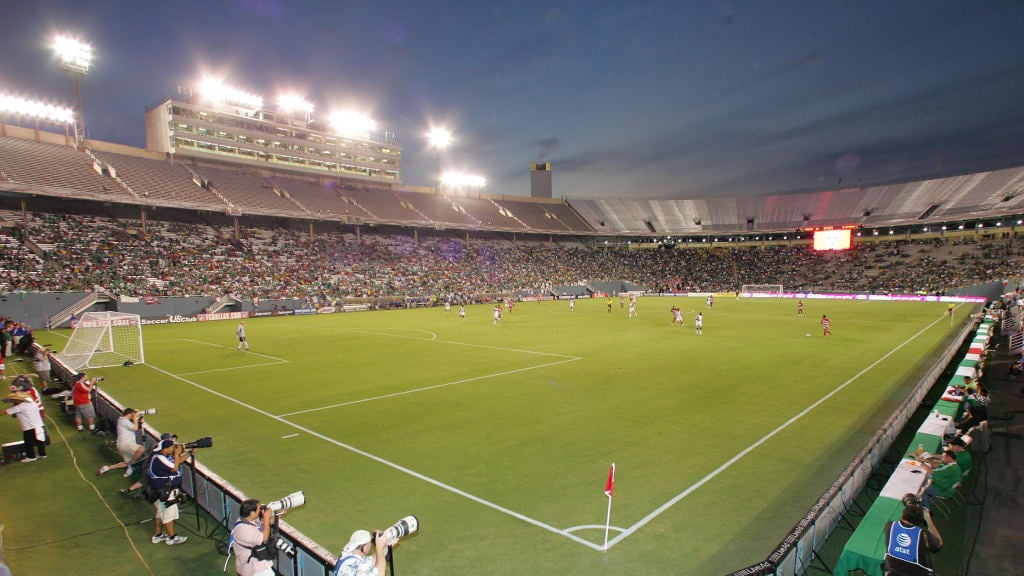
Although not purpose-built for soccer, the Cotton Bowl Stadium will soon be home to two American soccer teams. Located in Dallas, the stadium has a capacity of 92,100 and is the largest in the country to host soccer.
Originally opened in 1930, the Cotton Bowl has a long history of hosting major sporting events, particularly in American football. However, it has also staged numerous high-profile soccer matches over the years, including international friendlies, Gold Cup fixtures, and World Cup matches during the 1994 FIFA World Cup.
The stadium is set to play an even bigger role in the growth of soccer in the US, with plans for it to host Atletico Dallas in 2027. The venue is already home to the USLS club Dallas Trinity. Its huge capacity and historic status make it a unique venue, blending traditional American sports culture with the rising popularity of football in the region.
4. Misr Stadium – 93,940
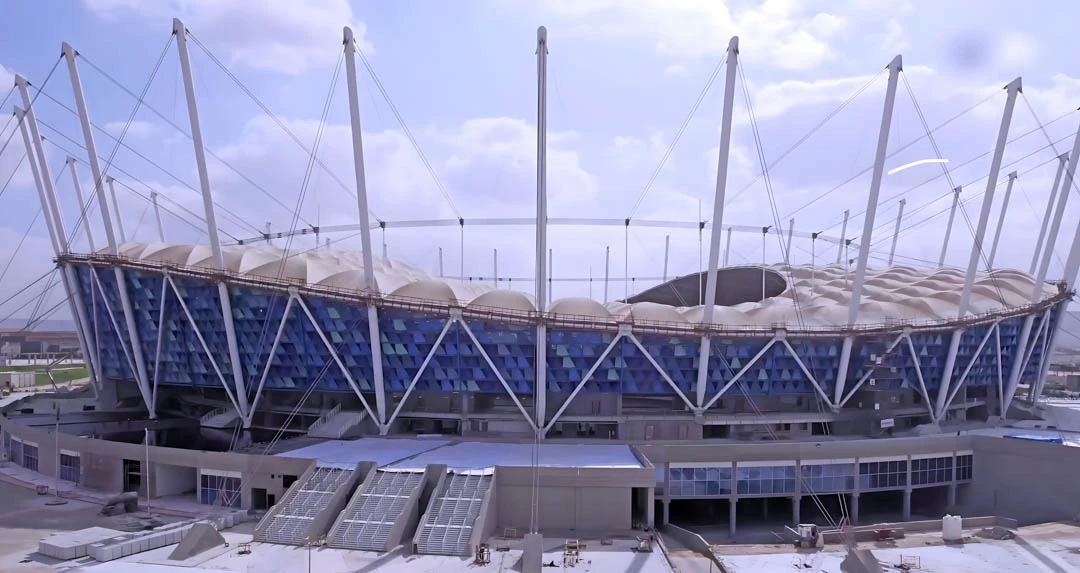
Also known as the New Administrative Capital Stadium, the Misr Stadium is the largest in Egypt and the second largest in Africa. The venue opened in 2024 and is part of the Egypt International Olympic City, a large sports complex under construction since 2015. Those plans will see the stadium expand to something even bigger.
The stadium was built as part of a long-term national vision that includes hosting major international events such as the future FIFA World Cup or Olympic Games. Its modern design reflects this ambition. It features world-class infrastructure and state-of-the-art facilities capable of supporting elite-level football and athletics.
Beyond the main arena, the complex is extensive. It includes dedicated training pitches, two indoor halls (one with a 15,000-seat capacity), an Olympic-sized swimming pool, and multiple supporting buildings. Together, these facilities make Misr Stadium more than just a football venue. It is a full-scale sports city designed to host large international tournaments and multi-sport events at the highest level.
3. FNB Stadium – 94,736
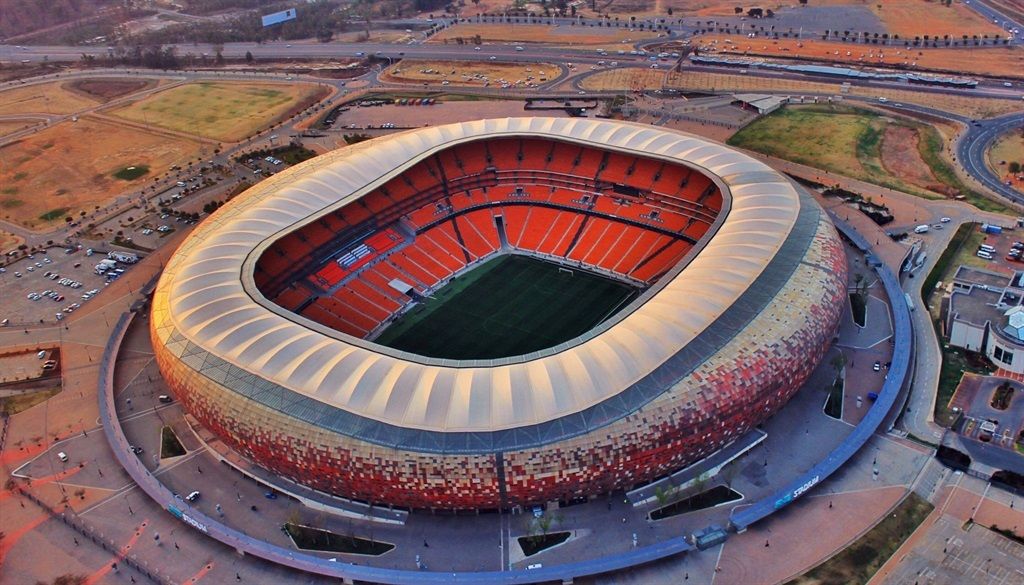
FNB Stadium, also known as Soccer City, is the largest stadium in Africa with a capacity of 94,736. Located in Johannesburg, it is home to Kaizer Chiefs and regularly hosts major South African national team matches.
The stadium gained global recognition during the 2010 FIFA World Cup Final. There, Spain defeated the Netherlands to win their first World Cup title. Its distinctive design, inspired by an African calabash (gourd), makes it one of the most visually unique stadiums in world football.
FNB Stadium has also hosted major political and cultural events, including memorial services for Nelson Mandela. With its enormous capacity and deep historical significance, it remains one of the most important sporting venues on the African continent.
2. Camp Nou – 99,354
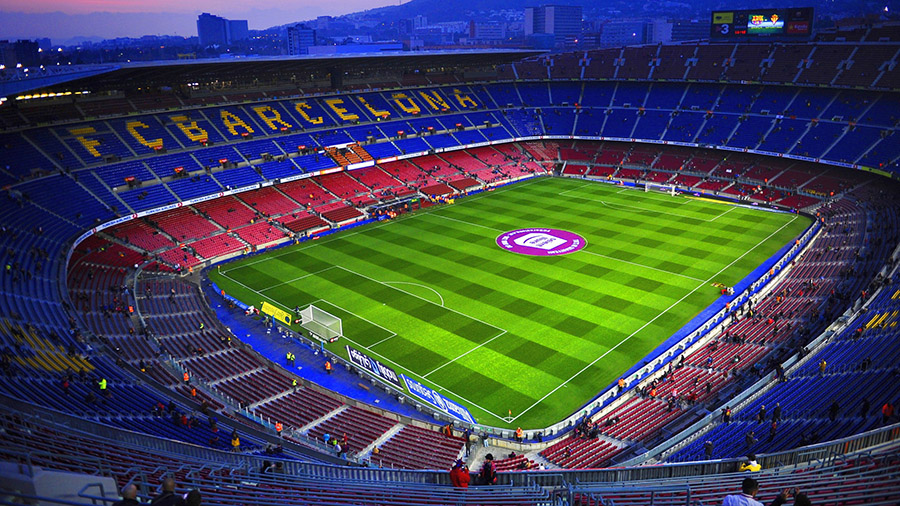
Camp Nou is the largest stadium in Europe and the second-largest football stadium in the world. Located in Barcelona, it is the iconic home of FC Barcelona and is widely regarded as one of the most famous stadiums in world football. Its scale, atmosphere, and history make it a landmark venue in global sport.
Opened in 1957, Camp Nou has hosted countless historic matches over the decades. It has been the stage for dramatic UEFA Champions League nights, El Clásico clashes, and major international fixtures. The stadium has also witnessed unforgettable moments from some of football’s greatest players. That includes Lionel Messi, one of the best soccer players of all time.
The stadium is currently undergoing a major redevelopment under the “Espai Barça” project. This renovation aims to modernise facilities, improve spectator comfort, and expand long-term capacity. Even during construction, Camp Nou remains a powerful symbol of football identity and Catalan pride. Its legacy, scale, and cultural significance ensure it remains one of the most iconic arenas in the sport.
1. Rungrado 1st of May Stadium – 113,281
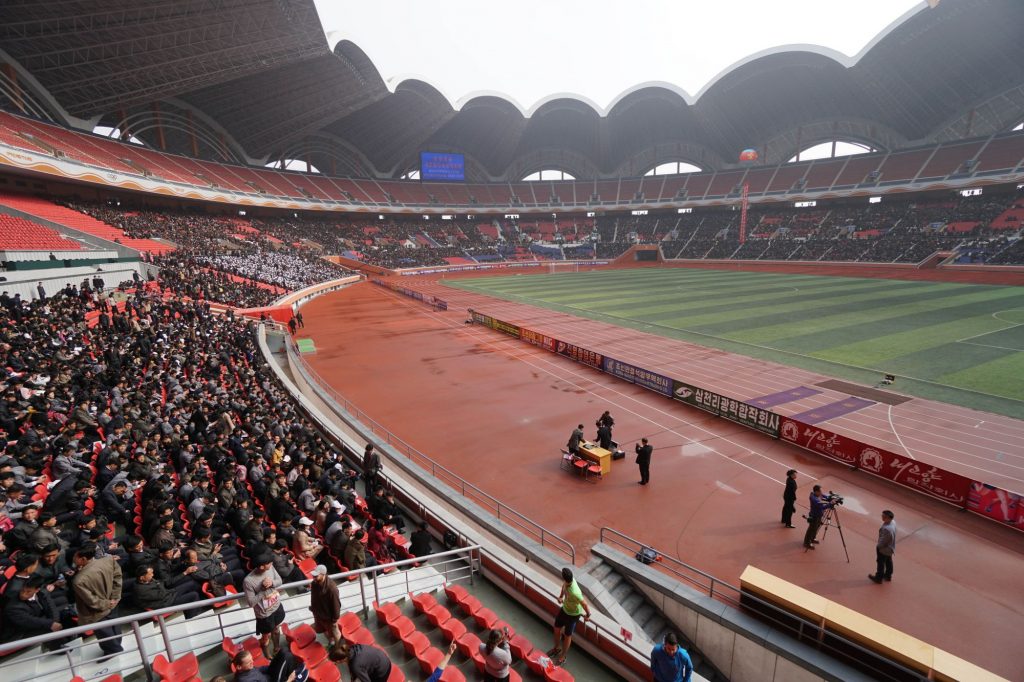
Rungrado 1st of May Stadium is the largest football stadium in the world, with a capacity of 113,281. Located in Pyongyang, it is one of the most unusual sporting venues globally due to its enormous scale and multipurpose design. It stands out not just for size, but also for its ceremonial and cultural use.
Opened in 1989, Rungrado 1st of May Stadium is primarily used for football matches and large public events. However, it is best known for hosting the annual Arirang Festival. This event features mass gymnastics and choreographed performances involving tens of thousands of participants. The entire stadium becomes part of the display, creating a unique visual spectacle across the pitch and stands.
The stadium features a distinctive shell-like roof made up of 16 arches. These arches are designed to resemble a magnolia flower, symbolising national pride. While it rarely hosts major international football fixtures, its scale is unmatched anywhere in the world. Its combination of capacity, architecture, and ceremonial use secures its place at the top of global stadium rankings.