





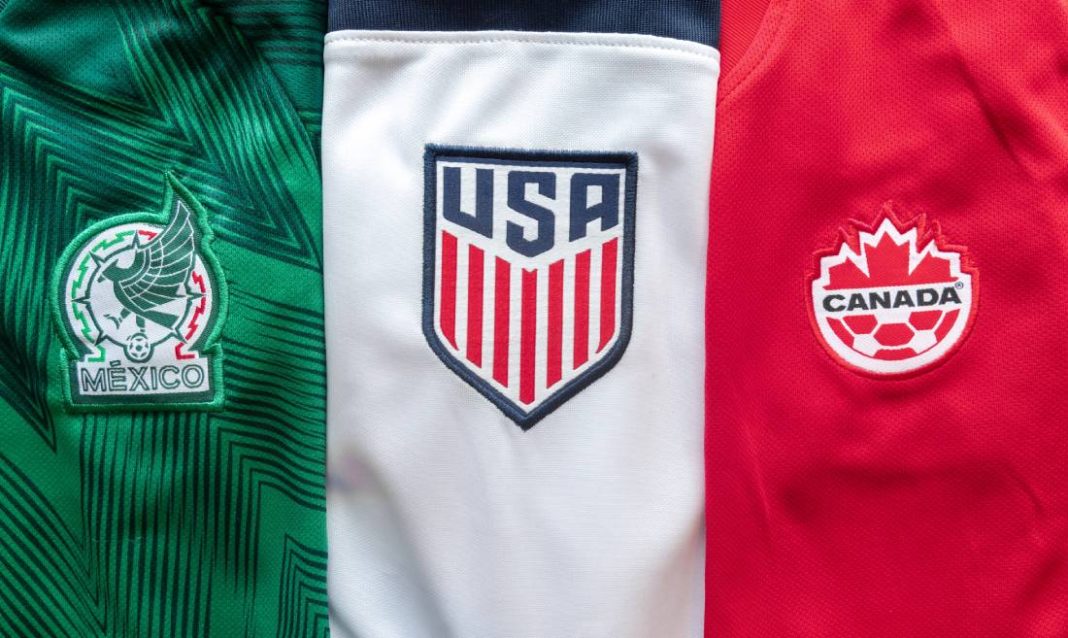

The United States, Mexico, and Canada are the three nations set to co-host the 2026 World Cup.
This will be the first time in the tournament’s history that three countries jointly host this major football event. The first instance of co-hosting between two nations came in 2002, when the World Cup was held in Japan and South Korea. Mexico will become the first country ever to host the tournament for a third time, having previously done so in 1970 and 1986.
Canada, on the other hand, will host the World Cup for the first time, while the United States last staged the tournament in 1994. For Canada, this is a landmark moment, especially considering that football has not traditionally been the country’s main sport.
In recent years, however, the game has grown significantly, and hosting the World Cup is expected to give it an even greater boost as the Opening Ceremony approaches.
Why is the 2026 World Cup being held in three countries?
The joint bid from the United States, Canada, and Mexico was chosen over Morocco’s, as it was considered far more comprehensive.
Several key advantages influenced FIFA’s decision:
• A very strong joint bid: All three countries already have many modern stadiums in place, along with well-developed infrastructure.
• Lower hosting costs: Staging a World Cup requires top-tier infrastructure and cutting-edge venues. In the U.S. especially, many stadiums are already match-ready, whereas Morocco had pledged to invest $16 billion.
• Greater logistical flexibility: For the first time, the tournament will feature 48 teams, making it easier for three countries to share the load of hosting more matches.
• A huge football market: North America offers a massive market in terms of TV rights and sponsorship opportunities.
• Experience in hosting: Mexico has hosted twice before, while the United States has done so once.
In short, the three-country bid was strong from the outset, and FIFA expects a highly successful tournament. Check the full 2026 World Cup schedule so you don’t miss a thing.

What advantages do the host countries have?
- Home support: Host nations naturally enjoy larger crowds, which can provide a significant boost during matches.
- Familiar surroundings: Players benefit from competing in environments they know well.
- Better chances of success: While not guaranteed, some host nations have exceeded expectations. South Korea finished fourth in 2002, Russia reached the semi-finals in 2018, and Mexico made a strong run in 1986.
- Favourites and title winner: On several occasions, the host nation has gone on to lift the trophy: Uruguay (1930), Italy (1934), England (1966), West Germany (1974), Argentina (1978), and France (1998).
- Economic benefits: Host countries gain from increased tourism, sponsorship revenue, and creation of new jobs.
- Growth of the sport: In countries like Canada, where football is still developing, hosting the World Cup can significantly accelerate its growth.
Do the host countries qualify automatically?
Yes, the United States, Canada, and Mexico have all qualified automatically for the 2026 World Cup as co-hosts.
This has been the case since the tournament began in 1930. FIFA guarantees the host nation a place, as their participation helps attract larger crowds and ensures smoother organisation.
This advantage is not granted for sporting reasons, but rather to support the overall planning and success of the tournament.

How does this affect the tournament and its format?
With three host nations already qualified, there are several implications for the competition:
- Fewer qualification spots: Since three teams from North and Central America and the Caribbean are already in, fewer places are available through the qualifying process.
- Hosts placed directly into groups: The host nations are automatically assigned to groups and do not face each other in the opening stage.
- Easier scheduling: Knowing in advance that the hosts will participate allows organisers to plan key fixtures early, including the opening match.