
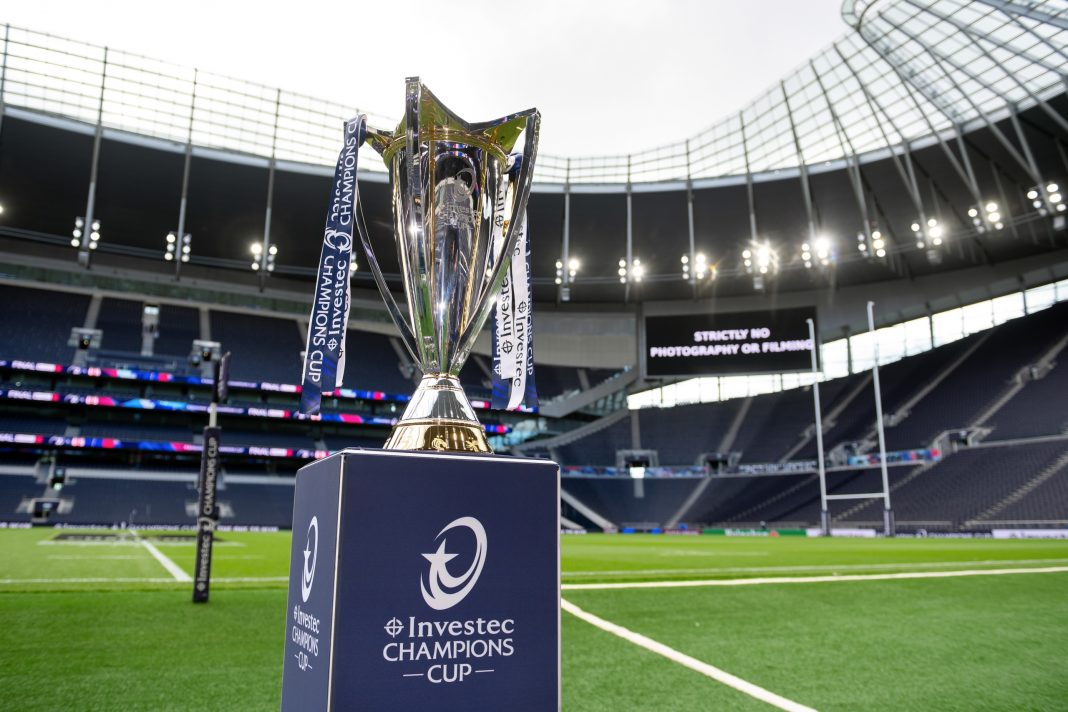

Rugby has undergone wide-scale changes over the years, and few competitions illustrate that evolution more clearly than the old Heineken Cup. For years, the Heineken Cup was the flagship tournament of European club rugby. It produced epic rivalries in front of packed-out stadiums with some of the most memorable matches in rugby history.
However, the competition as fans once knew it no longer exists in name. What used to be the Heineken Cup is now known as the European Rugby Champions Cup, or the Investec Champions Cup for sponsorship reasons. The rebrand arrived in 2014, following a major restructuring of European rugby. That brought new governance, revised qualification routes, and a sharper commercial identity.
This shift came about as an effort to modernise the competition while still preserving its prestige as the biggest in Europe. The tournament brings together the top sides from the United Rugby Championship, Premiership, and Top 14, but now does so under a format designed to increase competitiveness and reward league performance.
Despite the name change, many supporters still refer to it as the Heineken Cup out of habit. That is a reminder of just how iconic that branding had become. Despite the name change, the current format remains closely aligned with the traditions that made the tournament famous.
Why is the Heineken Cup now called the Investec Champions Cup
The name shift stemmed from a long-running dispute between unions, leagues, and broadcasters over how European club rugby should be structured. Debates over revenue distribution, qualification criteria, and control of the tournament’s commercial rights had been drawn out between the bodies. Eventually, they came to an agreement in 2014, which allowed the creation of a new governing body, the European Professional Club Rugby (EPCR). With it came the decision to rebrand.
The aim was to project a fresh identity that reflected a more balanced competition framework, strengthened financial stability, and a modernised approach to European rugby. The name change was also a practical step, allowing broader sponsorship opportunities while still leaving space for Heineken to remain a major commercial partner.
European Rugby Champions Cup Format Explained
The Investec Champions Cup is one of the most competitive competitions in the world due to its exciting format. The tournament begins with a pool stage, where clubs are split into four groups of six. These groups are based on seeding from their domestic leagues and will contain a mix of teams from the URC, Top 14 and Premiership. Each team plays four of the five teams in the pool, skipping the opponents in their corresponding league. For example, Leinster and Benetton of the URC were drawn in the same pool in 2024/25, but they will not face off in the group stage.
At the end of the pool stage, the top four teams from each pool advance to the knockouts. First and second receive a guaranteed home draw in the Round of 16, while third and fourth must play away. From here, the tournament adopts a straight elimination structure.
The knockout rounds elevate the drama. Each stage is single-leg, placing immense value on discipline, accuracy, and game management. The format ensures that every match carries weight, allowing the best teams to rise through a blend of squad depth, tactical coherence, and the ability to handle pressure on the biggest stage.
How ERCC Qualification Works
Qualification for the Champions Cup has also changed in recent years. It is now merit-based across all participating leagues. The top-performing teams from the URC, Premiership, and Top 14 secure their place through league standings. This ensures the competition showcases the strongest clubs from each domestic championship. The URC model, in particular, guarantees at least one qualifier from each nation but rewards higher table finishes with additional places.
This creates a more competitive environment throughout the season, as clubs can no longer rely on historical allocations. The structure has contributed to a sharper, more consistent standard of rugby, with teams balancing long-term squad management against the pressure to secure European qualification.
How Many Teams Qualify for the Champions Cup?
In the current European Rugby Champions Cup (Investec Champions Cup), 24 clubs qualify each season. These 24 sides come from the three major domestic and regional leagues: the English Premiership, the French Top 14, and the United Rugby Championship (URC). For the 2025-26 season, the allocation is:
- 8 clubs from the Premiership (top-eight finishers)
- 8 clubs from the Top 14 (top-eight finishers)
- 8 clubs from the URC (top-eight finishers)
This structure ensures the competition features the highest-performing teams across all three leagues, maintaining the standard and intensity expected of Europe’s premier club rugby tournament.
Past Winners and Records
Some of European rugby’s most storied clubs built their reputations in the Heineken Cup era and have continued that legacy in the Champions Cup. Toulouse remain the most decorated side in the competition’s history, with their blend of flair and steel establishing them as perennial contenders. Leinster sit close behind and has dominated large stretches of the modern era with a style built on precision, depth, and homegrown talent.
- Toulouse (France) – 6 titles: 1995-96, 2002-03, 2004-05, 2009-10, 2020-21, 2023-24
- Leinster (Ireland) – 4 titles: 2008-09, 2010-11, 2011-12, 2017-18
- Saracens (England) – 3 titles: 2015-16, 2016-17, 2018-19
- Toulon (France) – 3 titles: 2012-13, 2013-14, 2014-15
- Leicester Tigers (England) – 2 titles: 2000-01, 2001-02
- Munster (Ireland) – 2 titles: 2005-06, 2007-08
- La Rochelle (France) – 2 titles: 2021-22, 2022-23
- Wasps (England) – 2 titles: 2003-04, 2006-07
- Northampton Saints (England) – 1 title: 1999-00
- Brive (France) – 1 title: 1996-97
- Ulster (Ireland) – 1 title: 1998-99
- Bath (England) – 1 title: 1997-98
- Exeter Chiefs (England) – 1 title: 2019-20
- Bordeaux Bègles (France) – 1 title: 2024-25
While the format has changed over time, the Investec Champions Cup has consistently produced defining moments. That includes dramatic semi-finals to unforgettable finals that ended with one team lifting the Champions Cup.
Where to Watch the European Rugby Champions Cup This Season
Broadcast coverage of the European Rugby Champions Cup continues to be widely accessible, with viewers able to follow every round live. Matches are split between TNT Sports and free-to-air in Ireland and the UK, depending on the round and featured fixtures. This is similar to coverage of the URC. European audiences can access games through their national broadcasters, while EPCR’s digital platforms offer comprehensive highlights and match analysis throughout the season.
As the tournament progresses towards the knockout stages, broadcasters typically increase their coverage, ensuring fans never miss a key moment. Whether watching from home or following your team across Europe, the Champions Cup remains one of the sport’s most compelling spectacles.
Heineken Cup fixtures 2025/26
The 2025-26 Investec Champions Cup will feature 24 teams competing from early December through late May. The season begins on 5 December 2025 with the pool stage, where clubs are split into four pools of six. Each team plays four pool matches, avoiding opponents from their own domestic league. They’ve drawn the pools, and we can expect these teams to clash.
Pool 1
- Stade Toulousain
- ASM Clermont Auvergne
- Hollywoodbets Sharks
- Saracens
- Glasgow Warriors
- Sale Sharks
Pool 2
- Bath Rugby
- RC Toulon
- Munster Rugby
- Castres Olympique
- Edinburgh Rugby
- Gloucester Rugby
Pool 3
- Leinster Rugby
- Leicester Tigers
- Harlequins
- Stade Rochelais (La Rochelle)
- Aviron Bayonnais (Bayonne)
- DHL Stormers
Pool 4
- Union Bordeaux Bègles
- Scarlets
- Bristol Bears
- Section Paloise (Pau)
- Northampton Saints
- Vodacom Bulls
When is the Investec Champions Cup final 2026?
The final of the 2025-26 European Rugby Champions Cup will be held on Saturday, 23 May 2026, at San Mamés Stadium in Bilbao, Spain. This iconic venue previously hosted the 2018 final and is set to provide another atmospheric stage for the biggest game in European club rugby. The match will mark the culmination of months of high-level competition, with the semi-finals taking place in early May.