
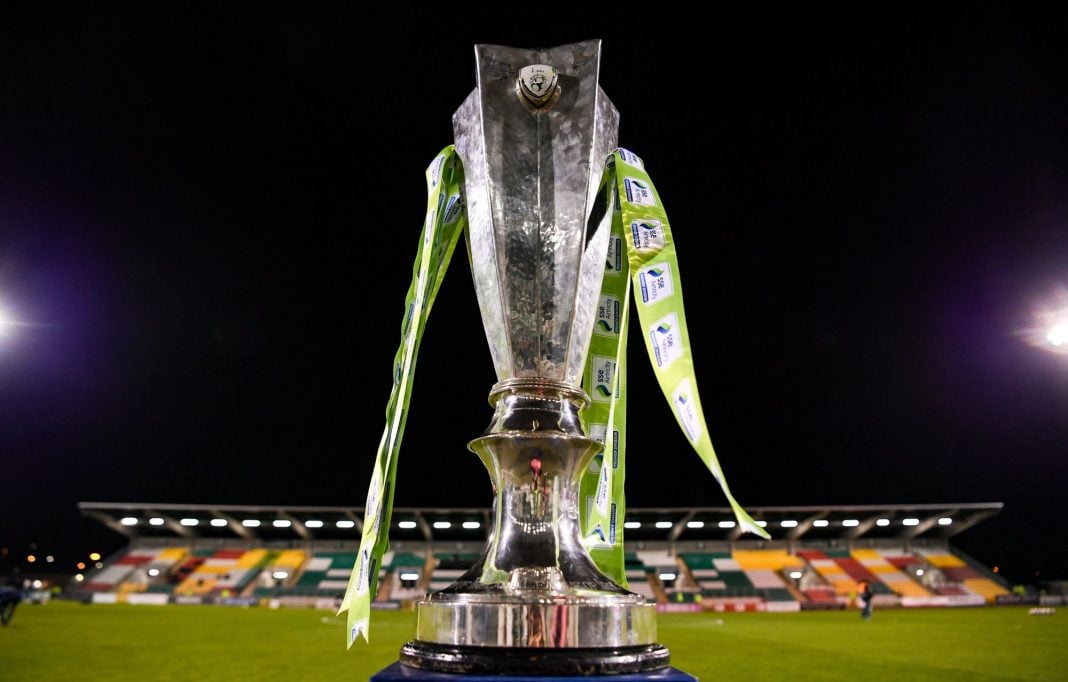

The League of Ireland has experienced substantial growth in recent years. More fans are tuning in every week to watch high-quality action in a competitive league. This has resulted in increased revenue to clubs and, more importantly, the players. But how much do League of Ireland players get paid per week or per year?
Salary of Full-Time Players in the LOI
Players in the League of Ireland have been famously underpaid for years. However, this changed in 2022, when the Professional Footballers Association of Ireland introduced a minimum wage. It meant players aged 20 and over would earn at least €430 a week, while part-time players were entitled to a minimum of €130 a week. From there, a new revolution for Irish soccer was born. This was changed once again in December 2025, when another rise came in for players across the board.
The most recent change means players in the division will take home at least €23,400 before tax. While this does not sound like a lot compared to the Premier League, it was an important milestone in Irish football. While there is a new minimum standard for players, clubs have also begun forking out more to retain key players. Below are the approximate pay brackets for professional soccer players in Ireland following the most recent change.
- Age 20 and over: €450 p/w, up from €430
- Age 19: €400 p/w, up from €380
- Age 18: €350 p/w, up from €330
- Age 17/16: €300 p/w, up from €280
Where Has the Money Come From?
The League of Ireland has experienced substantial growth in recent years. For fans, this has meant increased attendance, more TV coverage, and exclusive broadcast rights deals with huge media players. The LOITV streaming service has made it easy to discover where to watch League of Ireland matches throughout the season.
As of the current LOI Premier Division season, every player across all clubs is on a full-time, professional contract. This marks a historic turning point for Irish football, as it underscores a strategic and structural shift within the league. It reflects an ongoing approach to professionalisation and an ambition to elevate standards across the board.
Previously, many clubs relied on part-time or semi-professional arrangements. However, the move to full-time status signals heightened financial commitment and operational stability throughout the division.
The transformation sets the Premier Division apart within the Irish sporting landscape. It brings better training regimes, increased player development opportunities, and potential boosts to both performance and market appeal. For fans and stakeholders, this development suggests a more consistent and polished product.
The improvements to player salaries could further fuel spectator interest and media engagement. By formalising full-time wages across the division, the LOI is not only improving conditions for players but also affirming its place as a professional, sustainable competition aimed at long-term growth.
How Has That Affected Player Wages?
For those at the lower end of the pay scale, the shift has been transformative. A player who might once have earned €150 a week is now taking home three times that amount. Over the course of a season, this means every senior full-time professional in the Premier Division will earn at least €23,400 annually.
That baseline salary has become an important marker in the league’s progression. It ensures that no player is left trying to make ends meet while playing at the top level of Irish football. This safety net has given players a new sense of stability and professional recognition.
Beyond the numbers, the changes have helped reshape the culture of the league. Players are now being treated as genuine professionals rather than semi-pros juggling other work on the side.
It has also allowed many younger footballers to continue with their education while playing, without the same financial strain that previously forced difficult choices between school, work, and football. That means we can expect an even stronger pool of youngsters in the coming years, furthering the Irish game.
In short, the wage reforms have done more than just put extra money in players’ pockets. They have elevated the overall professionalism of the League of Ireland. It has created a platform that not only protects players but also raises the quality and appeal of the competition itself.
How Much Are The Highest Earners Paid?
While exact numbers are not known, the Irish Sun revealed that there are between five and 10 players in the Irish Premier Division on around €150,000 per year. That equals out to around €3,000 per week. While it is not known exactly who those players are, you can make some educated guesses.
The club is delighted to confirm that Jack Byrne has re-signed on a multi year contract and will continue to be a central part of the squad as we aim to build on the success of this season 🐐☘️ pic.twitter.com/4bzA16jTsK
— Shamrock Rovers FC (@ShamrockRovers) November 12, 2023
Jack Byrne is one of the most experienced players and arguably the biggest star in the Irish Premier Division. He is almost certainly the highest earner at Shamrock Rovers after signing a new contract in 2023. Rovers’ Matt Healy is another name likely to be in or around that bracket. Many sources estimate him to have the highest market value of any player in the league.
These top earners remain the exception rather than the rule, but their salaries highlight the growing ambition of the league. While most players are still on modest contracts compared to other European competitions, the presence of individuals earning six-figure sums shows that clubs are now willing to invest more heavily to attract and retain talent. It’s a sign of the League of Ireland’s increasing financial muscle and a statement that its biggest stars can be rewarded in line with their influence on and off the pitch.
Will LOI Salaries Grow in the Future?
League of Ireland salaries will increase across the board in the not-too-distant future. The growing presence of Irish teams in continental competitions means higher earnings for those clubs. For example, Shamrock Rovers were paid more (€135k) for their 1-1 draw with APOEL in the 2024 UEFA Europa Conference League league phase than champions Shelbourne were for winning the Premier Division (€125k).
The changes in the structure of European competitions and the introduction of the UEFA Conference League have provided more opportunities for Irish teams to perform at a higher level. This means more prize money, TV rights money, and exposure for football fans who may have previously never seen LOI teams play. UEFA’s new distribution model also means that nine top-flight teams will now receive €350,000 each. All of this will trickle down into the players’ pockets.
🚨 🇮🇪 Shelbourne with ANOTHER WIN over 🇬🇧 Linfield in the European qualifiers this summer!
✅ 🇮🇪 Shelbourne are likely to play in the league stage of the Conference League after a 3-1 win over 🇬🇧 Linfield in the 1st leg tonight!
❌ Both clubs missed penalties! pic.twitter.com/QtRizF36sk
— Football Rankings (@FootRankings) August 21, 2025
That boost in UEFA solidarity payments marks a major step forward for League of Ireland clubs. Until recently, top-flight sides received just €70,000 each, but pressure from the European Clubs Association has led to a far greater redistribution of funds across domestic leagues. The real winners are the nine Premier Division clubs not involved in European group stage football. Shamrock Rovers are the standout after earning more than €5 million from their continental run in 2024. While many soccer predictions will not fancy them to win the competition, the experience and money will help the game grow exponentially in the coming years.
Conclusion
The financial landscape of the League of Ireland has changed dramatically in just a few short years. From the introduction of a minimum wage to the shift towards fully professional squads and the increasing rewards of European football, players now find themselves in a far stronger position than ever before.
Salaries are still modest compared to Europe’s bigger leagues. However, the steady rise in earnings reflects the league’s growing ambition and the value being placed on its talent. With improved structures, greater investment, and more opportunities to shine on the continental stage, the trajectory is clear. The League of Ireland is moving towards a more sustainable and rewarding future for its players, clubs, and fans alike.