
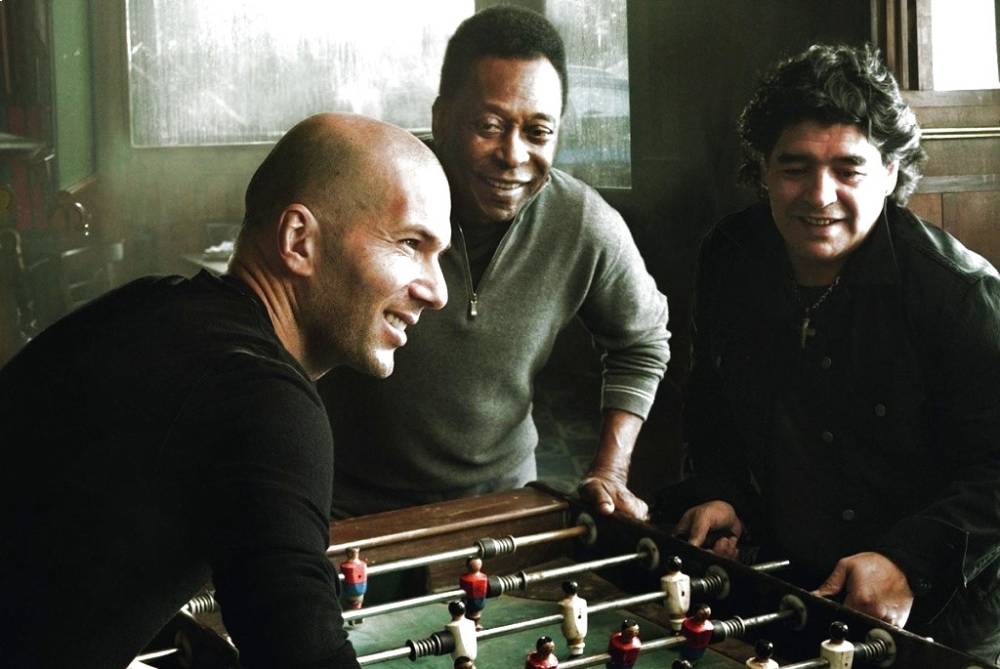

Every opinion is valid and, of course, subjective. Some will never accept that there has been a greater footballer in history than Diego Maradona. They may well be right. Others believe Pelé is untouchable, the man who wrote the story of the “king of sports” from the very beginning. And then there’s Lionel Messi, who, thanks to his longevity, titles, and unique achievements, stands above them both for many.
The list you’re about to read will certainly spark debate. Who truly deserves a place among the 100 greatest footballers of all time and who doesn’t?
In our view, for example, players like Kylian Mbappé, Lamine Yamal, and Erling Haaland might be considered too early in their careers to be included among the all-time greats.
A sustained level of performance and success over many years is usually required to earn a place in football’s hall of fame. However, Mbappé and Yamal, thanks to their incredible achievements at such a young age, already merit inclusion in the top 100. The only omission is the Norwegian striker, not because he lacks the quality, but due to the absence of major international honours.
For this list, we’ve selected the 100 greatest footballers in history by evaluating both their overall careers and their peak years.
Here you’ll find players everyone expected to see, legends known across generations, as well as names from the early and mid-20th century that only a few may recognise. Thankfully, their stories live on through those who witnessed them and through rare but fascinating footage on YouTube.
Novibet brings you the 100 greatest footballers of all time so that the old may remember and the young may learn.
Sit back and enjoy the journey!
Top 100 Footballers
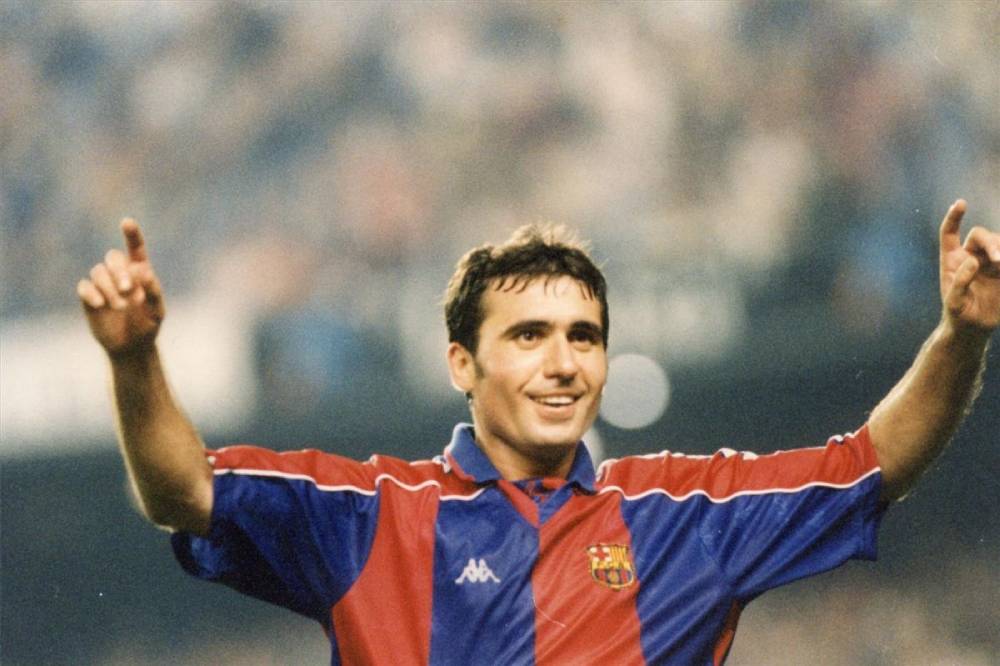
100. Gheorghe Hagi
How many Romanian players can you name who have played for both Real Madrid and Barcelona? Let us help you.
We’re talking about Gheorghe Hagi, the “Maradona of the Carpathians.” A classic No.10, Hagi combined exceptional vision with a remarkable eye for goal.
Over the course of his career, he made 516 appearances and scored 237 goals.
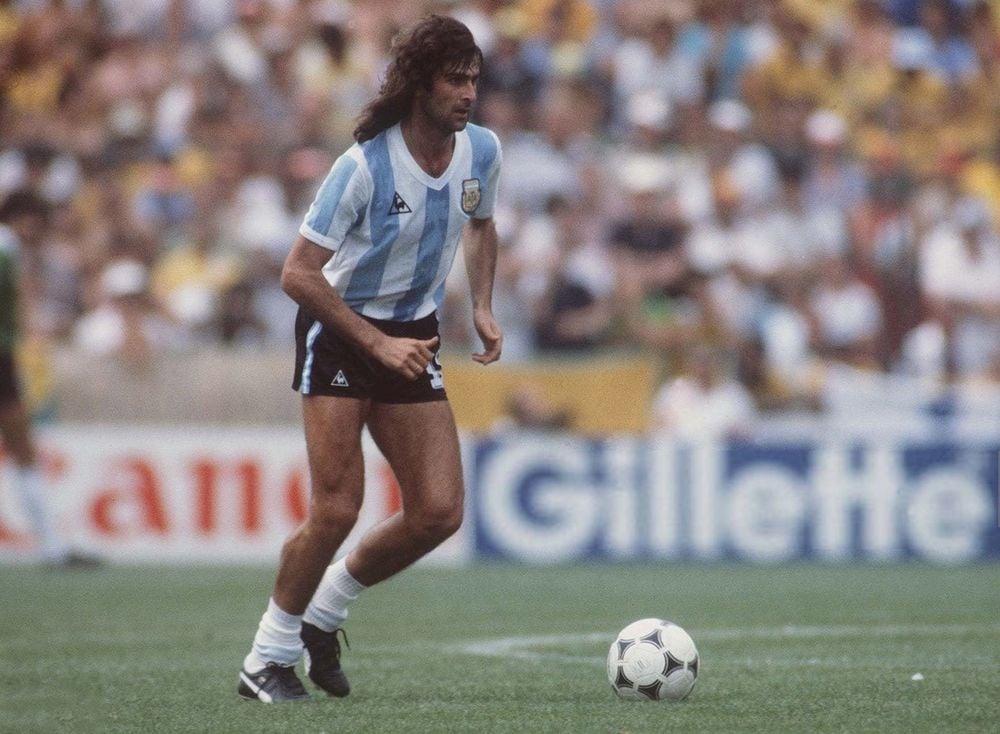
99. Mario Kempes
Only four Argentine players have ever finished as top scorer in La Liga, and Mario Kempes is one of them.
A lethal finisher, Kempes truly shone at the 1978 World Cup, where he finished as the tournament’s top scorer and was named the best player of the World Cup. In the final against the Netherlands, he scored twice in Argentina’s 3-1 victory in Buenos Aires.
He featured in three World Cups (1974, 1978, and 1982), scoring 20 goals in 43 appearances.
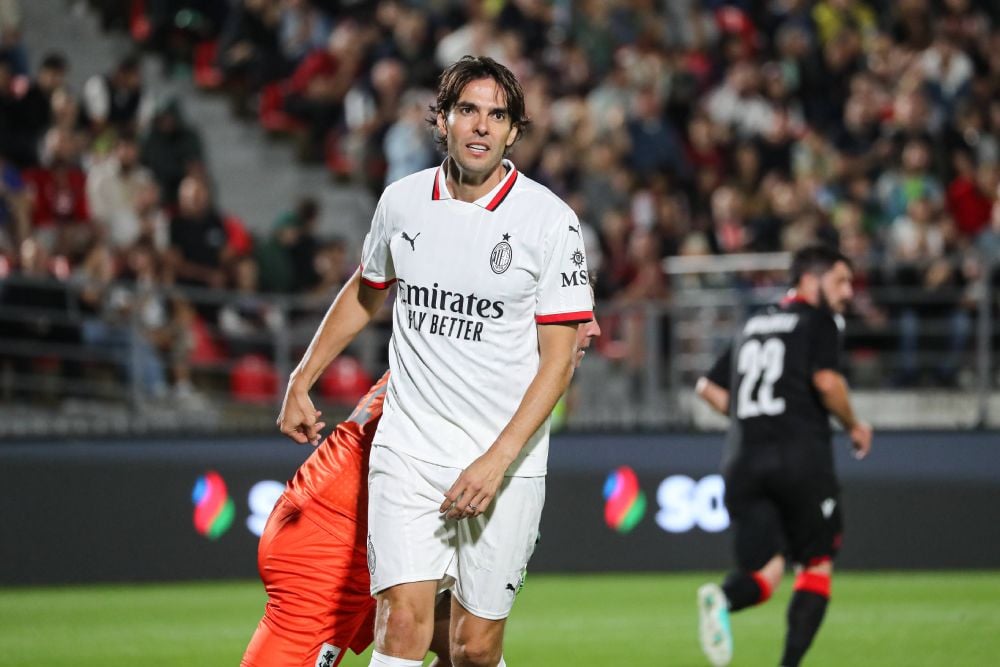
98. Kaká
Frank Lampard once said of Kaká: “He’s the only player I would pay to watch. I admire some of the things he does on the pitch.”
Kaká was a true virtuoso, playing for top clubs such as São Paulo, AC Milan, and Real Madrid. In 2007, he won the Ballon d’Or, just before the era dominated by Messi and Ronaldo began.
He is also one of only nine players in history to have won the World Cup, the Champions League, and the Ballon d’Or.
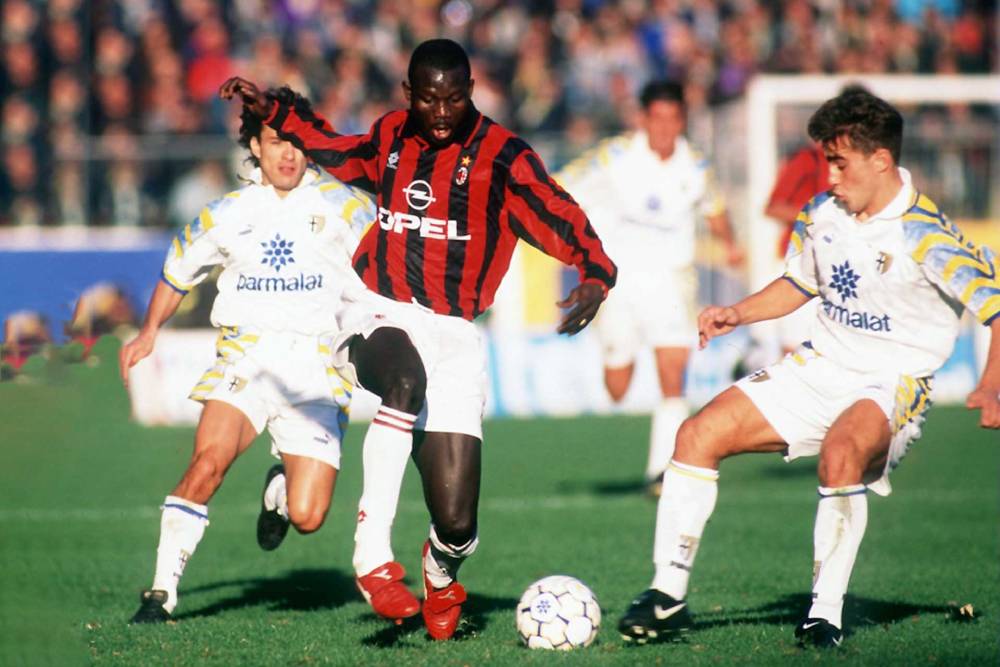
97. George Weah
George Weah was far more than just a great footballer. The Liberian is widely regarded as one of the finest strikers ever to grace European football. After arriving in Europe with Monaco, he went on to play for Paris Saint-Germain and AC Milan, where he reached the peak of his career.
Across those clubs, he made 313 appearances and scored 125 goals. From 2018 to 2024, he also served as President of Liberia.
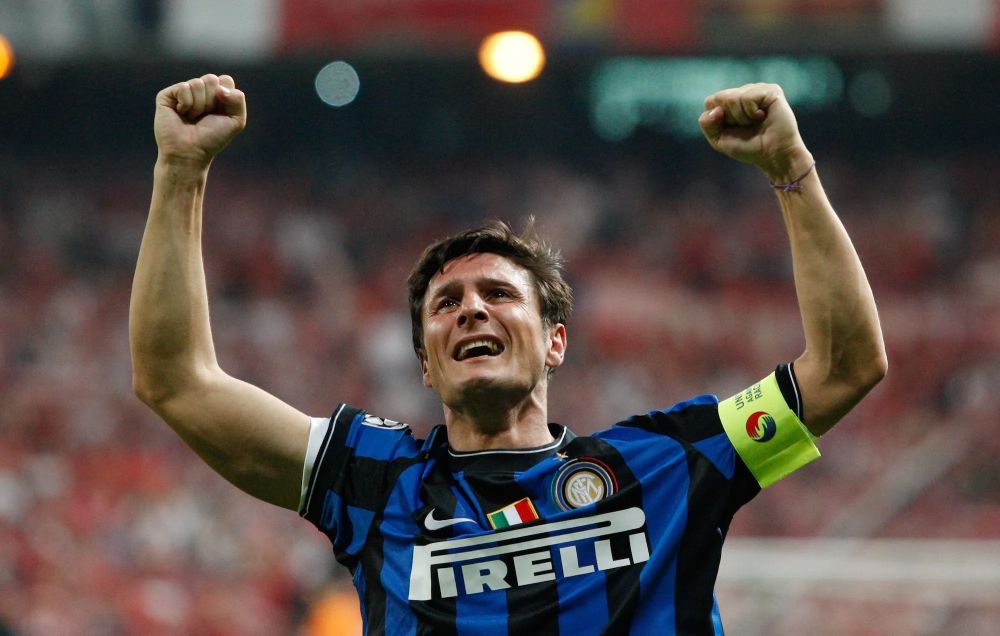
96. Javier Zanetti
Nineteen years at one club, Javier Zanetti’s loyalty to Inter is almost unmatched. A phenomenal right-back, the Argentine became a true symbol of the Italian side.
In 859 appearances, he won 16 trophies and retired at the age of 40.
The highlight of his career came in 2010, when Inter, under José Mourinho, completed a historic treble, winning Serie A, the Coppa Italia, and the Champions League.
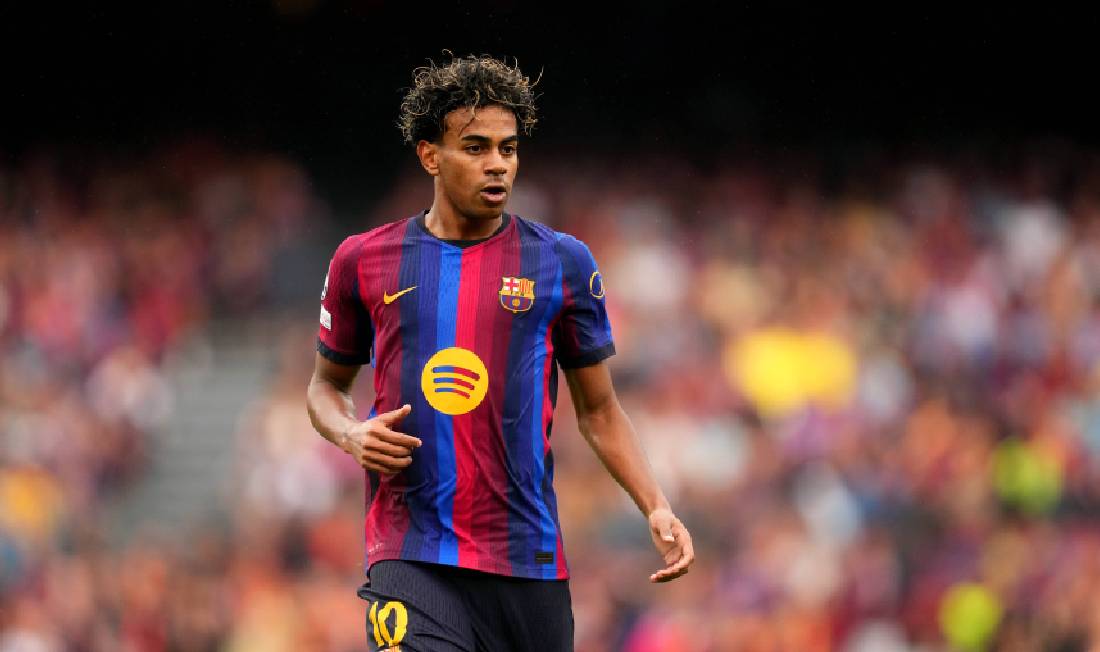
95. Lamine Yamal
At just 19 years, he has already won everything top footballers dream of achieving over an entire career. A World Cup and the Euros with Spain, plus three league titles and one Copa del Rey with Barcelona.
His coaches, Hansi Flick at Barça and Luis de la Fuente with the national team, they swear by him.
“He is blessed by God. He has that rare football intelligence. He possesses the magic of the great players who are destined for something unique,” they have said in front of the cameras, without fearing that the young boy from Rocafonda might get carried away. He is already a leading figure and a mature professional, because he lives and breathes just for football.
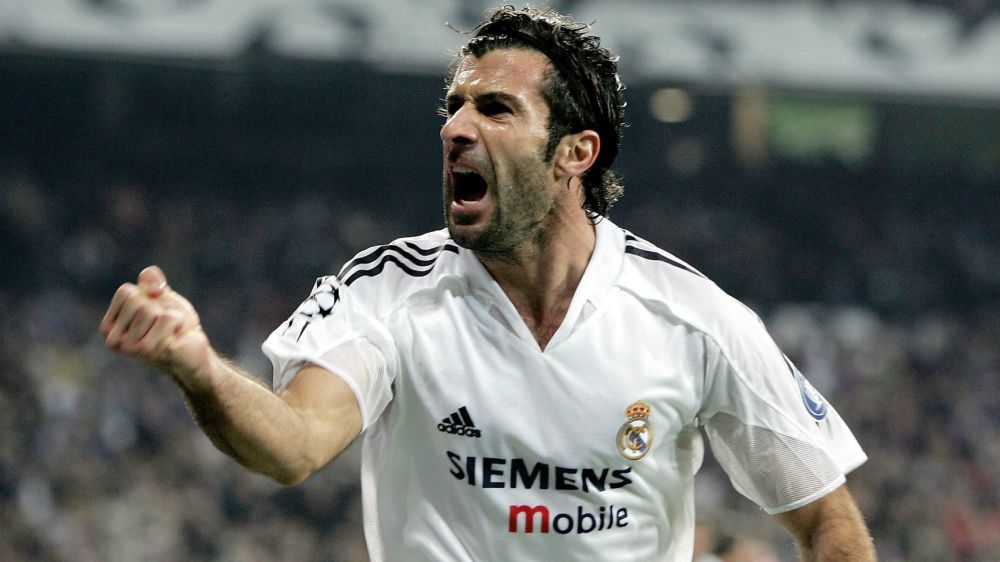
94. Luís Figo
A brilliant player who managed to divide an entire nation. It was in 2000 when, after five years as a respected captain of Barcelona, he transferred to their hated rivals Real Madrid.
He became a hate figure for the fans of Barça, who burned shirts bearing his name and even threw pig heads in his direction at his first derby against “Los Blancos” with the Portuguese star on the opposing side.
In terms of trophies, he won everything at club level. League titles and cups with Barcelona, league titles, cups and a Champions League with Real Madrid, and league titles and cups with Inter.
He was voted Player of the Year for 2000 and also won the Ballon d’Or in the same year.
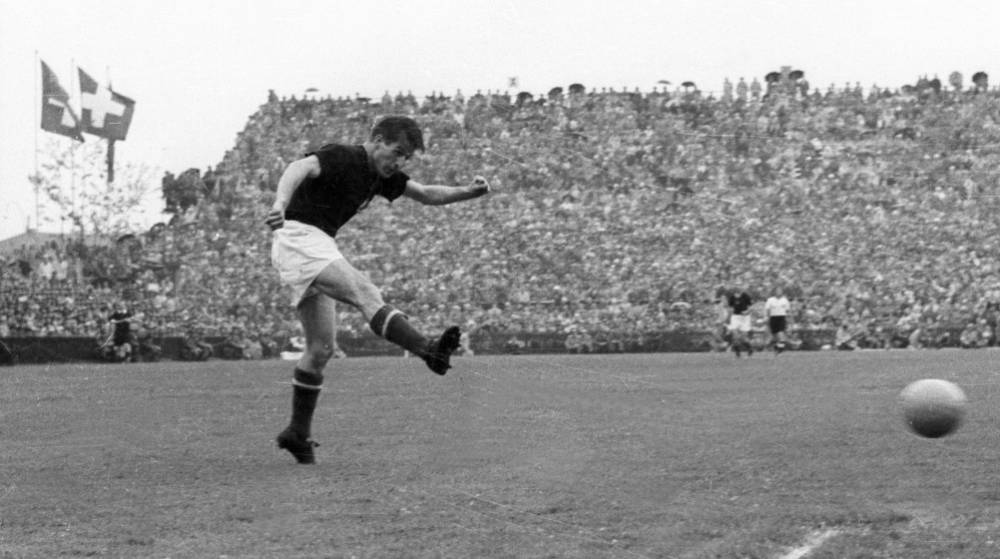
93. Sándor Kocsis
What an incredible goalscorer Sándor Kocsis was! The Hungarian striker was part of Hungary’s legendary national team from the late 1940s to the mid-1950s.
To give an idea of his scoring record: he netted 176 goals in 160 appearances for Honvéd! For Hungary, he scored 75 goals in 68 matches! He scored 11 goals in just five matches at the 1954 World Cup, and he was the first player ever to score two hat-tricks in a World Cup tournament.
Beyond his homeland, he also played for Barcelona.
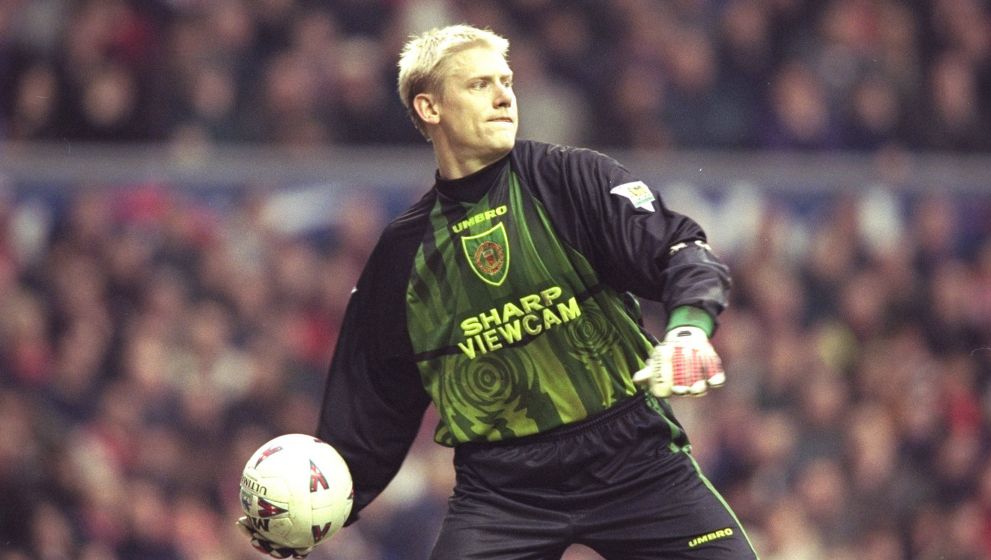
92. Peter Schmeichel
He reached the peak of his career at Manchester United from 1991 to 1999, where he won everything, highlighted by the famous treble in 1999, claiming the Premier League, FA Cup, and Champions League.
In total, he won five league titles, three FA Cups, and, as mentioned, one Champions League with Manchester United.
The greatest moment of his career came with Denmark’s triumph at Euro 1992.
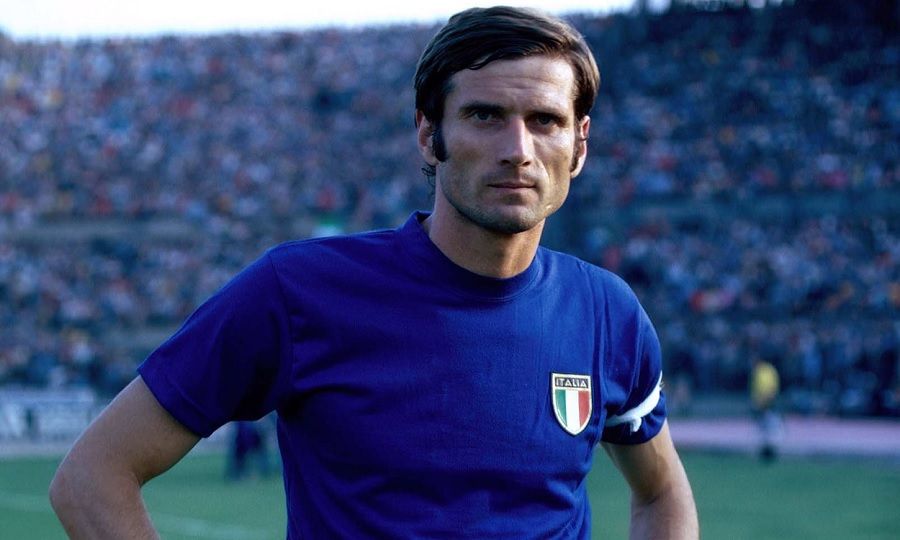
91. Giacinto Facchetti
He is one of those players who spent their entire career at a single club. He played from 1960 to 1978, all with Inter. In 629 appearances for Inter, he scored 75 goals, a record that makes him the most prolific defender in the history of Serie A.
He is considered one of the greatest left-backs of all time, and with Inter he won four league titles, one domestic cup, two European Cups, and two Intercontinental Cups.
With the Italian national team, he won Euro 1968 and was a runner-up at the 1970 World Cup.
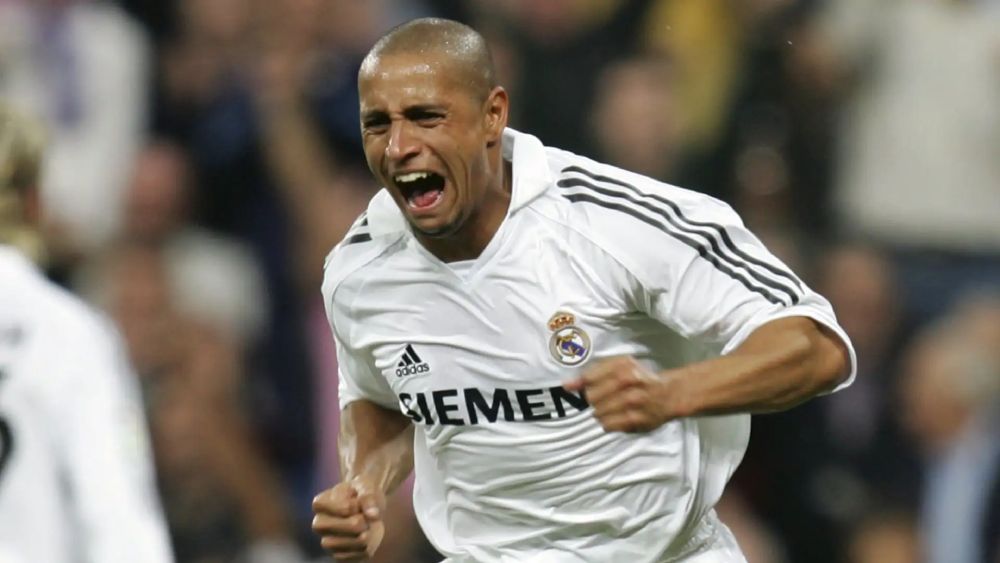
90. Roberto Carlos
He dominated the left side of Real Madrid’s defence for eleven years, winning three Champions Leagues with the club. He had exceptional pace and a famously powerful left foot.
He scored numerous long-range goals from free kicks. Who can forget the goal he scored against Fabien Barthez with a bending outside-of-the-foot strike in a friendly against France in 1997?
His honours include four Spanish league titles, two Copa América titles, and one World Cup.
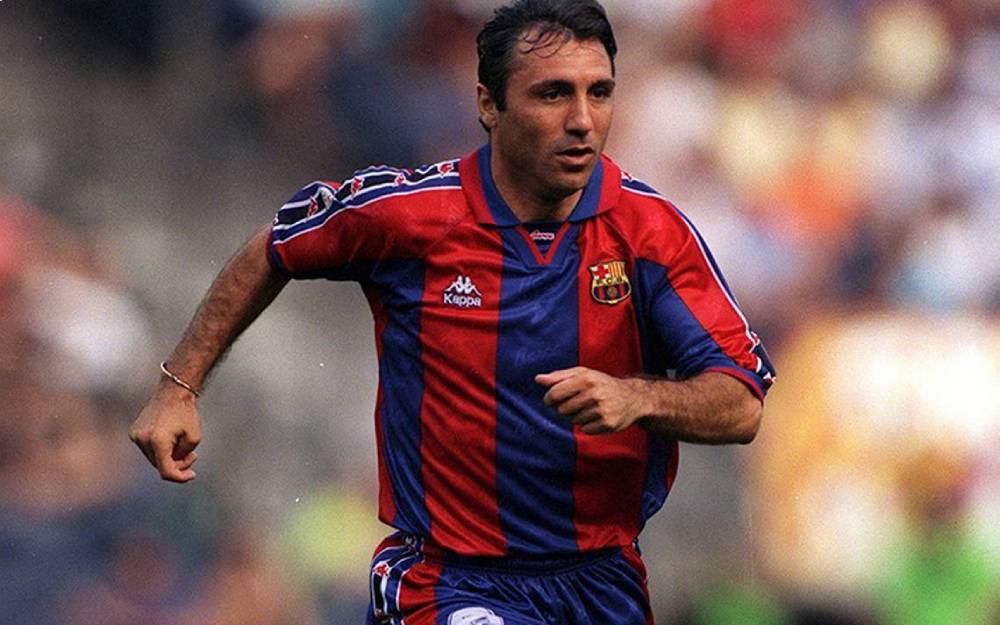
89. Hristo Stoichkov
There are countries that consistently produce talented footballers, and others where it is a rare occurrence. Bulgaria belongs to the second category. Hristo Stoichkov was such an outstanding player that he almost single-handedly led Bulgaria to the semi-finals of the 1994 World Cup. That is how good he was.
At club level, the Bulgarian striker dazzled Barcelona fans for seven years between 1990–1995 and 1996–1998.
During that time, he won one Champions League, one Cup Winners’ Cup, and five league titles.
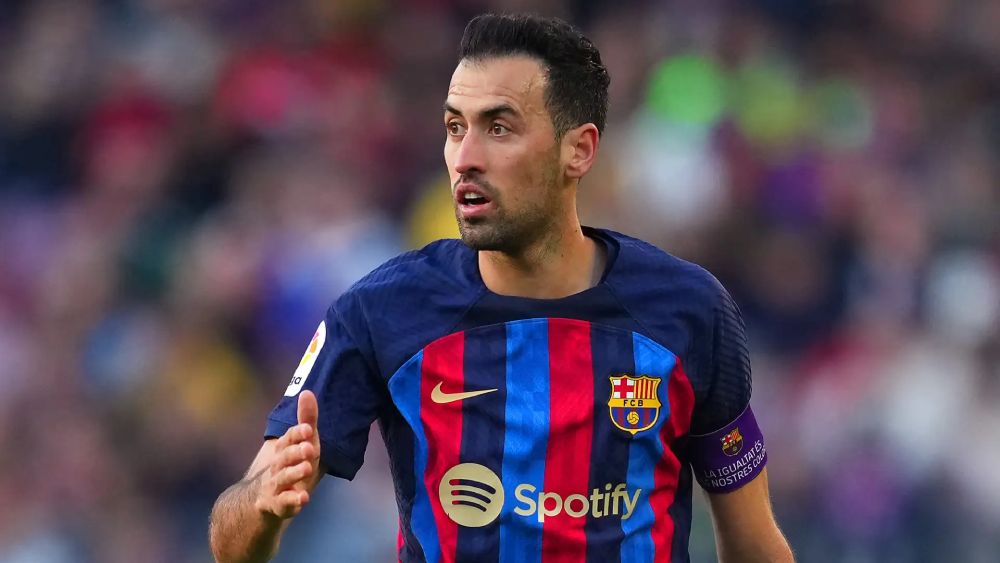
88. Sergio Busquets
He is arguably one of the most complete defensive midfielders of all time.
He was an indispensable member of Pep Guardiola’s legendary Barcelona side, playing alongside Iniesta, Xavi, Messi, and the rest of that iconic team. His technical ability allowed him to handle his defensive duties with ease, while also contributing significantly to the build-up play. He would collect the ball from defence and initiate attacks.
The most important moment of his career came at the 2010 World Cup. Ηe won nine La Liga titles, five Copa del Rey trophies, and three Champions League titles with Barcelona.
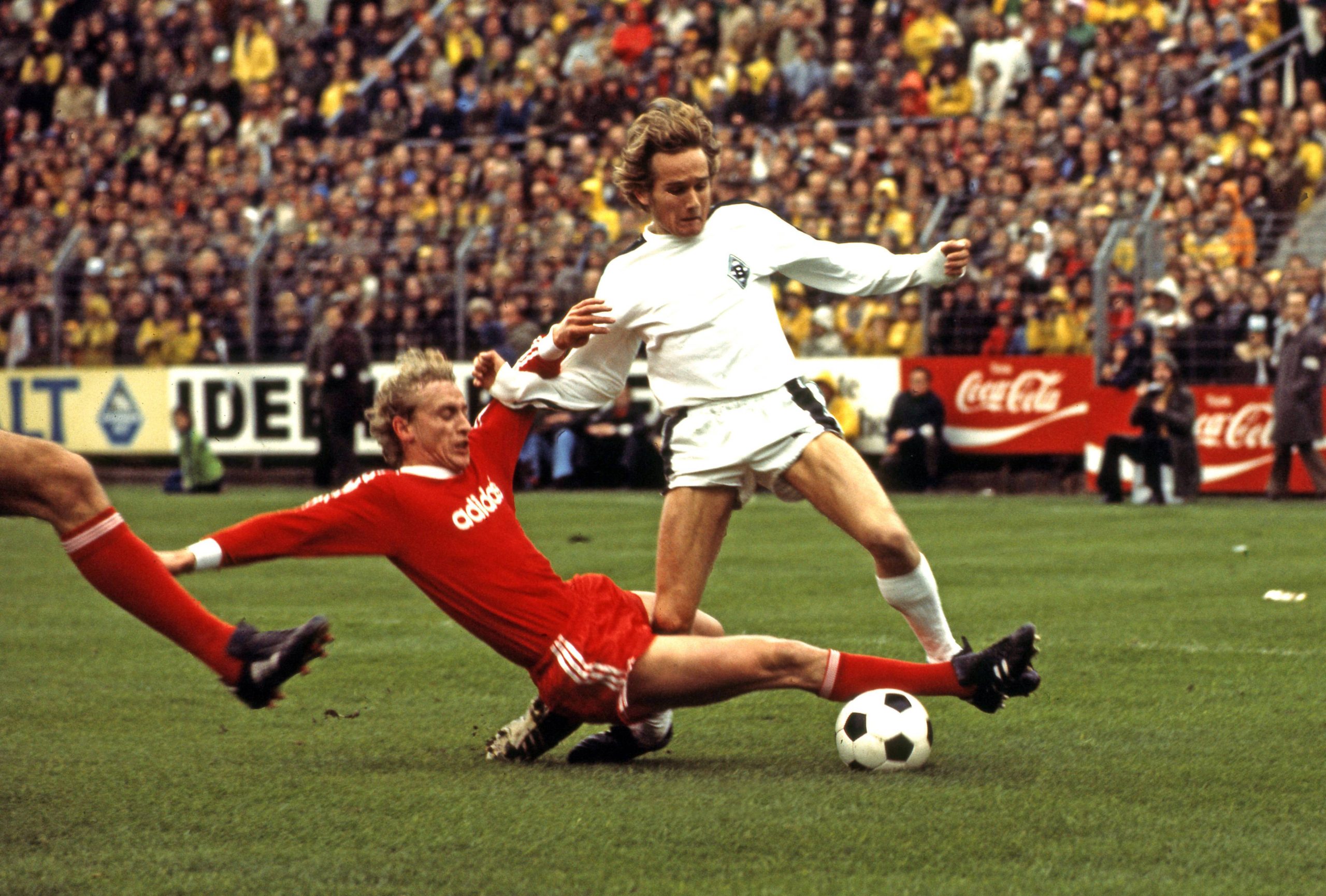
87. Allan Simonsen
Simonsen is considered one of the greatest Danish footballers of all time.
1977 was the peak year of his career, as he played in the Cup Winners’ Cup final against Liverpool and was named European Footballer of the Year, winning the Ballon d’Or. It was the first and only time a Danish player has ever won the award.
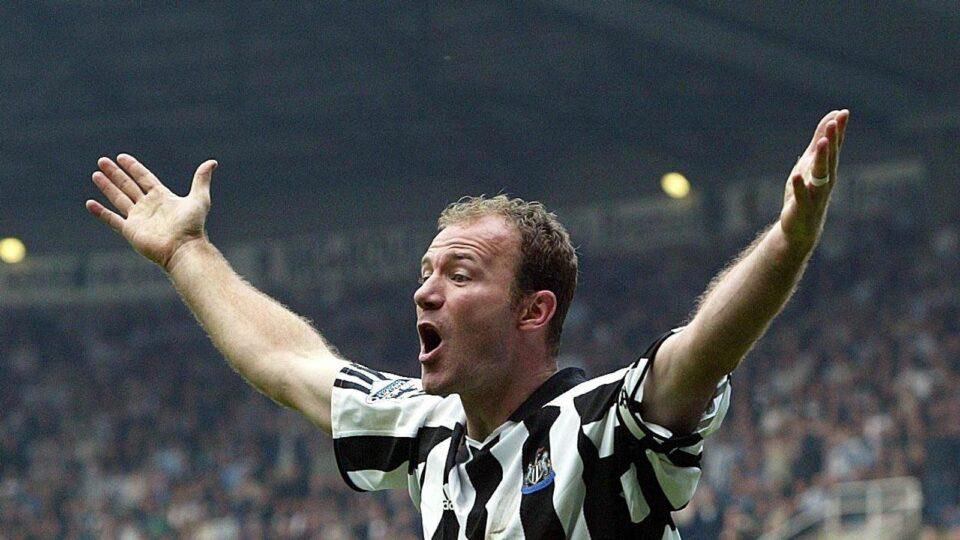
86. Alan Shearer
Τhe one and only Alan Shearer! He remains the all-time top scorer in Premier League history with 260 goals in 441 appearances, a record that is unlikely to ever be broken.
He was the captain of the England national team in the late 20th century, despite never playing for one of the Premier League’s biggest clubs.
He won the English league title in 1995 with Blackburn Rovers, largely thanks to his 34 goals that season.
The summer of 1996 was a turning point in his career, as Manchester United under Alex Ferguson tried to sign him. However, Shearer, one of the few true romantics, chose Newcastle United instead, the club of his hometown, over glory and trophies elsewhere. This decision made him a cult hero among Newcastle fans.
With England, his best year came in 1996, when he led the team to the semi-finals of Euro 1996 and finished as top scorer with five goals.
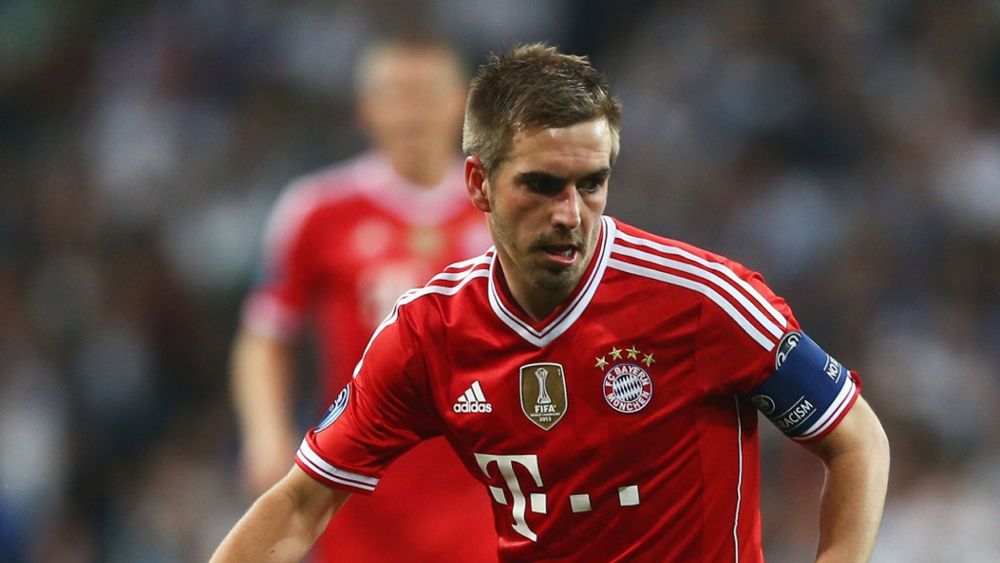
85. Philipp Lahm
One of the best full-backs in the world. Although naturally right-footed, he played with equal ease on both sides of defence.
He spent almost his entire career at Bayern Munich and was a key figure for the German national team with 113 participations in total.
With Bayern, he won eight Bundesliga titles, seven domestic cups, one League Cup, three German Super Cups, one Champions League, and with Germany he lifted the 2014 World Cup.
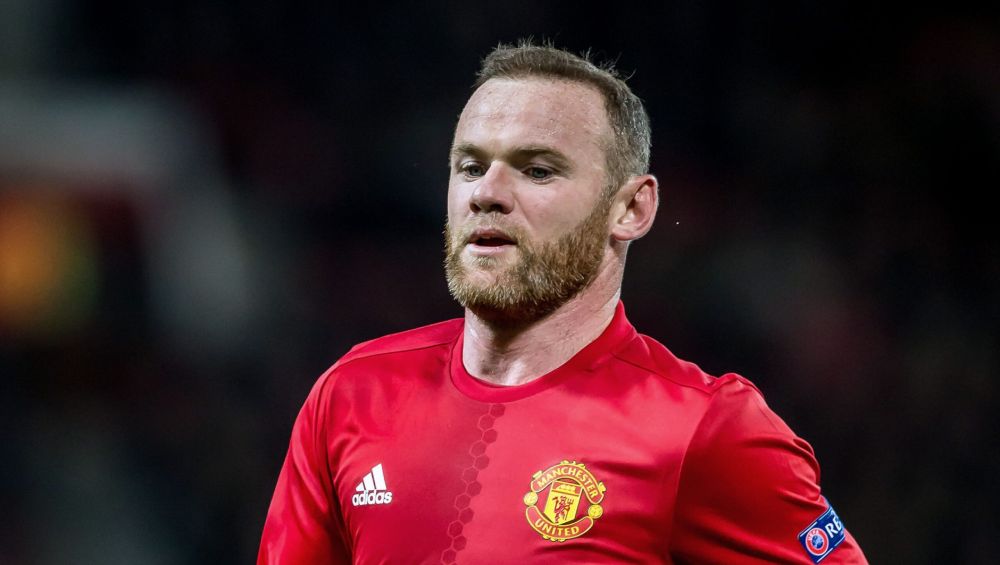
84. Wayne Rooney
We’re talking about Manchester United’s all-time leading scorer and the second-highest scorer in England’s national team history, behind Harry Kane.
A player who showed his goalscoring instinct from a very young age, he was rightly labelled a “wonderkid” after his outstanding performances at Euro 2004.
At just 18 years old, he scored his first Champions League hat-trick in a match against Fenerbahce in 2004. He went on to score a total of 253 goals, making him the second-highest scorer in Premier League history, behind Alan Shearer.
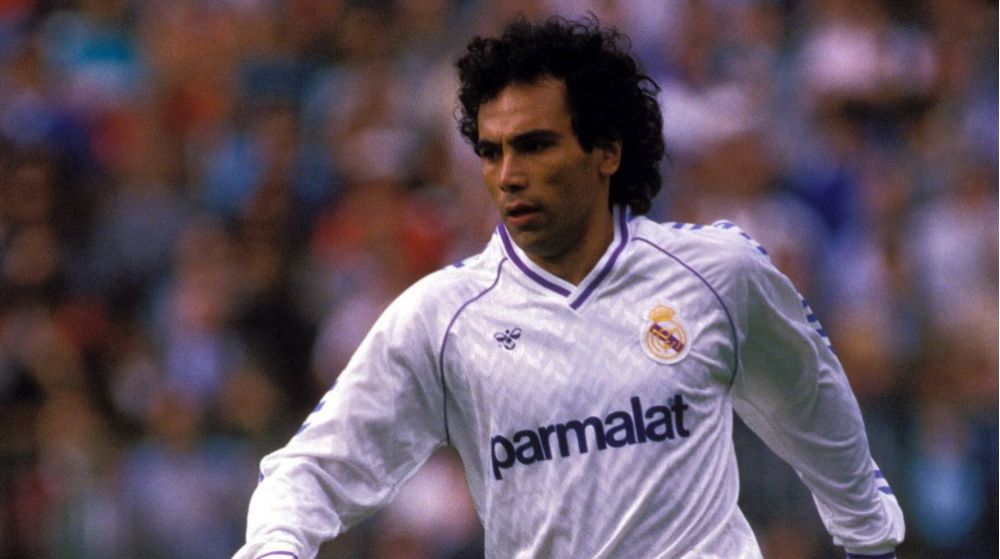
83. Hugo Sánchez
The greatest Mexican footballer of all time and one of the top scorers in both Real Madrid and La Liga history.
He played for both Madrid-based clubs, but it was at Real Madrid where he truly made his mark. He won five consecutive league titles between 1985 and 1990, finishing as top scorer in four of those five seasons. In short, a true goal machine.
The best season of his career came in 1989, when he won La Liga, the Copa del Rey, and scored 45 goals in 42 matches, winning the European Golden Shoe.
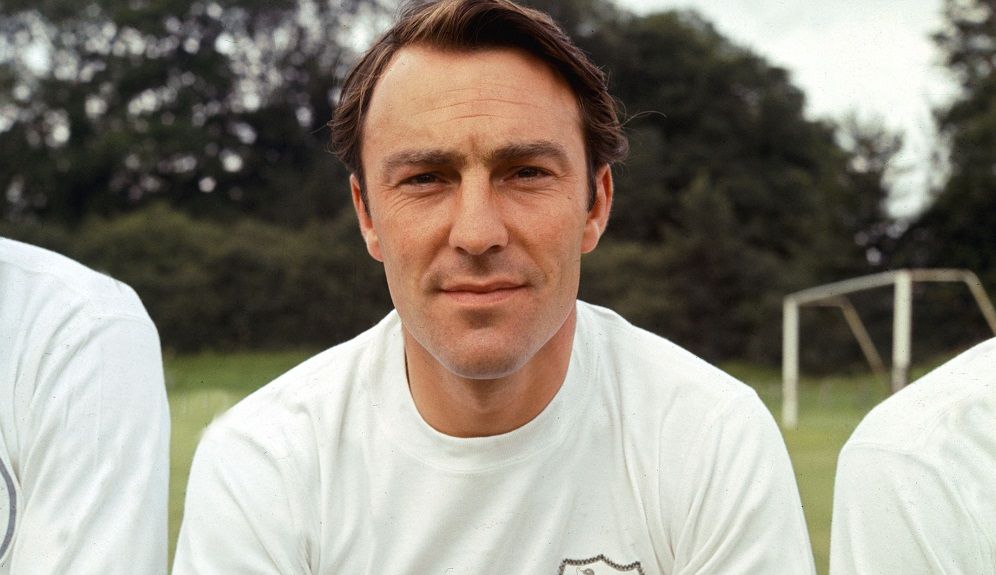
82. Jimmy Greaves
A prolific goalscorer and a member of the England national team that won the 1966 World Cup.
He mainly played for Chelsea and Tottenham Hotspur and remains the all-time top scorer in the history of the English top division with 357 goals. He also holds the record for the most hat-tricks for England, with six.
With Tottenham, he won the 1963 Cup Winners’ Cup, scoring twice in the final. The match ended 5–1, and Spurs became the first English club to win a European trophy.
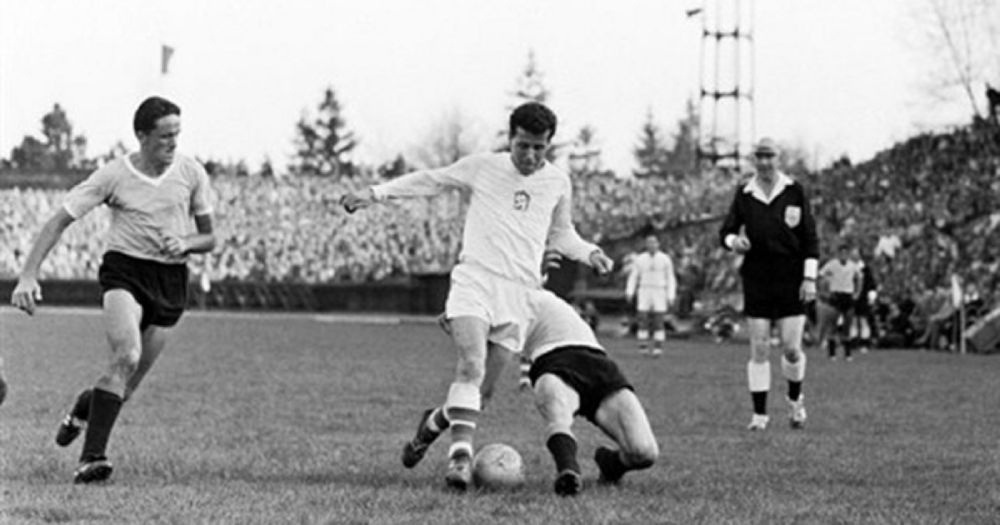
81. Josef Masopust
He is the embodiment of fair play. At the 1962 World Cup, the most violent and rough tournament in history, he chose not to challenge the injured Pelé, who had to remain on the pitch due to the absence of substitutions.
A true leader, he went on to inspire Czechoslovakia all the way to the World Cup final in 1962, where they were defeated by the brilliant Brazil team of Garrincha and Didi. He was awarded the Ballon d’Or in 1962.
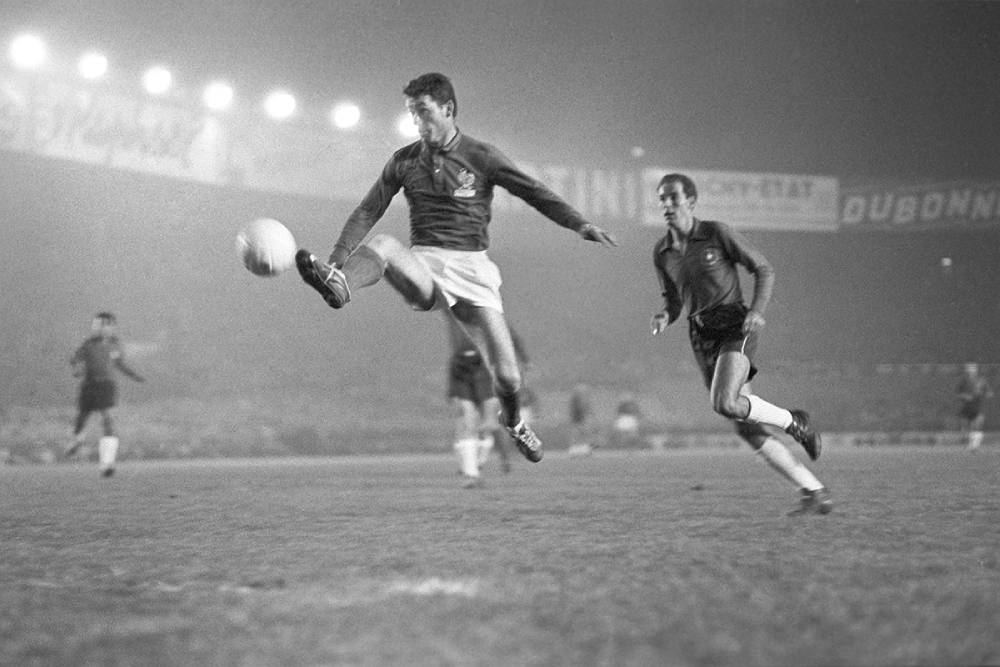
80. Just Fontaine
At the 1958 World Cup, the 18-year-old Pelé stole much of the spotlight. But it was impossible to ignore the tournament’s top scorer and the only player ever to score 13 goals in a single World Cup.
That player was Just Fontaine. The French striker was a gifted goalscorer. Born in Morocco, he played club football for Casablanca, Nice, and Reims.
In total, he scored 227 goals in 248 club appearances and 30 goals in 21 matches for the French national team.
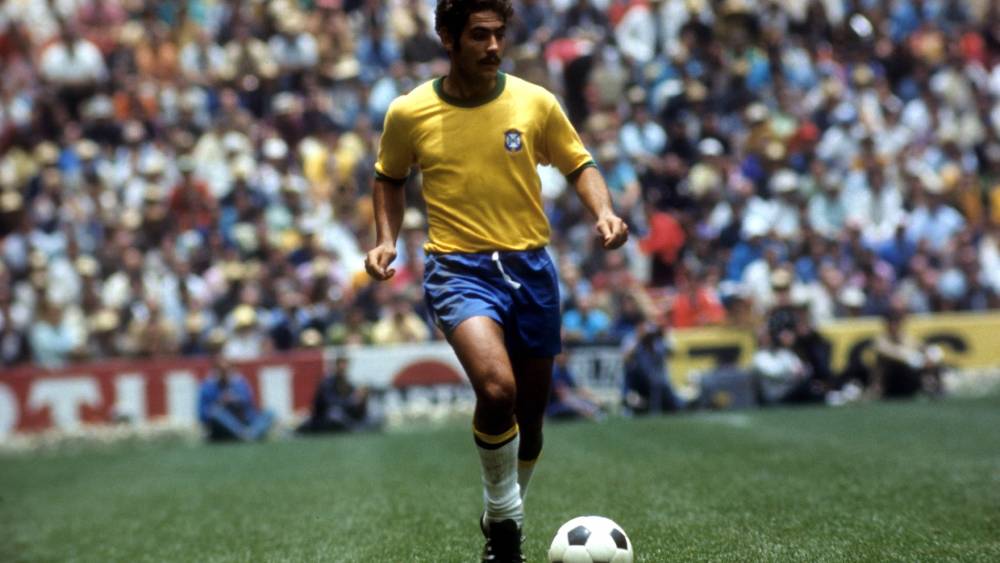
79. Rivellino
Thankfully, platforms like YouTube allow us to watch matches from past eras. Without them, younger generations might never have known players like Rivellino.
The Brazilian was an attacking midfielder who left his mark on the game from the mid-1960s to the early 1980s. He first spent nine years at Corinthians, and also played for Fluminense and Al Hilal. Of course, he is best remembered for his role with the Brazil national team, with whom he won the 1970 World Cup.
Let’s not forget that he perfected the flip-flap move, later made famous by players like Romário, Ronaldo, Ronaldinho, and Cristiano Ronaldo. What is it? Just look it up on YouTube!
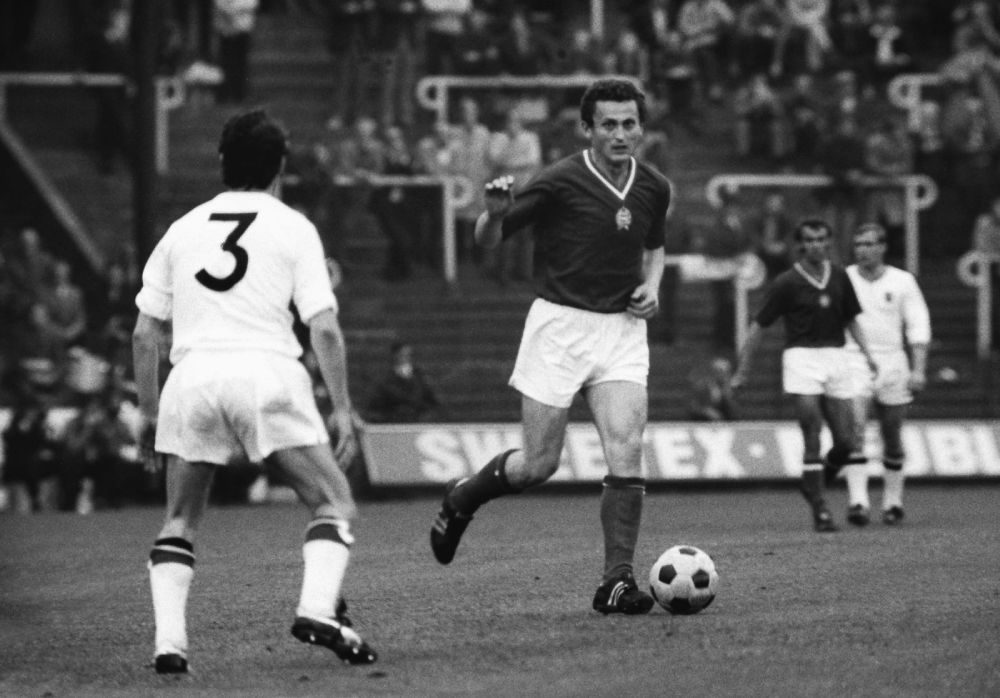
78. Flórián Albert
A Hungarian striker nicknamed “The Emperor,” known for his exceptional scoring ability.
He spent his entire 16-year career at Ferencváros and was outstanding for the Hungarian national team, scoring 31 goals in 75 appearances.
He was awarded the European Footballer of the Year (Ballon d’Or) in 1967.
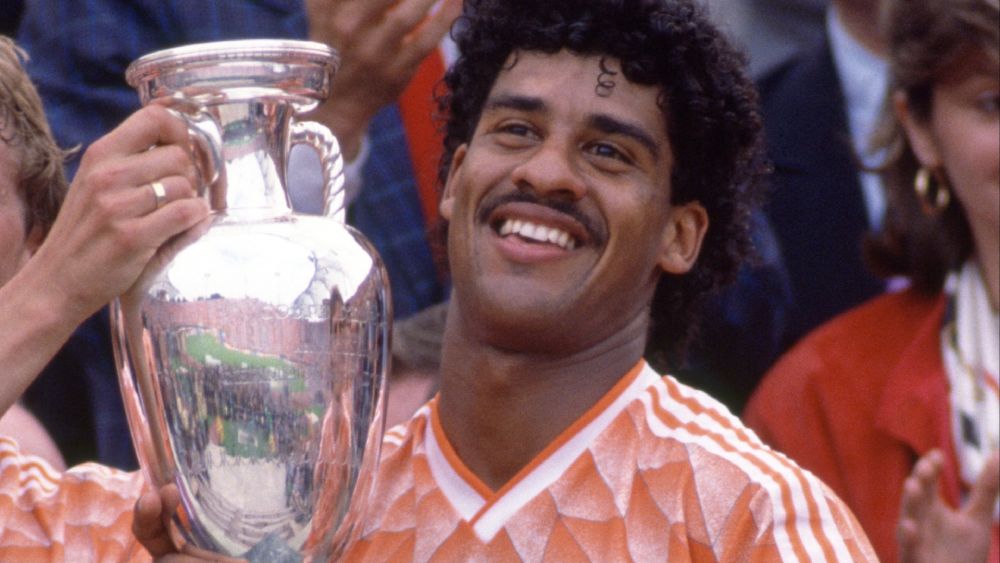
77. Frank Rijkaard
Rijkaard was a modern box-to-box midfielder who began his career at Ajax in the early 1980s, winning three Dutch league titles (1979, 1980, 1983) and the Cup Winners’ Cup in 1987.
In 1988, he moved to AC Milan alongside Marco van Basten, where he won two European Cups (1989, 1990) and Serie A titles in 1992 and 1993. In 1993, he returned to Ajax to finish his career, winning two more Dutch league titles (1994, 1995) and the Champions League in 1995.
With the Netherlands national team, he won the 1988 Euro.
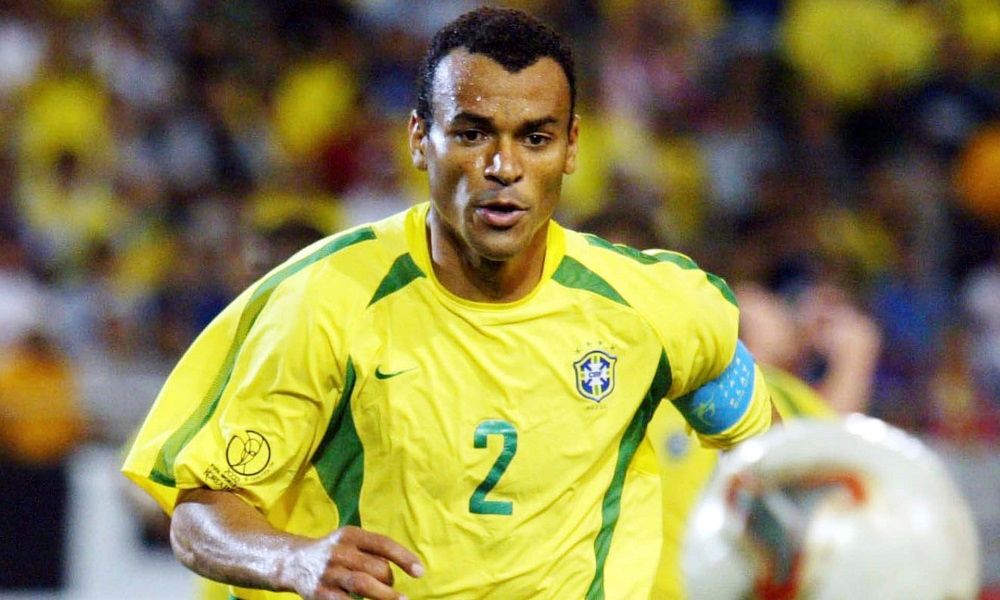
76. Cafu
Cafu… a name, a legacy! A gem both as a person and as a player. He played as a right-back and remains the only player in football history to have featured in three World Cup finals, winning two of them in 1994 and 2002.
For Brazil, he operated on the right flank, with Roberto Carlos on the left, forming arguably the greatest full-back partnership of all time. Both would push forward, creating overloads in midfield and making life extremely difficult for opposing defences.
His list of honours is extensive: Serie A titles with Roma in 2001 and AC Milan in 2004, a Champions League title with Milan in 2007, numerous trophies with São Paulo in Brazil, and with the Brazilian national team, two World Cups, two Copa América titles, and one Confederations Cup.
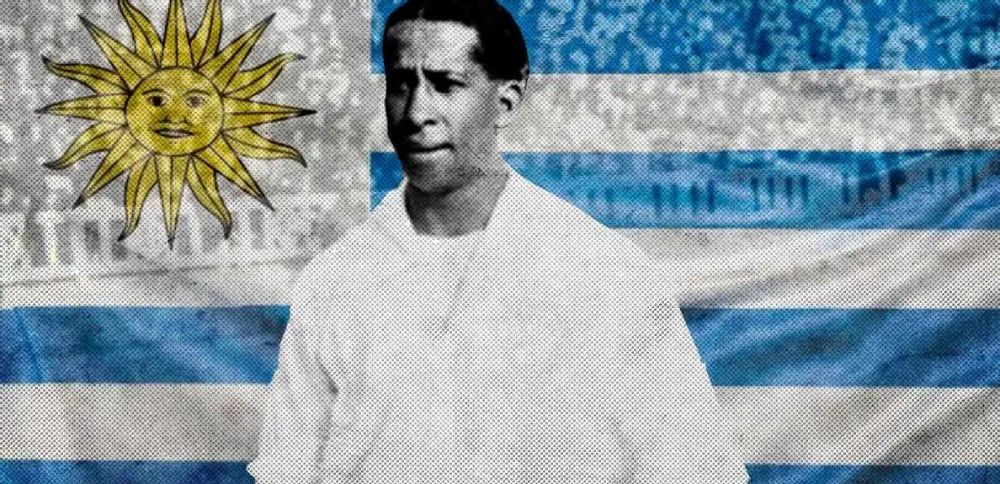
75. José Leandro Andrade
Despite his slender build, his technical ability helped him establish himself in Uruguay’s defensive line during the 1928 Olympic Games and the 1930 World Cup.
Nicknamed the “Black Marvel,” he stood out not only for his talent but also for breaking barriers in the sport. With Uruguay, he won every major title available: three Copa América titles (1923, 1924, 1926), the 1930 World Cup, and two Olympic gold medals in 1924 and 1928.
Notably, in 1924, by winning Olympic gold, he became the first black footballer to compete in the Olympic Games.
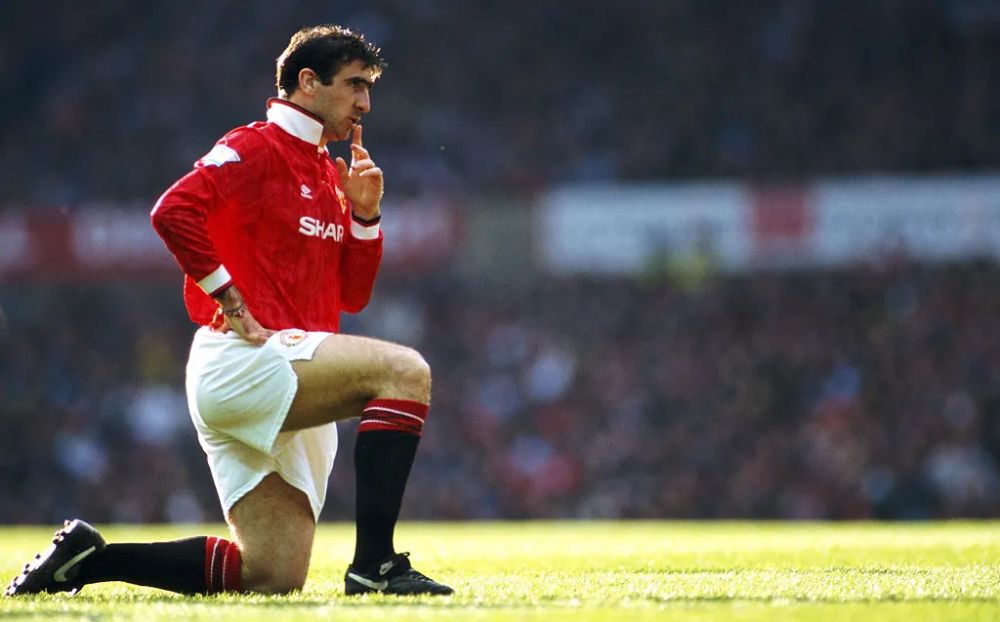
74. Eric Cantona
What can one say about Eric Cantona? Many credit him with sparking Manchester United’s footballing renaissance, helping transform the club into a dominant force in English football. He wore the iconic number 7 shirt, previously donned by George Best and Bryan Robson, and later by David Beckham and Cristiano Ronaldo.
Nicknamed “King Eric,” Cantona won four league titles in five seasons with Manchester United, as well as two domestic doubles.
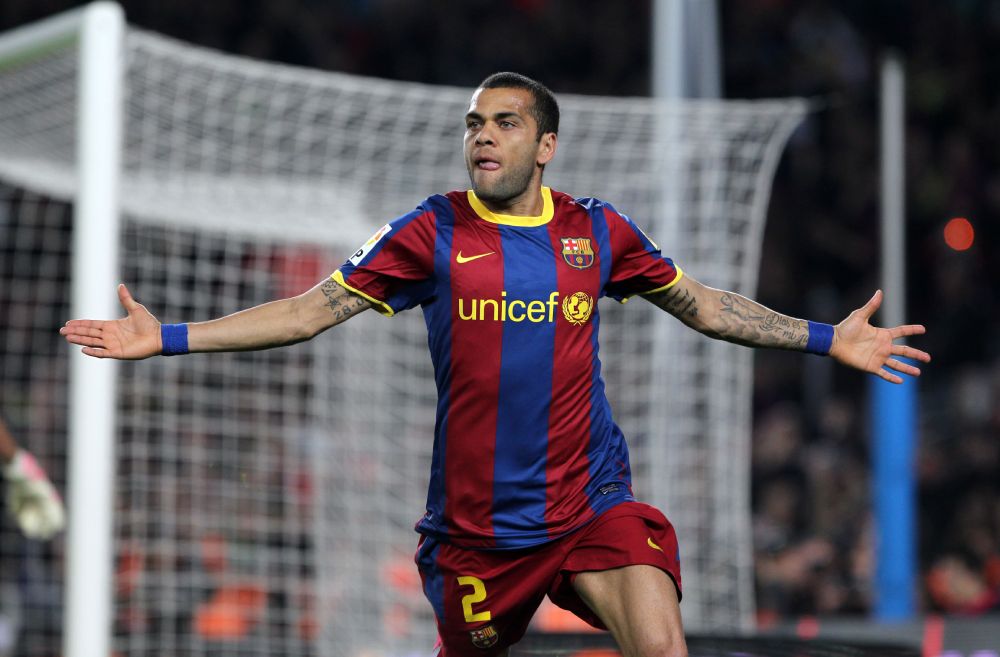
73. Dani Alves
Alves was a gifted right-back who could dominate the entire flank. As strong as he was defensively, he was even more effective going forward.
At Barcelona, where he truly excelled, he played a key role in Pep Guardiola’s system, often pushing forward to create overloads in attack, essentially becoming an additional midfielder alongside Iniesta, Xavi, and Messi.
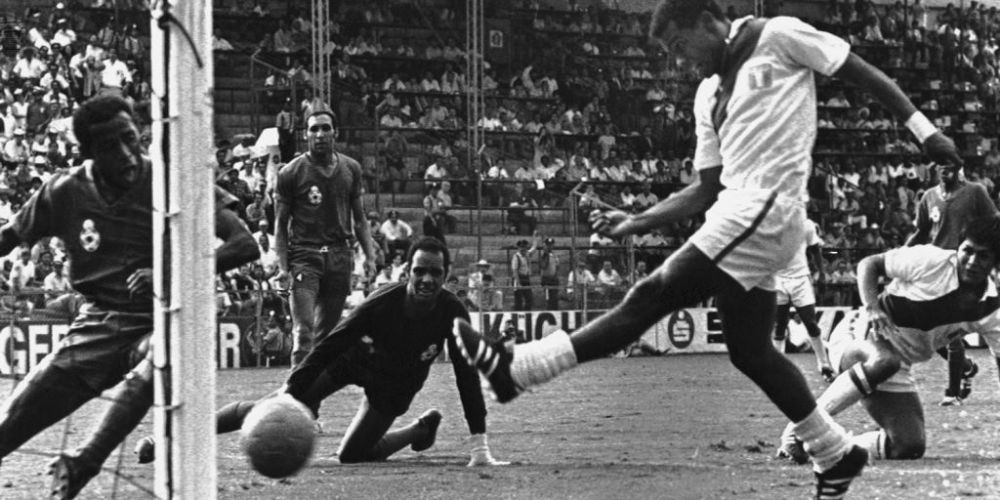
72. Teófilo Cubillas
The greatest Peruvian player in history. In both 1970 and 1978, he scored five goals in each tournament. The only others to achieve this are Miroslav Klose and Thomas Müller.
Nicknamed “El Nene” (“The Kid”), he stood out for his technical ability and his knack for scoring from set pieces. In 1975, he won the Copa América with Peru, which marked the pinnacle of his career.
He is Peru’s all-time top scorer, with 26 goals in 81 appearances, and in 2006 he was named the greatest Peruvian footballer of the 20th century.
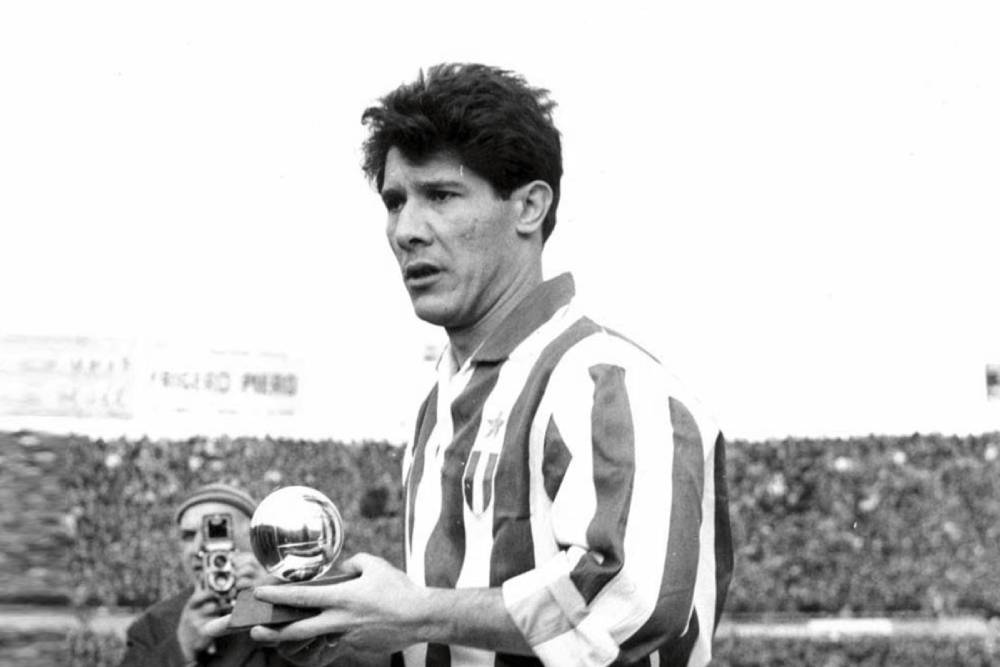
71. Omar Sívori
Omar Sívori could not be left out of this list.
Born in Argentina, he later acquired Italian citizenship (and played for both national teams), and wore the shirts of River Plate, Juventus, and Napoli. He possessed outstanding technical ability, great pace, and scored goals for fun. There was little he couldn’t do on the pitch.
He scored 176 goals in 341 club appearances and won three Serie A titles and three Coppa Italia trophies with Juventus, as well as three Argentine league titles with River Plate. He also won the Ballon d’Or in 1961.
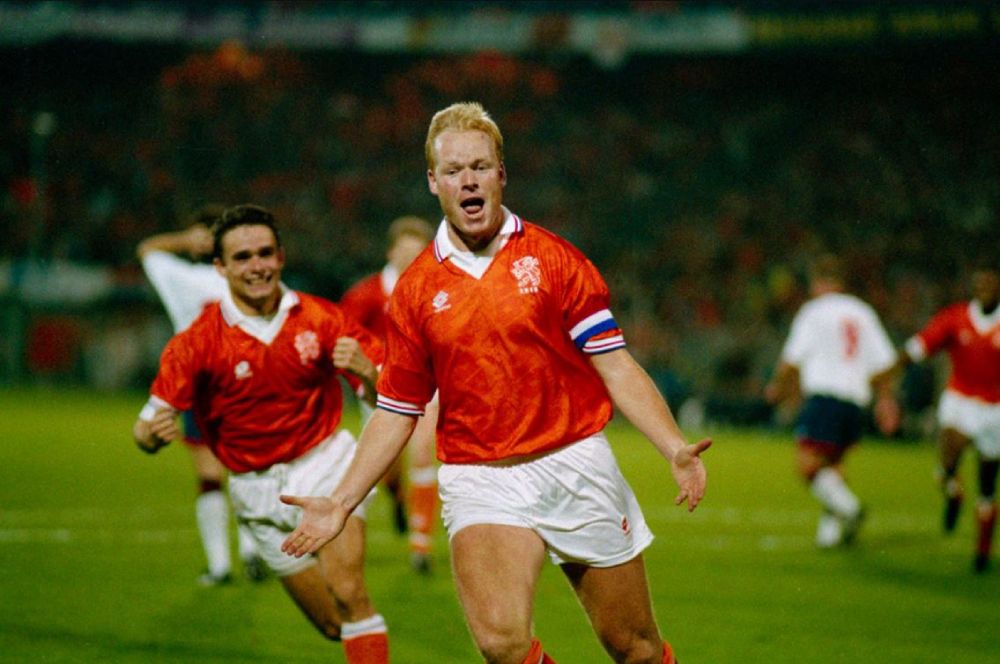
70. Ronald Koeman
Outstanding technical ability for a defender and a remarkable eye for goal.
He played as a sweeper and defensive midfielder. He is the highest-scoring defender in football history, with 253 goals, including 60 from free kicks. A member of the Netherlands team that won Euro 1988 against the Soviet Union, he also lifted the European Cup with PSV Eindhoven in the same year.
He also won numerous league titles and cups with PSV Eindhoven, as well as with Barcelona in Spain.
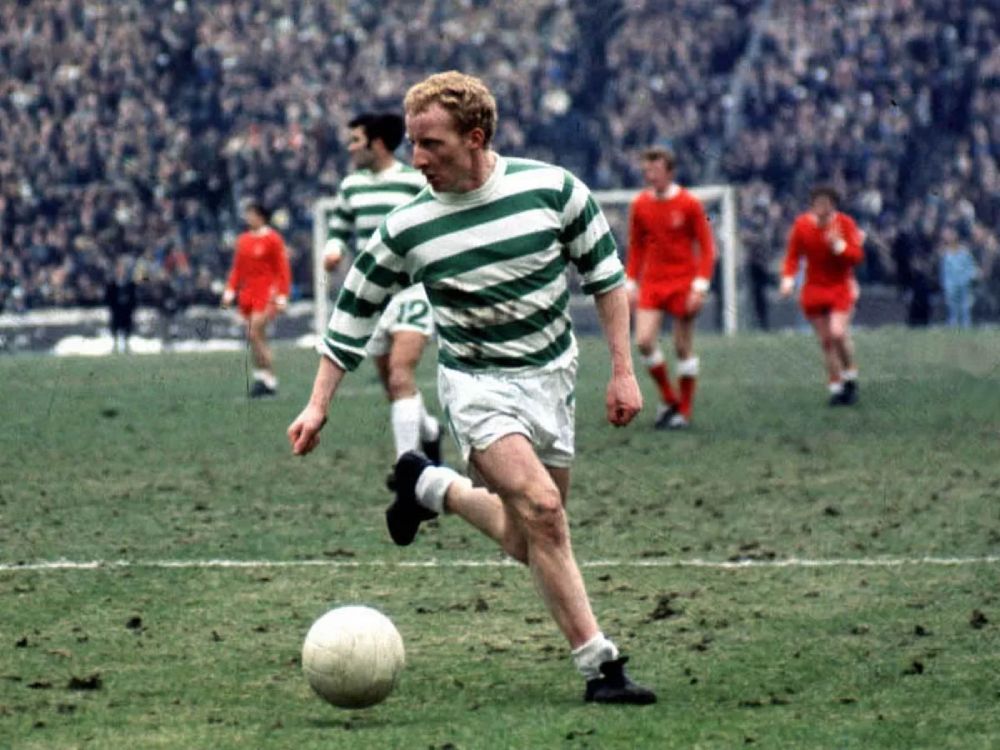
69. Jimmy Johnstone
A gifted right winger with exceptional dribbling skills.
He played for Celtic from 1962 to 1975 and was part of the legendary “Lisbon Lions” team that won the European Cup in 1967, defeating Inter 2–1 in the final. Since 2008, two years after his death, his statue has stood outside Celtic Park as a tribute to his contribution to the club.
He scored 82 league goals in 308 Scottish league appearances, and a total of 135 goals in 529 matches for Celtic in all competitions.
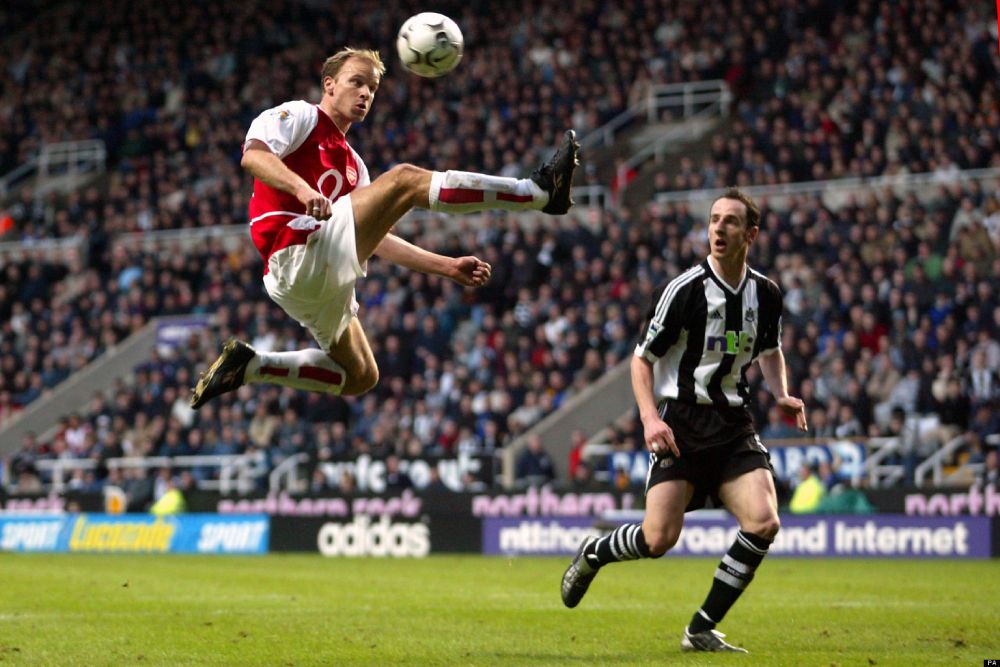
68. Dennis Bergkamp
Although he was Dutch, the peak of his career came in England.
At Ajax, where he began his career, he won one Dutch league title, two domestic cups, one UEFA Cup, and one Cup Winners’ Cup.
He then moved to Inter, where he won the UEFA Cup, before Arsène Wenger brought him to Arsenal in 1995, where he stayed until 2006 and formed a brilliant partnership with Thierry Henry. With Arsenal, he won three Premier League titles, four FA Cups, and three FA Community Shields.
One of the defining moments of his career was his famous dribble against Greece international Nikos Dabizas while playing for Newcastle, finishing with one of the most beautiful goals in Premier League history.
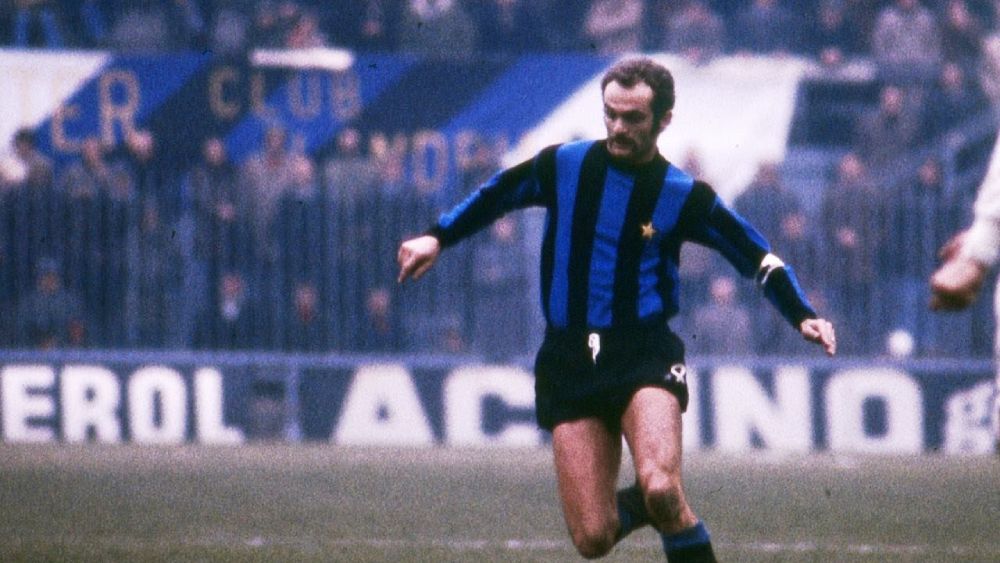
67. Sandro Mazzola
Sandro Mazzola was the son of Valentino Mazzola, the captain of the legendary Torino side that tragically died in a plane crash along with most of the team in 1949.
Sandro spent his entire career in Italy with “Grande Inter”, playing for the club from 1960 to 1977. He won four league titles (1963, 1965, 1966, 1971), two consecutive European Cups in 1964 and 1965, and a European Championship with Italy in 1968.
A gifted attacking midfielder, he stood out for his creativity and productivity in front of goal. He made 565 official appearances in all competitions and scored 158 goals.
He passed away in September 2026 at the age of 83.
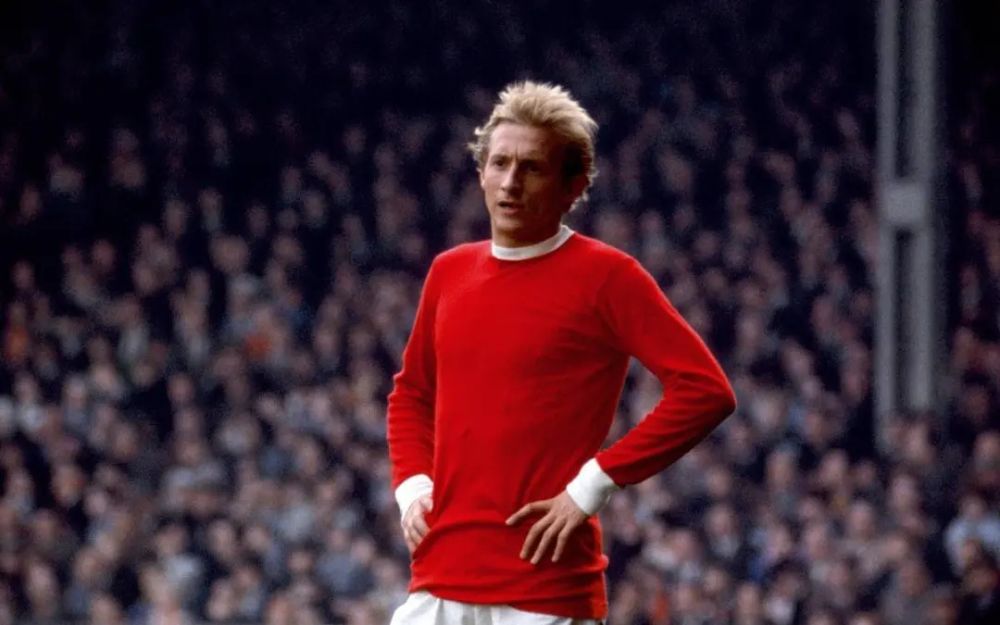
66. Denis Law
The Scottish striker at Manchester United formed a legendary attacking trio with Bobby Charlton and George Best, one of the greatest in football history.
In his career, he broke the record for the most expensive transfer in England three times. He won two English league titles, one FA Cup, and one European Cup in 1968.
Individually, he won the Ballon d’Or in 1964, finished as top scorer of the European Cup in 1969, and was voted Scotland’s greatest player of the last 50 years in 2003.
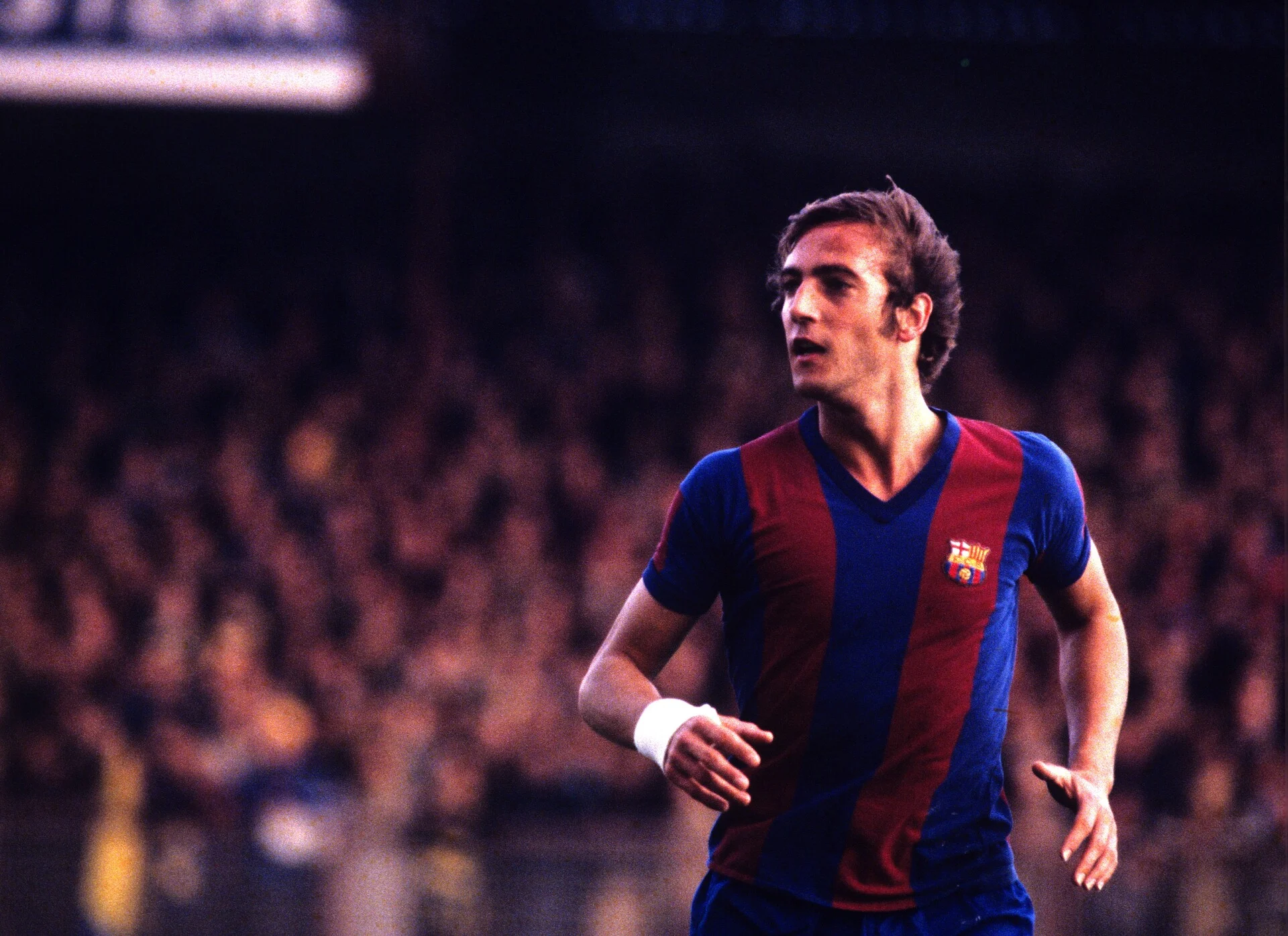
65. Johan Neeskens
A tireless midfielder, equally capable of scoring, passing, assisting, and covering defensive gaps, a true “Swiss Army knife” on the pitch.
Sharing the same first name as Johan Cruyff, he was nicknamed “the Second Johan,” and the two formed a brilliant and dynamic duo. With Ajax, he won three consecutive European Cups (1971, 1972, 1973) before moving to Barcelona, following Cruyff.
He played in two consecutive World Cup finals in 1974 and 1978 with the Netherlands national team. In the 1974 final, he scored a penalty against West Germany, but it wasn’t enough for the Dutch to lift the trophy.
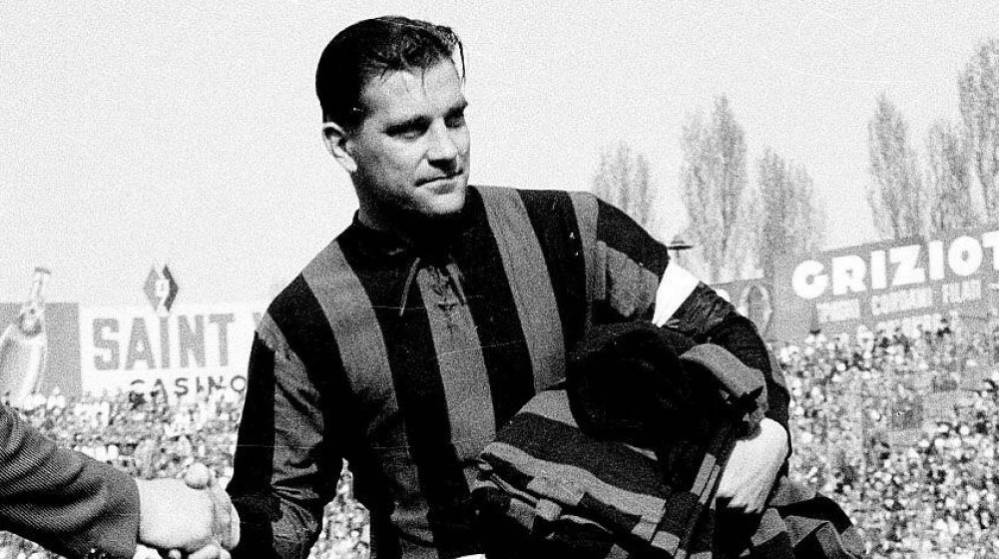
64. Gunnar Nordahl
How many people know who AC Milan’s all-time top scorer is? Probably not many, as it’s not a name from the club’s modern era, but from the mid-20th century.
That man is Gunnar Nordahl. The Swedish striker knew exactly how to score goals, lots of them. He joined Milan in 1949 and stayed until 1956, scoring an incredible 221 goals. A tally that still places him at the top of the club’s all-time scoring chart, ahead of Andriy Shevchenko, who sits second with 175.
Nordahl was part of the legendary Swedish trio “Gre-No-Li,” alongside Gunnar Gren and Nils Liedholm. His nickname was “Il Pompierone” (“The Fireman”), as that was his profession back in Sweden.
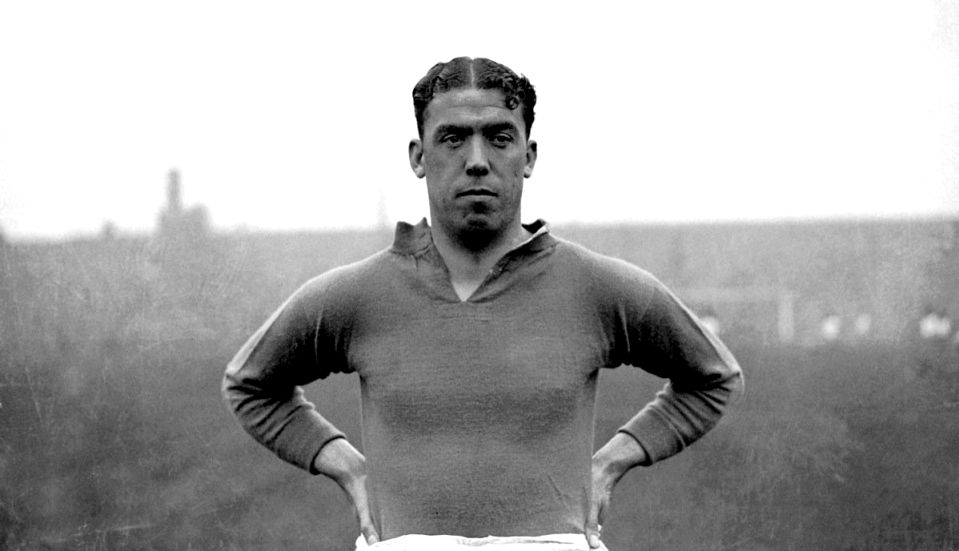
63. Dixie Dean
A prolific goalscorer, he found the net 379 times in 437 appearances. The Englishman still holds the seemingly untouchable record of 60 goals in a single English league season, achieved with Everton. This record stood as a European benchmark for 20 years, until it was broken in 1946.
He won two English league titles, in 1928 and 1932, finishing as the top scorer in both seasons.
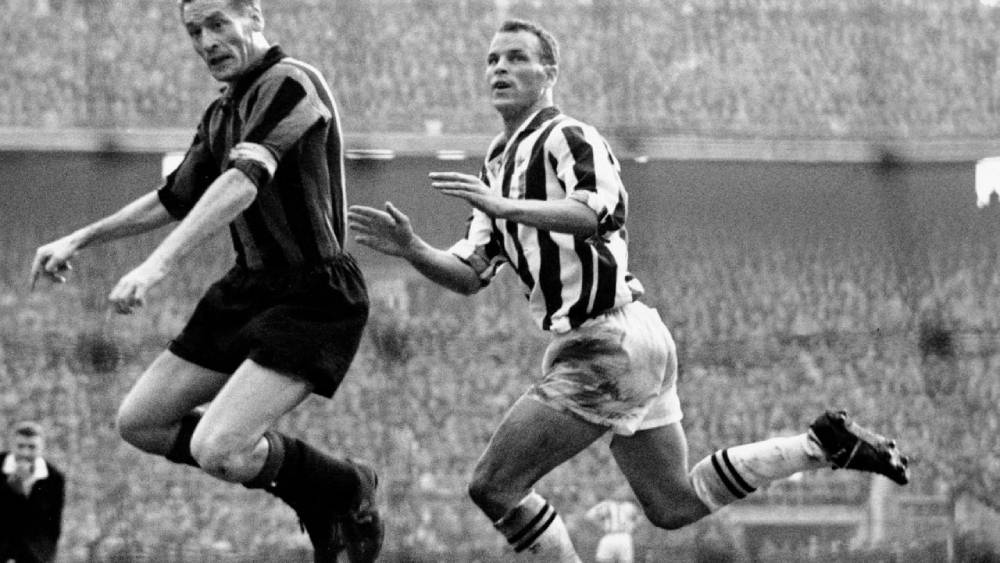
62. John Charles
Before Ryan Giggs and Gareth Bale, there was another great Welsh footballer, one of the finest in the history of the game. John Charles had something truly remarkable. He could play with equal ease both as a striker and as a central defender.
He enjoyed a great career at Leeds before moving to Juventus, where, alongside Omar Sívori and Giampiero Boniperti, they worked wonders together. The trio was famously known as the “Holy Trinity”.
Standing at 1.88m, he was also nicknamed the “Gentle Giant,” as he was never sent off in his career, he believed in never striking an opponent. In 715 appearances, he scored 370 goals.
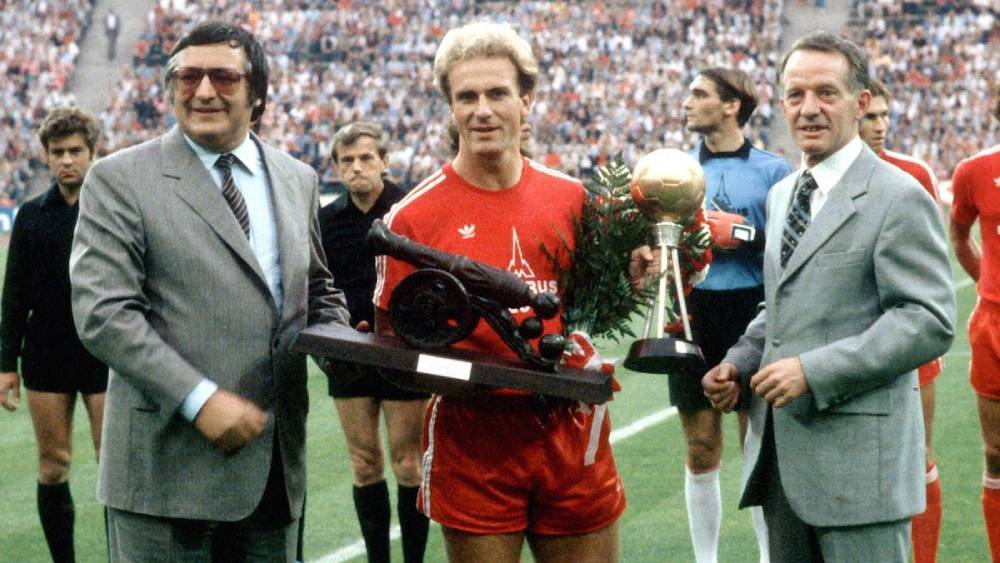
61. Karl-Heinz Rummenigge
Despite his illustrious career, Karl-Heinz Rummenigge was left with one regret: he never managed to win the World Cup, despite reaching two finals and losing both.
The German striker was a gifted goalscorer and an outstanding forward. He spent ten years at Bayern Munich, winning two European Cups, one Intercontinental Cup, two league titles, and two domestic cups.
He won the European Championship in 1980 with West Germany. However, he finished as a runner-up in the 1982 World Cup final against Italy and again in 1986 against Argentina.
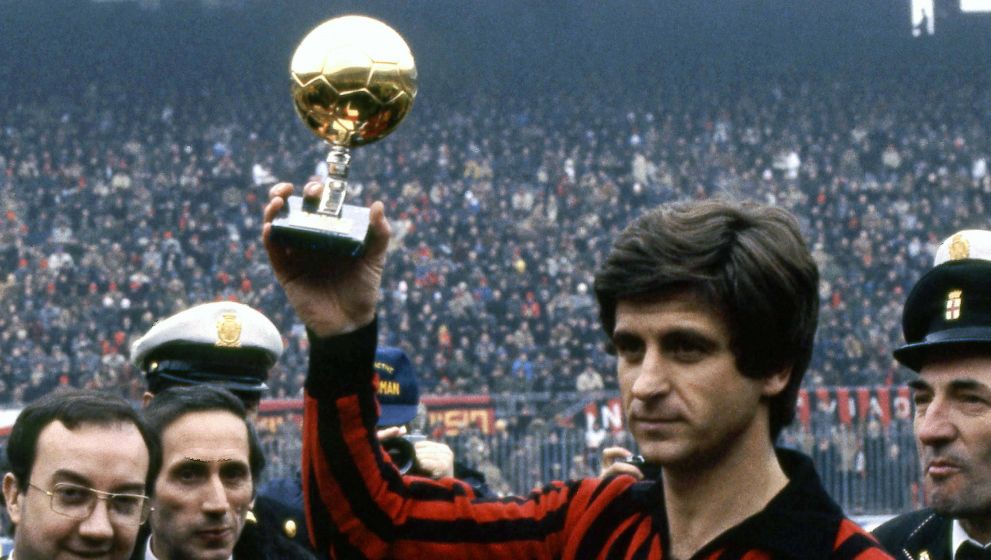
60. Gianni “Giovanni” Rivera
He is considered one of the greatest footballers of all time and, alongside Giuseppe Meazza, one of Italy’s finest. He spent 19 years at AC Milan, winning everything there was to win: Serie A titles, domestic cups, UEFA competitions, and European Cups.
Before the 1970 World Cup, England manager Alf Ramsey was asked to name the four best Italian players. Jokingly, he replied: “Rivera, Rivera, Rivera, and Rivera”.
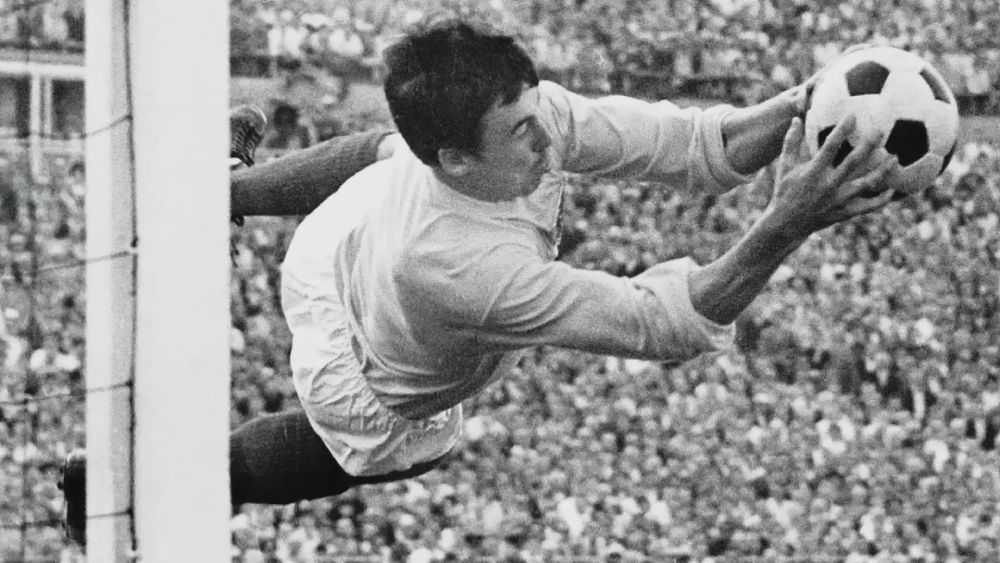
59. Gordon Banks
The English goalkeeper who guarded the net for England in their only World Cup triumph in 1966.
He is widely regarded as one of the greatest goalkeepers of all time. He was voted the second-best goalkeeper of the 20th century, behind Lev Yashin, ranking above even Dino Zoff. He was named Goalkeeper of the Year for six consecutive years, from 1966 to 1971.
The defining moment of his career was an incredible save from a powerful header by Pelé at the 1970 World Cup, widely known as the “save of the century”.
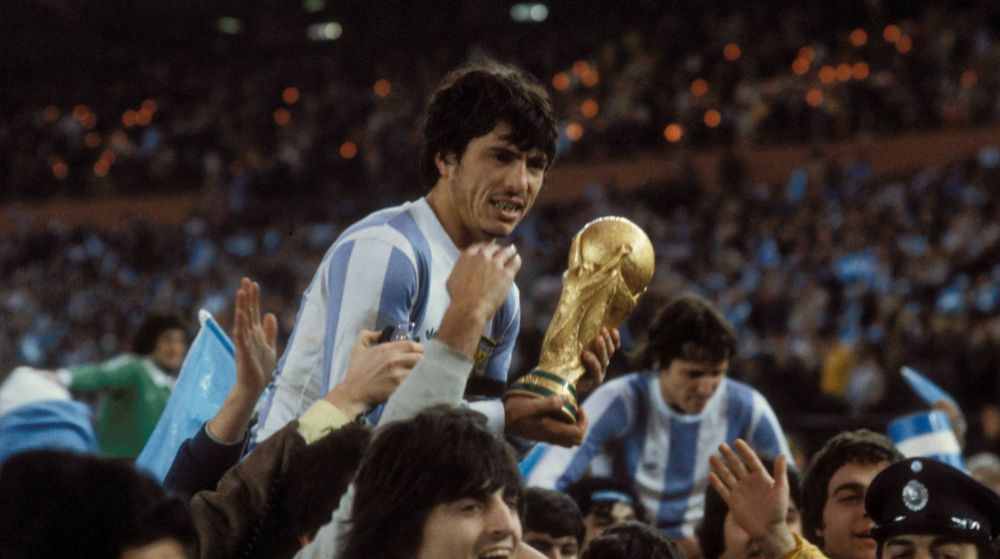
58. Daniel Passarella
He is regarded as one of the greatest centre-backs of all time.
He had the whole package: strength, tackling, aerial ability, and excellent positioning in defence. At the same time, he was very comfortable on the ball, capable of organising play and building attacks from the back. But that wasn’t all. He also managed to score an incredible 175 goals during his career.
Alongside all these qualities, he possessed strong leadership skills. It’s no coincidence he was nicknamed “El Gran Capitán” (“The Great Captain”).
He captained Argentina to World Cup glory in 1978.
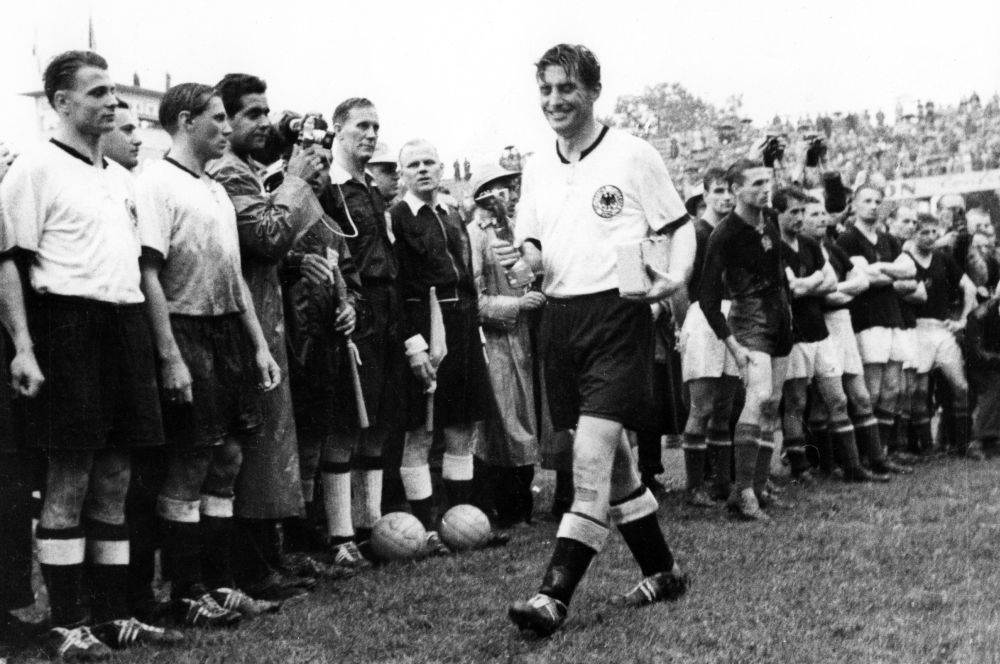
57. Fritz Walter
A tough and resilient attacking midfielder. He particularly enjoyed playing in difficult conditions and was known to perform even better in the rain.
At club level, he remained loyal to Kaiserslautern throughout his career, despite interest from many other teams. He achieved something remarkable: over 20 years at Kaiserslautern, he averaged nearly a goal per game.
The greatest moment of his career came as captain of West Germany, leading them to victory in the 1954 World Cup against the mighty Hungary side of that era.
56. Juan Alberto Schiaffino
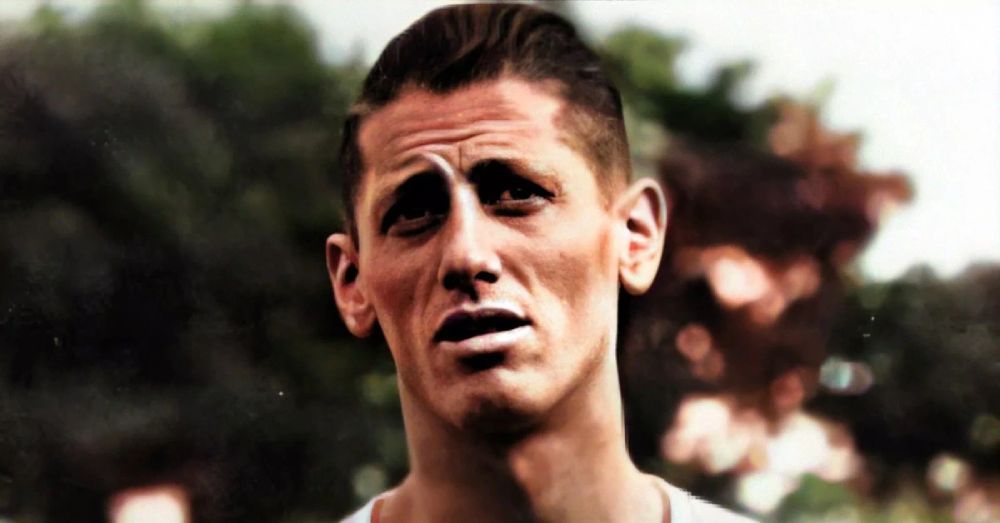
Also known by the nickname “Pepe” (which means “pepper” in Italian), he had a physique that didn’t typically resemble that of a footballer. A tall and slender attacking midfielder, he possessed outstanding technical ability and a superb left foot, capable of both scoring and creating goals.
He was a key member of Uruguay’s national team that won the 1950 World Cup, even scoring the equaliser in the final.
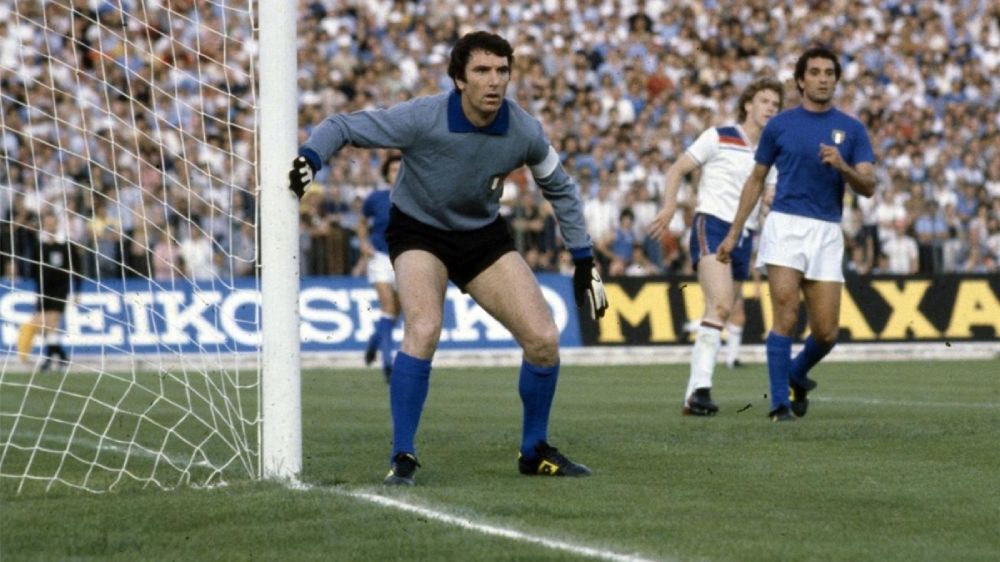
55. Dino Zoff
He is the only Italian footballer to have won both the European Championship and the World Cup, a remarkable achievement in itself. At club level with Juventus, he won six Serie A titles, two Coppa Italia trophies, and one UEFA Cup (now known as the Europa League).
He is widely regarded as one of the greatest goalkeepers of all time.
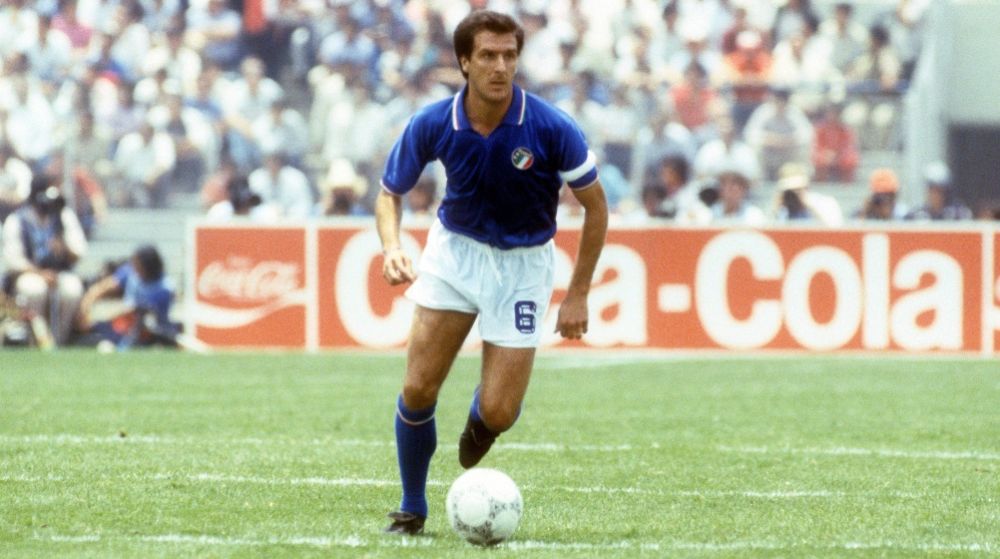
54. Gaetano Scirea
An outstanding Italian defender. To understand his greatness, his performances were so exceptional that he kept Franco Baresi out of the Italy national team’s defence. With Juventus, he achieved a unique feat: winning every major FIFA and UEFA club competition.
He was also a key member of Italy’s 1982 World Cup-winning team.
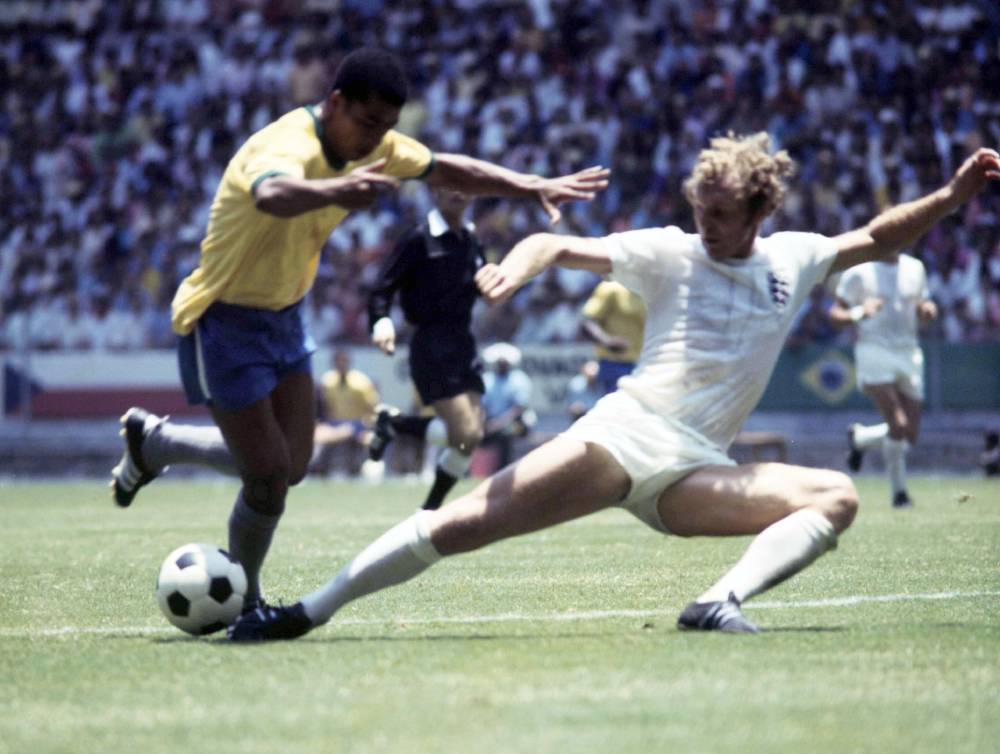
53. Jairzinho
Jairzinho is one of the three players in football history to have scored in every match of a single World Cup. And not just any tournament, but the 1970 World Cup in Mexico, won by Brazil, one of the greatest teams the sport has ever seen.
He scored seven goals in six matches for the Seleção, although the tournament’s top scorer was Gerd Müller with ten goals. Over his club career, he also found the net regularly, scoring 272 goals in 570 appearances.
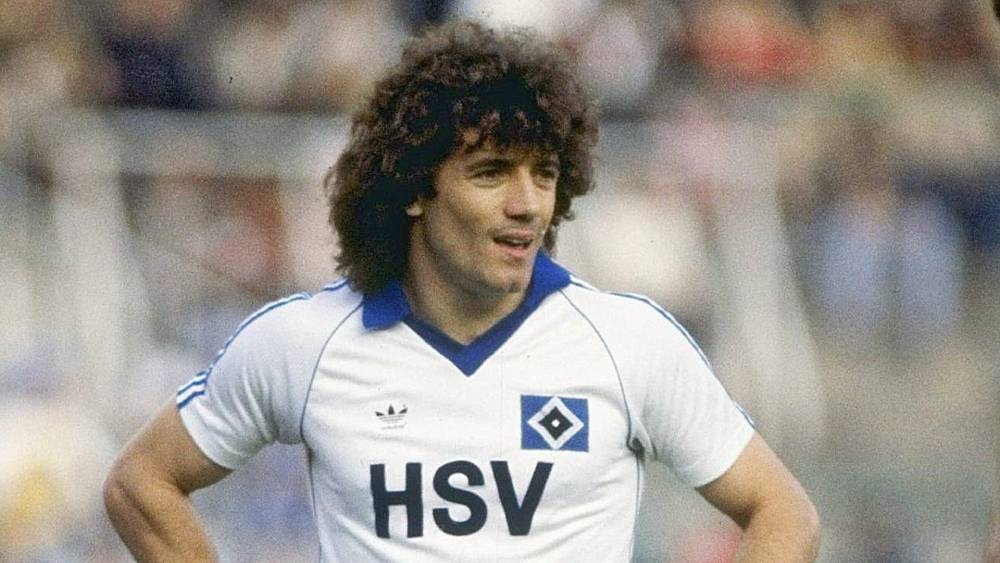
52. Kevin Keegan
Kevin Keegan, who recently passed away, was the only English player to have won the Ballon d’Or twice! That’s how good he was.
This outstanding forward made his name in English football during his six years at Liverpool, where he won one European Cup, two UEFA Cups, three league titles, and one FA Cup. He also played for Hamburg, where he won the Bundesliga, and it was there that he claimed both of his Ballon d’Or awards.
He passed away in July 2026 at the age of 75.
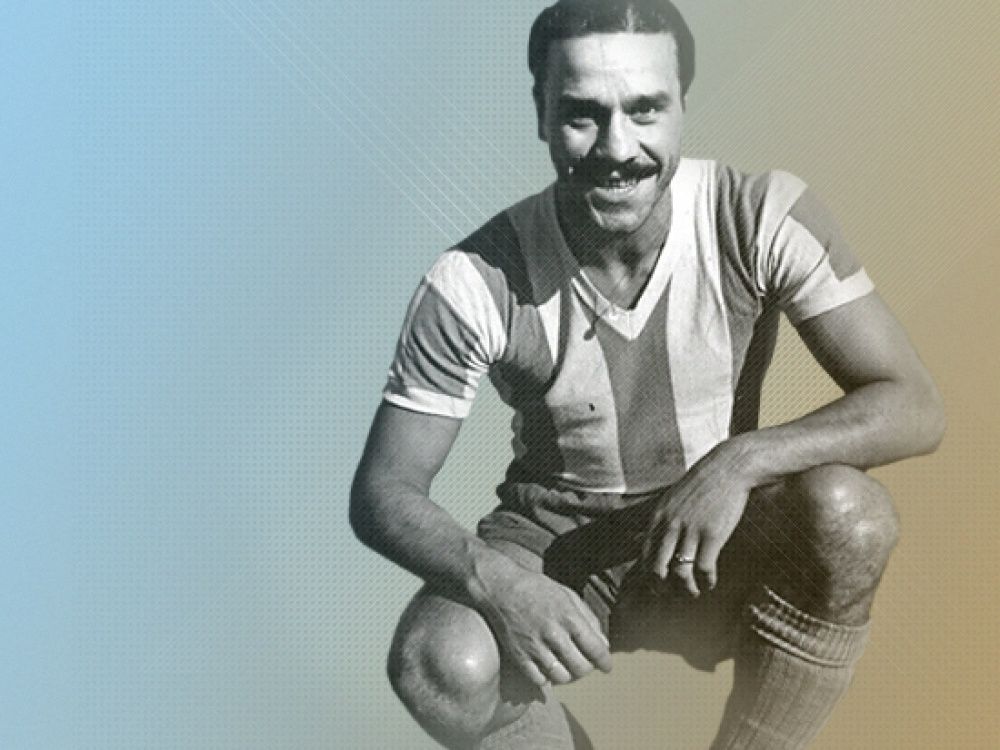
51. José Manuel Moreno
Α forward with extraordinary talent, a member of River Plate’s legendary 1940s team known as “La Máquina,” as well as Argentina’s national team that won the Copa América in 1941 and 1947.
Alfredo Di Stéfano once said about him: “Moreno was the leader. The best footballer I have ever seen. An artist, a painter. An artist of theatre, cinema, a dancer.”
Top 50 Footballers
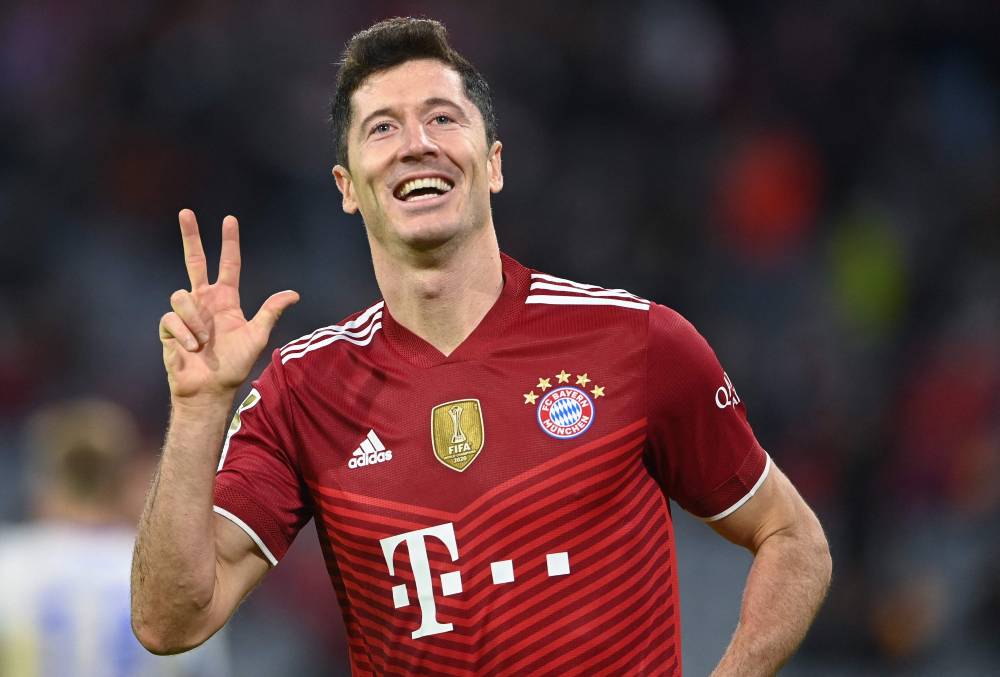
50. Robert Lewandowski
A pure goalscoring machine, that is exactly what Robert Lewandowski is.
The Polish striker never gets tired of scoring, and we simply could not leave him out of this list. Let the numbers speak for themselves. At Bayern Munich, where he played from 2014 to 2022, he scored 344 goals in 375 appearances across all competitions. Since 2022, he has been playing for Barcelona, where he has scored 73 goals in 107 appearances.
In total, at club level, he has 582 goals in 783 matches. He has won everything: league titles, domestic cups, and the Champions League.
The only major honour missing from his trophy cabinet is a Ballon d’Or, which he arguably deserved in 2021.
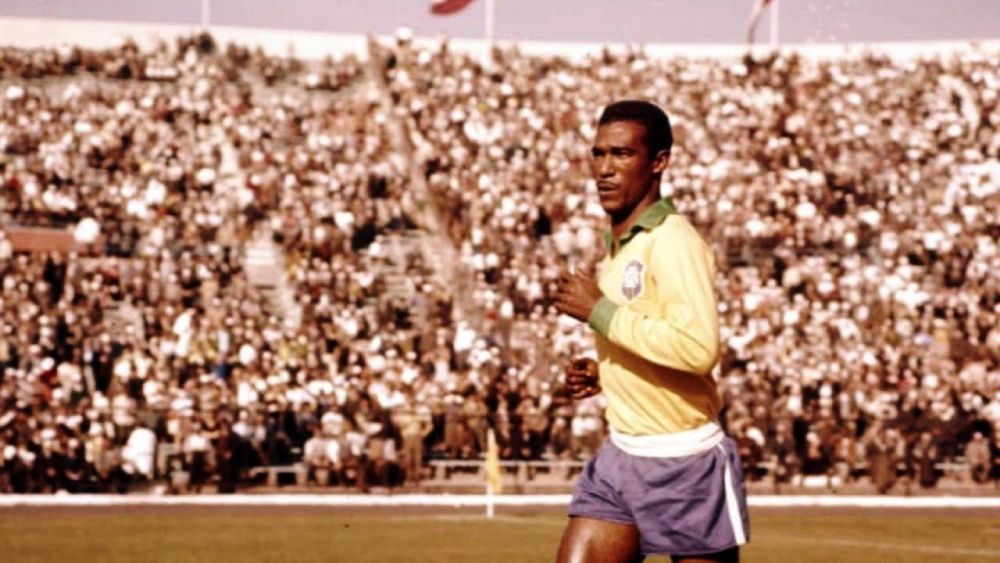
49. Didi
Didi was his nickname. His real name was Waldir Pereira, a Brazilian midfielder with outstanding technical ability.
He won two World Cups in 1958 and 1962. In particular, at the 1958 World Cup he was named the tournament’s best player and won the Golden Ball.
Pelé once said about him: “His genius was unbelievable. I am nothing compared to Didi. He is my idol, my role model. I will never reach him. I won’t even get close to his ankle. The first figurines I ever collected were Didi figurines.”
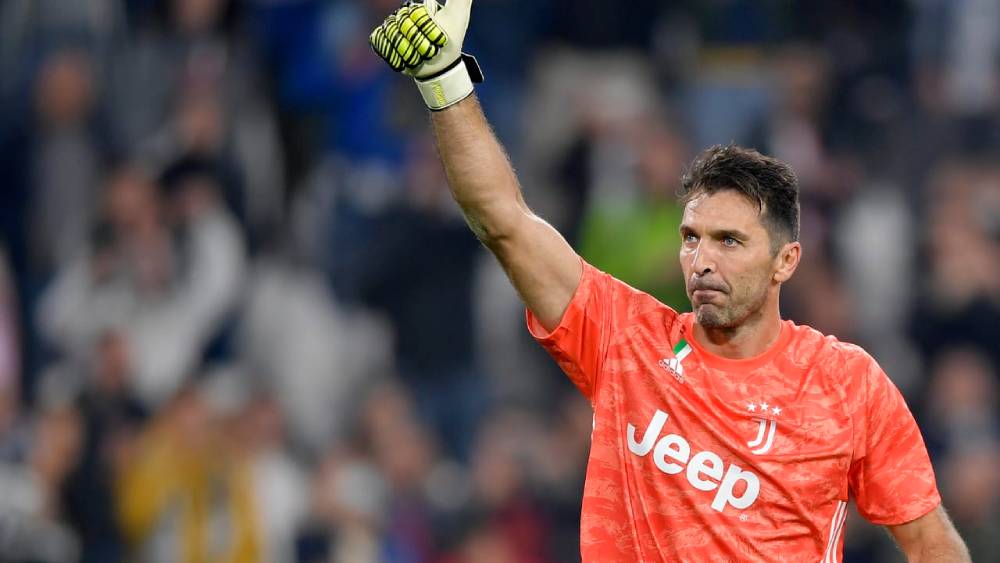
48. Gianluigi Buffon
It is not common to see goalkeepers in lists of the greatest footballers, but Gianluigi Buffon simply could not be left out. An exceptional goalkeeper, he played for three clubs in his career: Parma, Juventus, and Paris Saint-Germain, as well as the Italian national team.
The pinnacle of his career was winning the 2006 World Cup with Italy, where he conceded just two goals throughout the entire tournament, one from Zaccardo and one from Zinedine Zidane in the final.
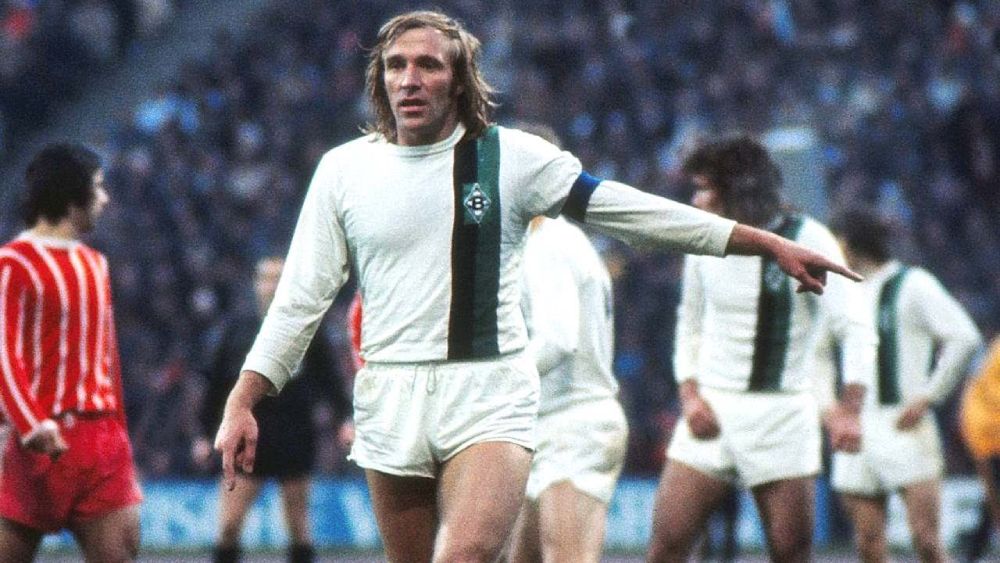
47. Günter Netzer
He made his mark during the era of West Germany, a highly gifted midfielder who orchestrated play and delivered precise passes to teammates no matter how far they were. He won domestic titles with Borussia Mönchengladbach in Germany before moving on to Real Madrid in Spain, where he also achieved success.
Ηe played for West Germany from 1965 to 1975, winning Euro 1972 and the 1974 World Cup.
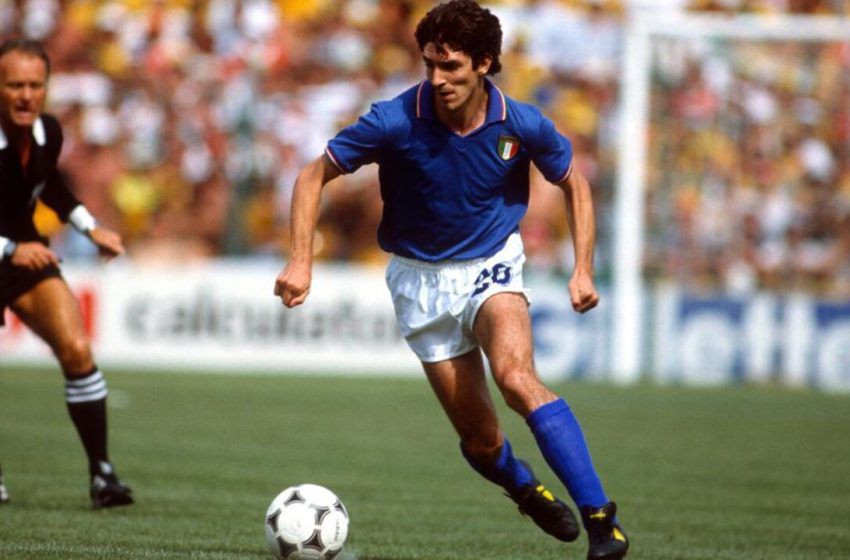
46. Paolo Rossi
1982 was the greatest year of Paolo Rossi’s career, both individually and collectively.
He won the World Cup and also claimed both the Golden Boot and the World Cup Golden Ball as top scorer and best player of the tournament, as well as the Ballon d’Or that year. In the quarter-finals against Brazil, he scored a hat-trick, an iconic performance that even inspired the title of his autobiography, “I Made Brazil Cry.”
A charismatic striker and a true leader, he won everything at club level with Juventus as well.
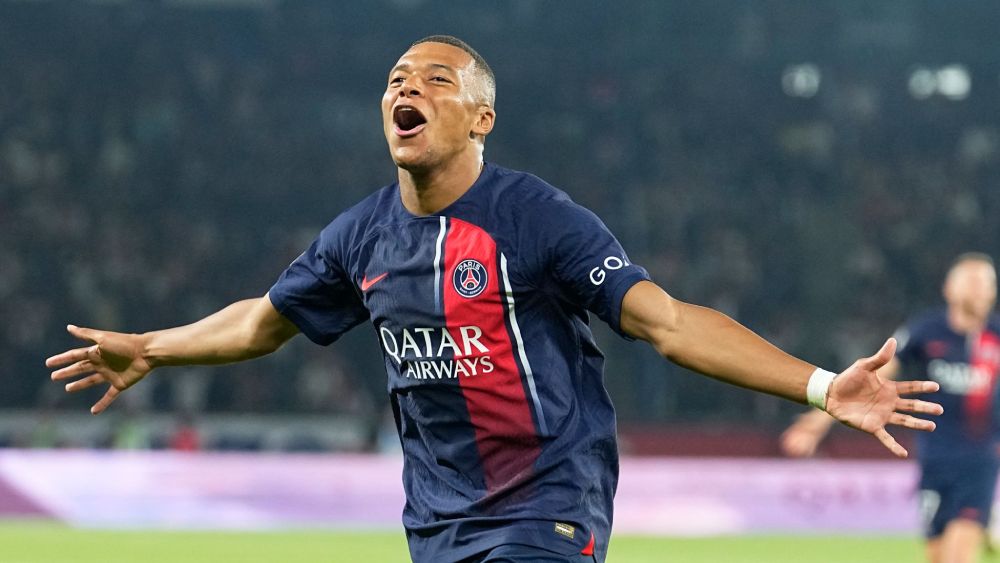
45. Kylian Mbappé
Mbappé has already won league titles, domestic cups, and French Super Cups with Monaco and Paris Saint-Germain. With France, he became World Champion in 2018, was a runner-up in 2022, and finished fourth with the “Blues” in 2026.
He has scored 22 goals, the most in World Cup history. And, if he remains fit, he still has at least two more World Cups ahead of him. In 2018, he became the youngest player ever to score in a World Cup final, surpassing Pelé. Now highly experienced, and currently one of the highest-paid footballers in the world, he aims to reach new heights with Real Madrid.
He has a complex personality and is often not particularly liked. There is no doubt about his great talent. Time and consistency will show whether he can eventually be ranked among the top 10 players of all time.
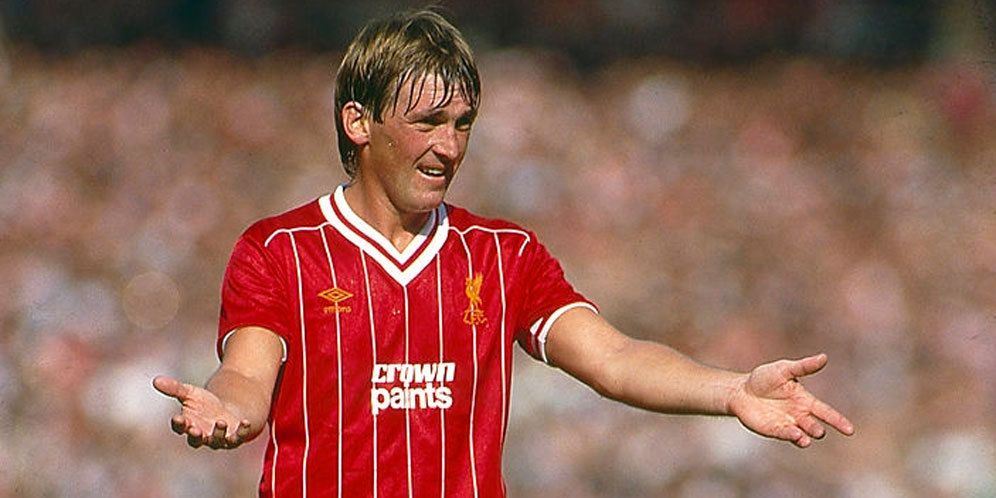
44. Kenny Dalglish
Kenny Dalglish was the first player to score 100 goals in both the Scottish and English top divisions. He also holds the record for 30 goals in 102 appearances for Scotland.
At Liverpool, where he starred, he formed a brilliant partnership with Ian Rush. He was also a player-manager for the Reds when they won the double in 1986.
In total, he won six league titles with Liverpool as a player, and three more as player-manager, while also lifting three European Cups with the club. Individually, he finished second in the 1983 Ballon d’Or, behind Michel Platini.
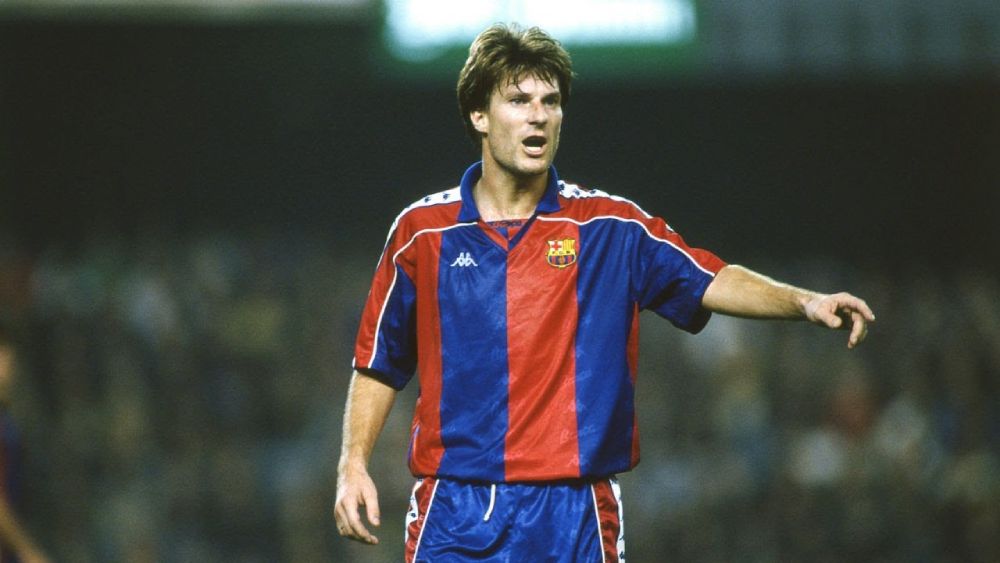
43. Michael Laudrup
A gifted playmaker, widely regarded as the greatest Danish footballer of all time. He was part of Johan Cruyff’s “Dream Team” at Barcelona, winning four consecutive league titles. The peak of his career came with Barcelona’s first European Cup triumph at Wembley in 1992.
He later joined their arch-rivals Real Madrid. Andrés Iniesta once described him as the “best player in history.”
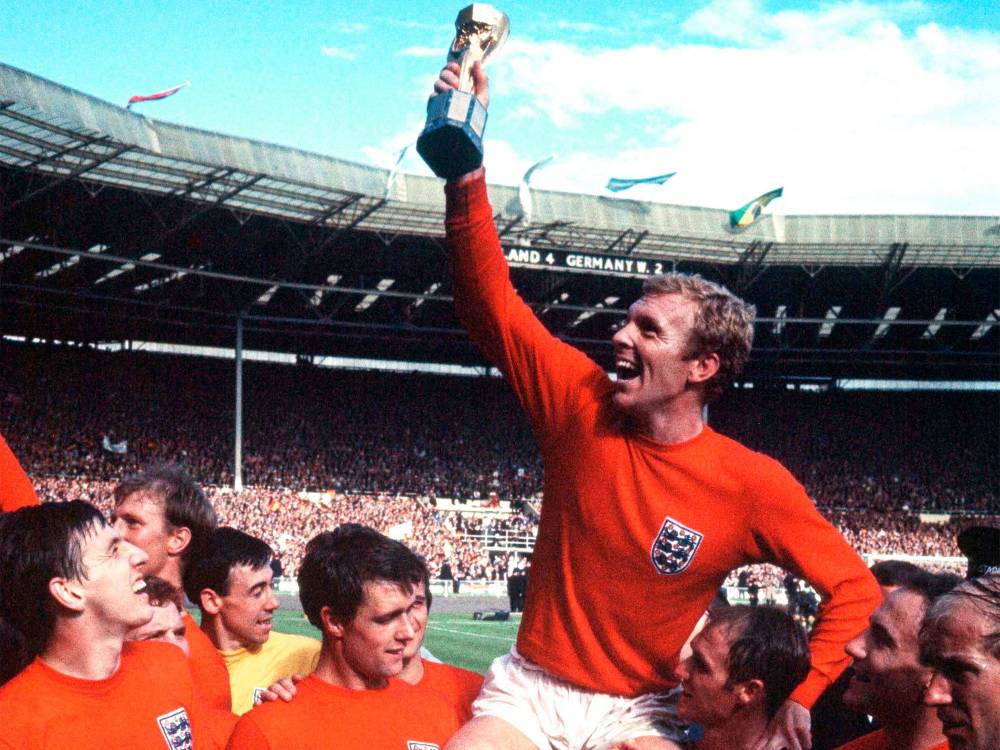
42. Bobby Moore
England has won only one World Cup back in 1966, when they hosted the tournament. And they did so largely thanks to one man.
Of course, there were others, but without Bobby Moore, England would not have lifted the trophy. He was a world-class central defender, known for his reading of the game and exceptional leadership. He spent most of his career at West Ham United, making 544 appearances and scoring 24 goals over 16 years. He also earned 108 caps for England.
His statue stands proudly outside Wembley Stadium.
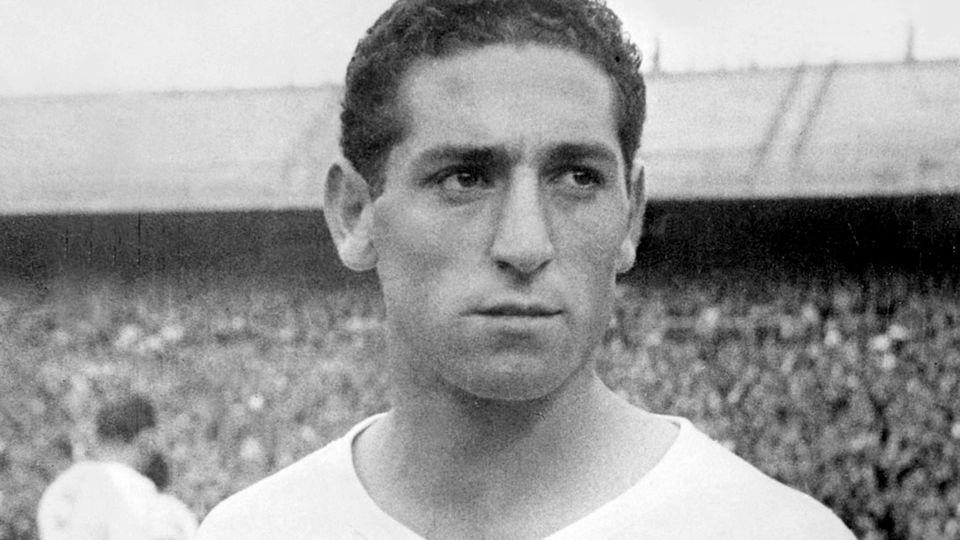
41. Francisco “Paco” Gento
Paco Gento was a left winger who played for Real Madrid from 1953 to 1971. He won 12 league titles and 6 European Cups with Real. Alongside Di Stéfano, Kopa, Rial, and Puskás, he formed a devastating attacking unit, scoring 178 goals in 606 matches.
He was also the team captain in 1966 when they won their sixth European title against Partizan Belgrade.
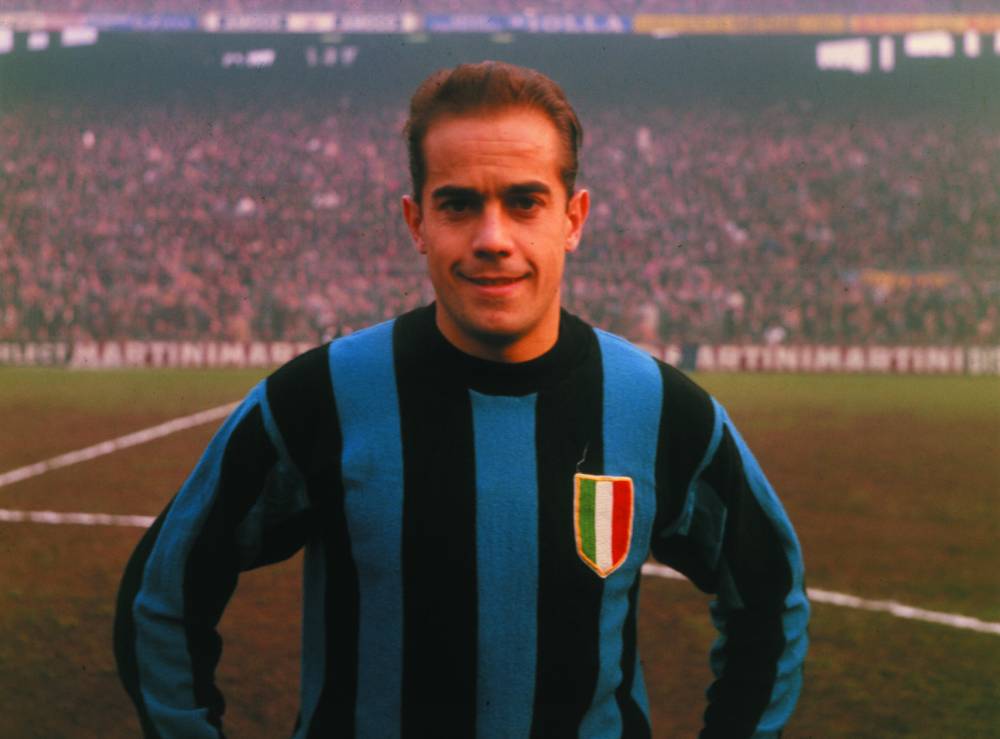
40. Luis Suárez
First, it should be clarified that we are referring to the Spanish Luis Suárez, who played from 1953 to 1973. An outstanding player, remarkably precise and one of the greatest Spaniards of all time, deserving his place on this list. Nicknamed “The Architect,” he was an elegant midfielder who stood out from an early age.
He excelled at Barcelona (6 years), Inter (9 years), and Sampdoria (3 years). He was part of the great Inter side that won back-to-back European Cups in 1964 and 1965.
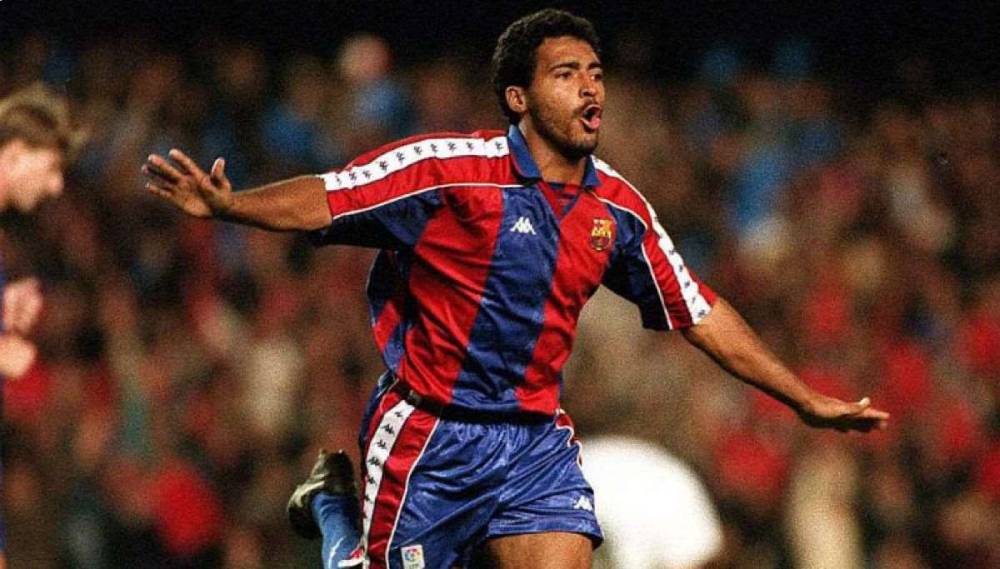
39. Romário
Brazil has produced countless great footballers. One of them is, without a doubt, Romário. An exceptional striker with outstanding spatial awareness and positioning, he was the kind of player who could carry his team on his shoulders, at both club and international level, whenever it mattered most.
He proved this with Barcelona, PSV Eindhoven, Flamengo, and of course with the Brazil national team, with whom he won the 1994 World Cup.
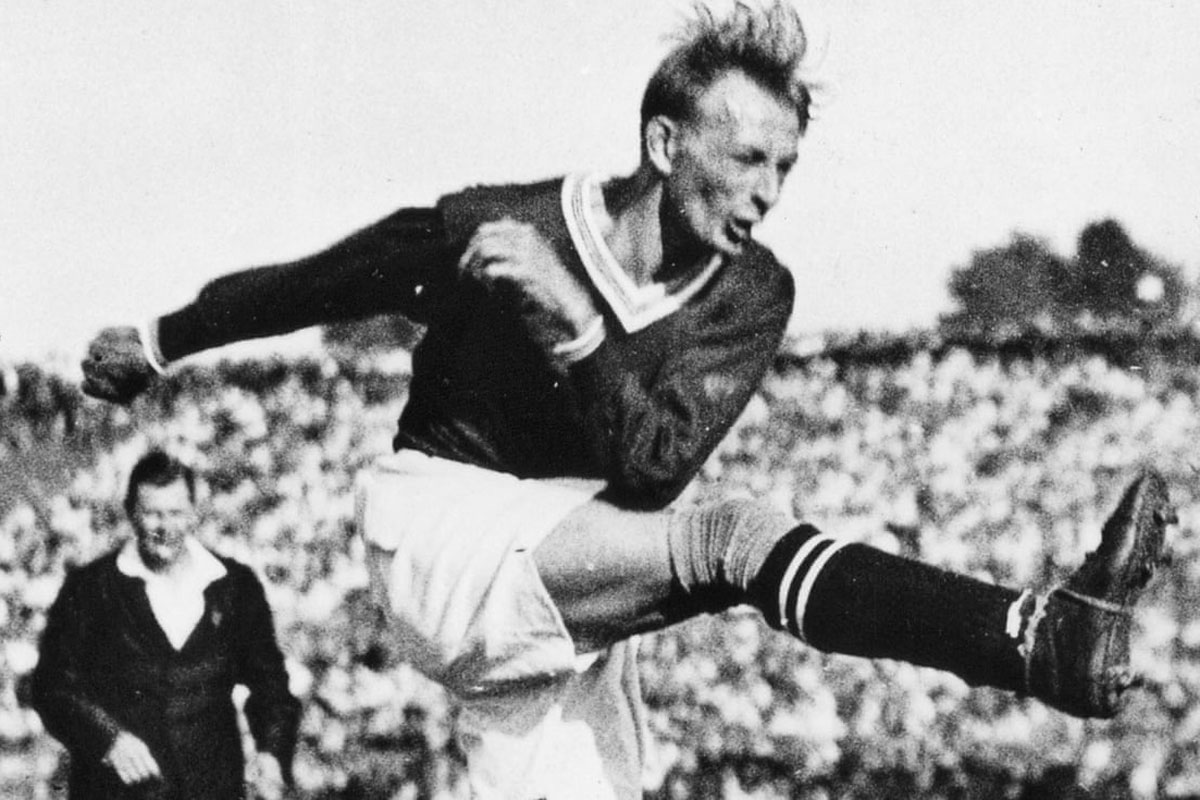
38. Matthias Sindelar
Matthias Sindelar is widely regarded as Austria’s greatest footballer. The vast majority of his career was spent at Austria Vienna, where he played for 13 years and became the central figure of the club’s golden era.
Although he had a brief early spell at Hertha Vienna, it was at Austria Vienna where he truly made his name and built his legacy as “The Paper Man”, known for his elegance, intelligence, and technical brilliance. In 1923, he suffered a serious knee injury and underwent surgery, which was highly challenging for that era. After his recovery, he played with a knee support, which became one of his trademarks throughout his career.
In 1938, in the midst of the Second World War, a match was held in honor of the “union” of Austria and Germany. The match had been agreed to end in a draw; nevertheless, the final score was 2–0, with Sindelar scoring the first goal and celebrating it in front of the officials’ stand, which was filled with National Socialist officials.
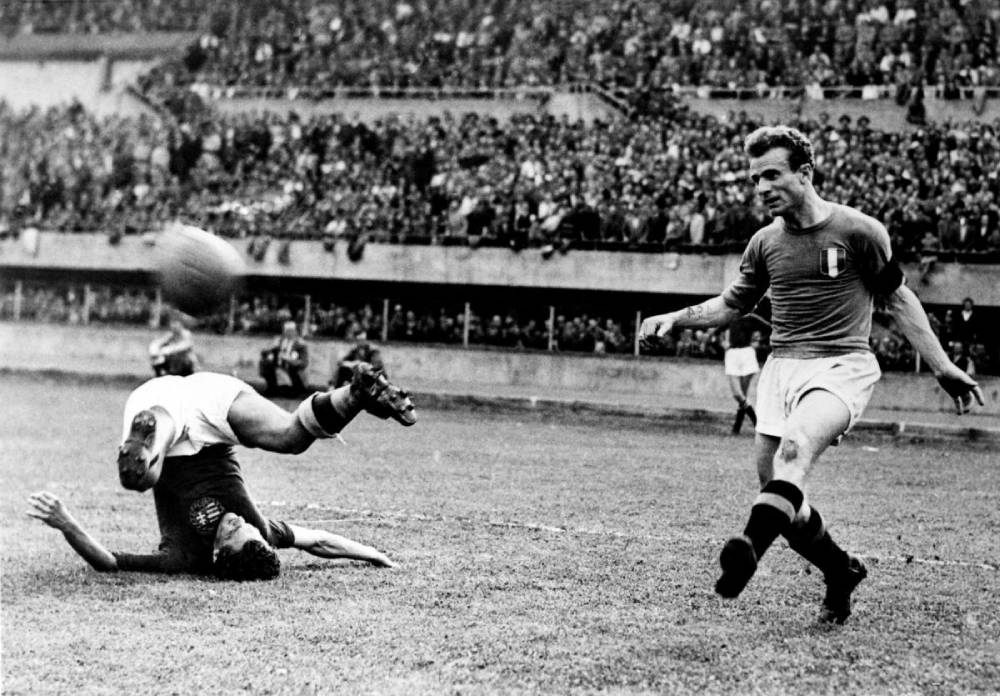
37. Valentino Mazzola
Valentino Mazzola is remembered by many as one of the greatest Italian footballers of all time and was a victim of the Superga air disaster on May 4, 1949, where he died at the age of 30. He was the father of Sandro Mazzola, a legend of Inter Milan.
He made his debut with Venezia, with whom he won the Italian Cup in 1941. The following summer, Juventus agreed with Venezia to sign him, but it was Torino that ultimately secured him, offering two players and the staggering sum of 250,000 Italian lire.
He stayed for seven years with the “Granata” and, in 195 appearances, scored 118 goals. During his time at Torino, he also won five Serie A league titles, forming the core of the legendary “Grande Torino” side.
On April 20, 1946, he achieved the fastest hat-trick in Italian football history, scoring three goals in just three minutes (!) against Vicenza Calcio.
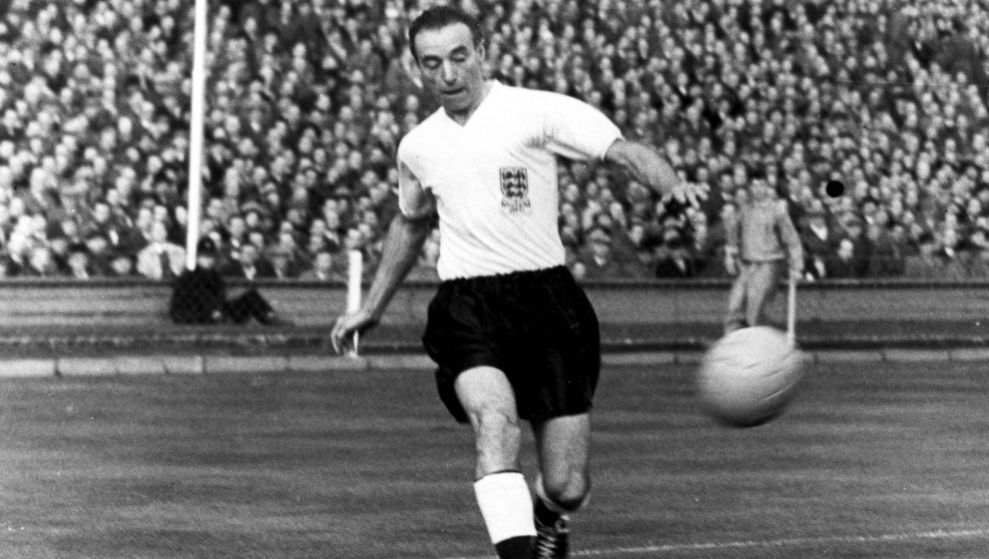
36. Stanley Matthews
Stanley Matthews was nicknamed the “Wizard of the Dribble,” as he was one of the most gifted dribblers in the history of football. In 1956, he won the Ballon d’Or while playing for Blackpool.
He was also the first English footballer to be awarded the title of “Sir” for his contribution to the sport.
Remarkably, Matthews played at the highest level until the age of 50, making him the oldest player ever to appear in England’s top division, as well as the oldest player to represent the England national team.
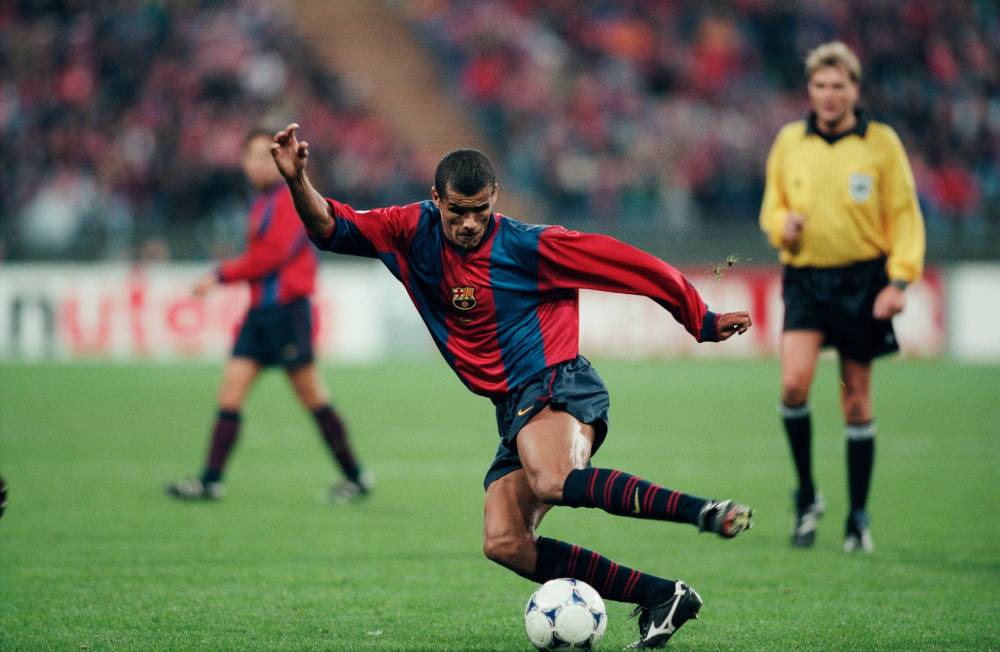
35. Rivaldo
Rivaldo is widely regarded as one of the greatest players to have ever played the game. A true Brazilian maestro, he was a classic number 10, combining elegance, vision, and exceptional technical ability. His talent caught the attention of Barcelona, who signed him from Deportivo de La Coruña. He spent five years in Barcelona, establishing himself as one of the world’s best, and later had a spell with AC Milan.
He won the FIFA World Cup 2002 with Brazil and also lifted the UEFA Champions League 2003 with AC Milan.
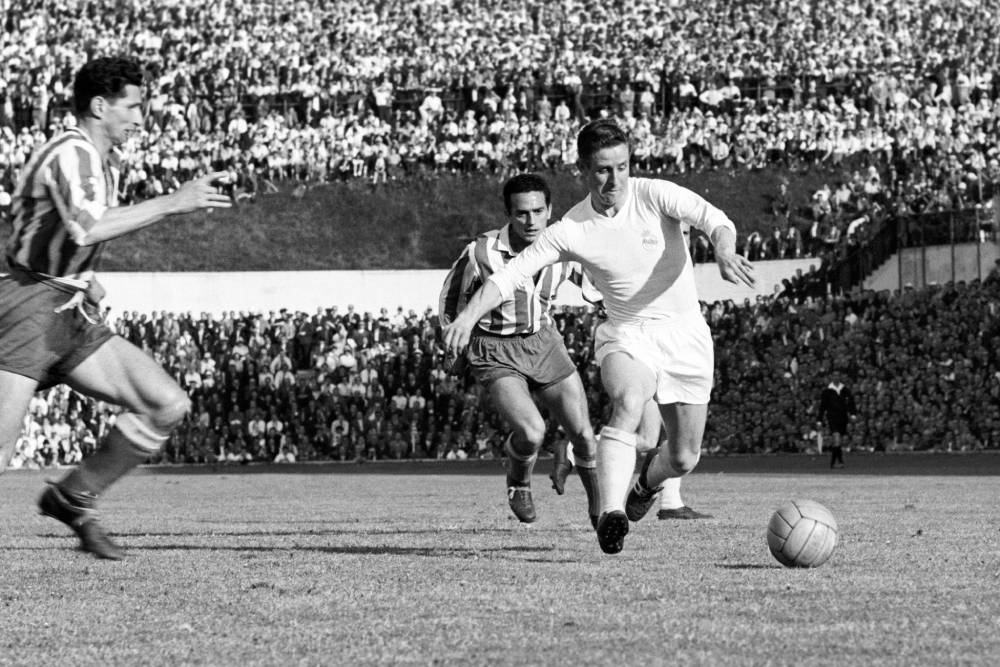
34. Raymond Kopa
Raymond Kopa is often mentioned alongside Zinedine Zidane and Michel Platini as one of the three greatest French players, all of whom excelled in the number 10 role.
Kopa was the earliest of the three, making his debut in 1949 and playing until 1967. He spent the majority of his career at Stade de Reims, where over 13 years he made 402 appearances and scored 84 goals. However, between 1956 and 1959, he moved to Real Madrid. There, he won three consecutive European Cups and was awarded the Ballon d’Or in 1958.
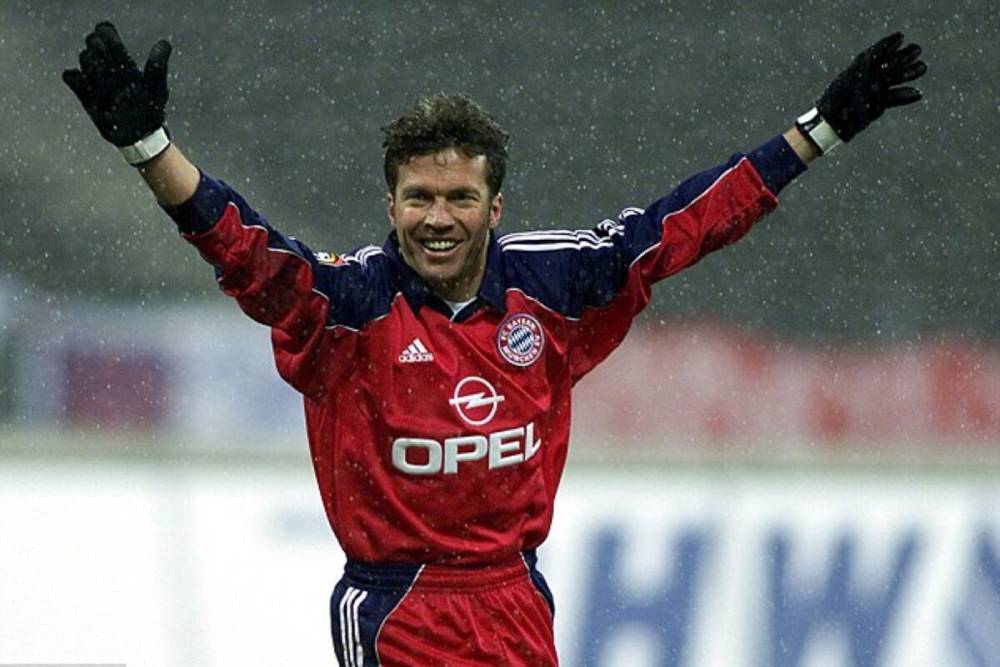
33. Lothar Matthäus
Lothar Matthäus can be described as perhaps the most complete player of his generation and one of the finest in world football, a generation that also included legends like Diego Maradona, Zico, and Michel Platini.
The German was a born winner, wearing the shirts of Borussia Mönchengladbach, Bayern Munich, Inter Milan, and New York/New Jersey MetroStars, amassing 596 appearances and 161 goals. He also earned 150 caps and scored 23 goals for the German national team (initially West Germany national team and later the unified Germany national team).
A gifted midfielder, he later dropped deeper in the latter stages of his career, operating as a sweeper (libero).
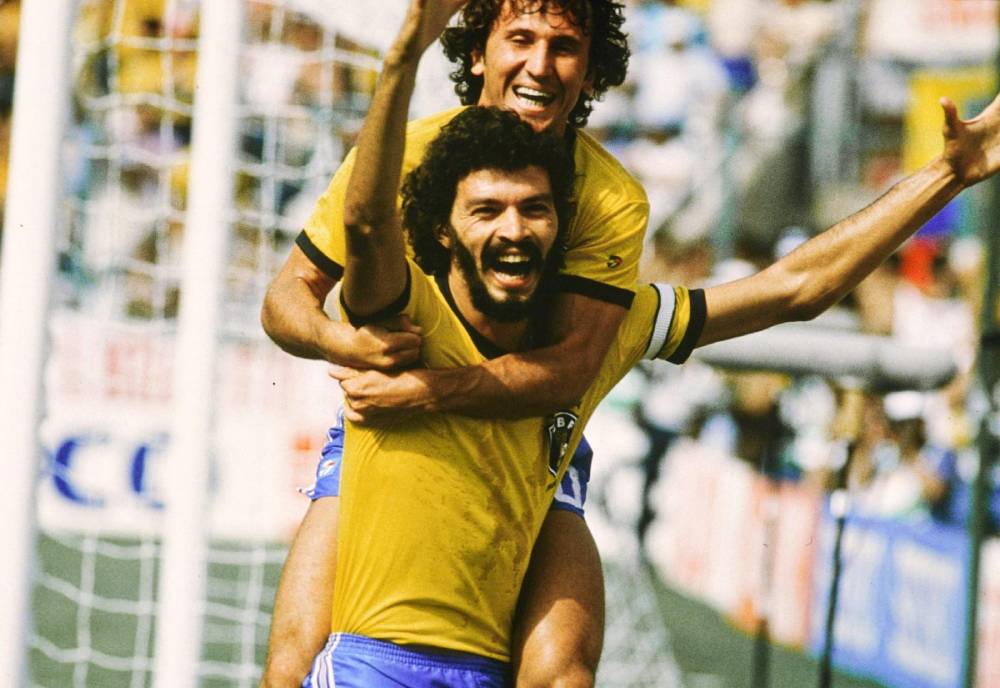
32. Sócrates
Sócrates is yet another Brazilian to feature on this list, which comes as no surprise. On the contrary. He was a commanding and elegant midfielder who left a lasting mark on the game. Strong yet highly technical, despite being a heavy smoker, he also had a powerful presence off the pitch.
A qualified medical doctor and a politically engaged figure, he earned the nickname “Doctor Sócrates.” He stood out with Botafogo FR and SC Corinthians and also spent a season in Europe with Fiorentina.
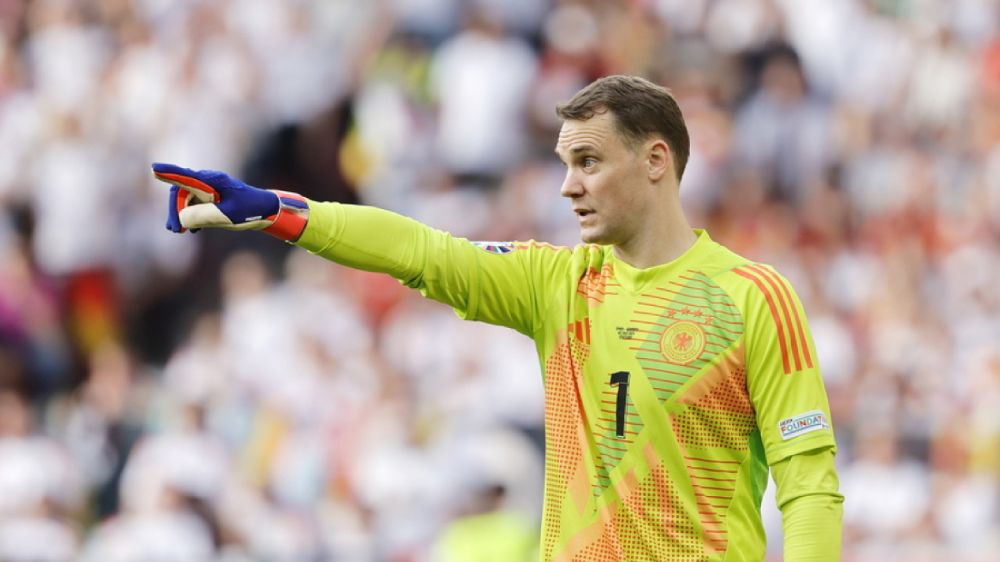
31. Manuel Neuer
Manuel Neuer is widely regarded as one of the most influential goalkeepers in modern football, redefining the way the position is played.
His exceptional technical ability with the ball at his feet allowed Pep Guardiola to implement a style of play where the team effectively had an extra outfield player when in possession. Building play from the back became a major advantage, making him a key asset for any coach.
He won 11 consecutive Bundesliga titles with Bayern Munich and lifted the Champions League twice.
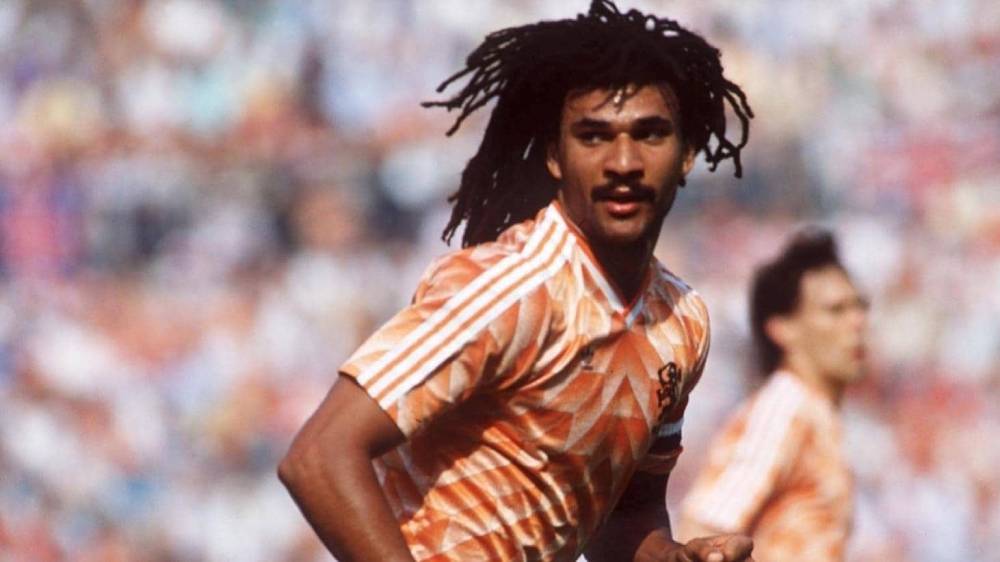
30. Ruud Gullit
Ruud Gullit is famously listed as a forward, midfielder, and defender, an accurate reflection of his incredible versatility. The “Black Tulip” of Dutch football had no fixed position on the pitch. He could do everything, short of playing as a goalkeeper, and did it all at an exceptional level.
He began his career as an attacking midfielder but evolved into a complete footballer. He played for Feyenoord and PSV Eindhoven before being signed by AC Milan for a then world-record fee of £6 million in 1987.
In Milan, he formed the famous Dutch trio with Frank Rijkaard and Marco van Basten. He won two European Cups, three Serie A titles, and, of course, the Euro 1988 with the Netherlands.
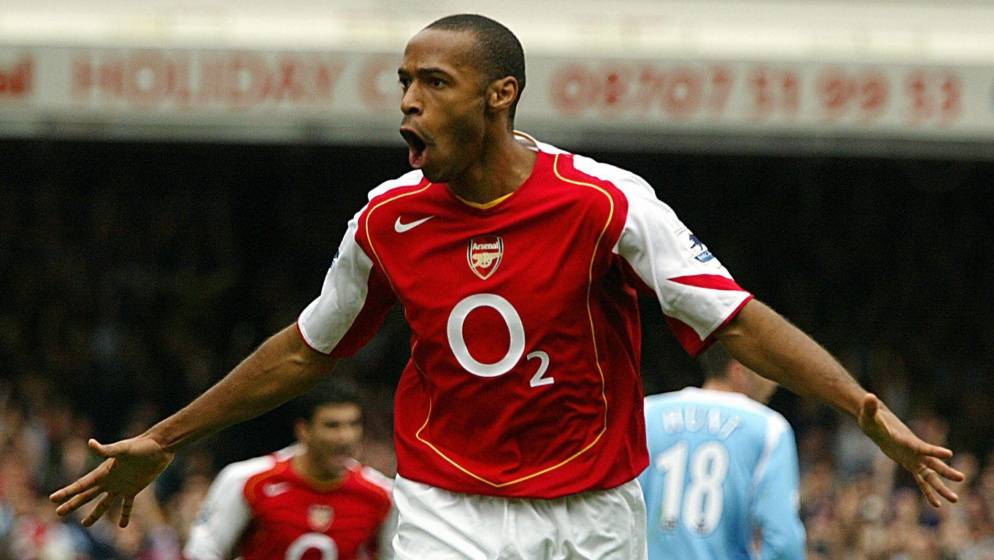
29. Thierry Henry
Thierry Henry, the elegant French forward with a sublime finish, was a nightmare for defenders. His stride, pace, and deadly composure in front of goal made him one of the most feared attackers of his era. He played for AS Monaco, Arsenal, and Barcelona, winning everything there is to win: Champions League titles, domestic leagues, and cups.
With France national team, he won the FIFA World Cup 1998 and the UEFA Euro 2000. He narrowly missed out on the Ballon d’Or in 2003, arguably somewhat unfairly, as it was awarded to Pavel Nedvěd.
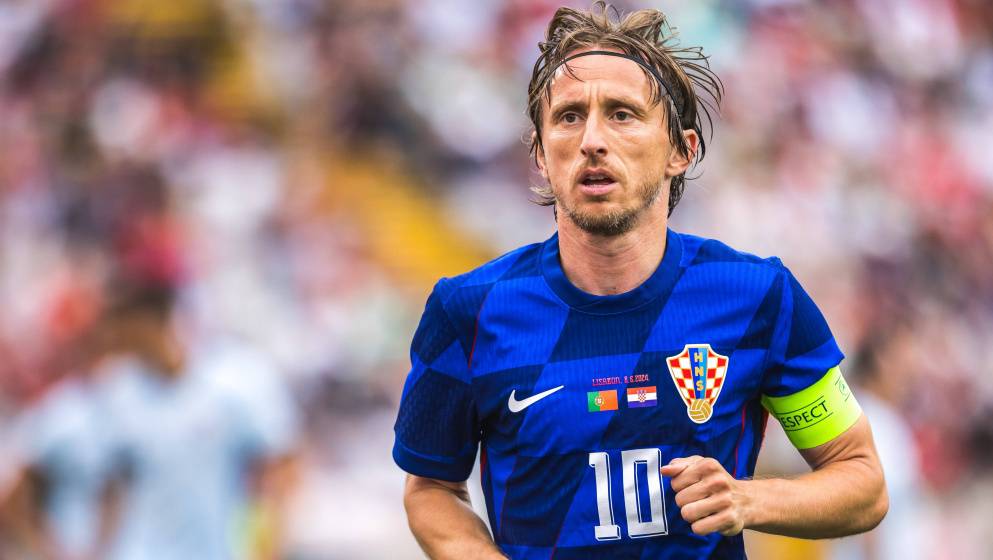
28. Luka Modrić
Luka Modrić is another unique midfield case, widely regarded as one of the best players of his generation. He has performed consistently at the highest level and holds the all-time appearance record for the Croatia national team.
His greatest individual achievement came in 2018, when he broke the long-standing Lionel Messi – Cristiano Ronaldo dominance of the Ballon d’Or, winning it after leading Croatia to their first-ever FIFA World Cup Final 2018.
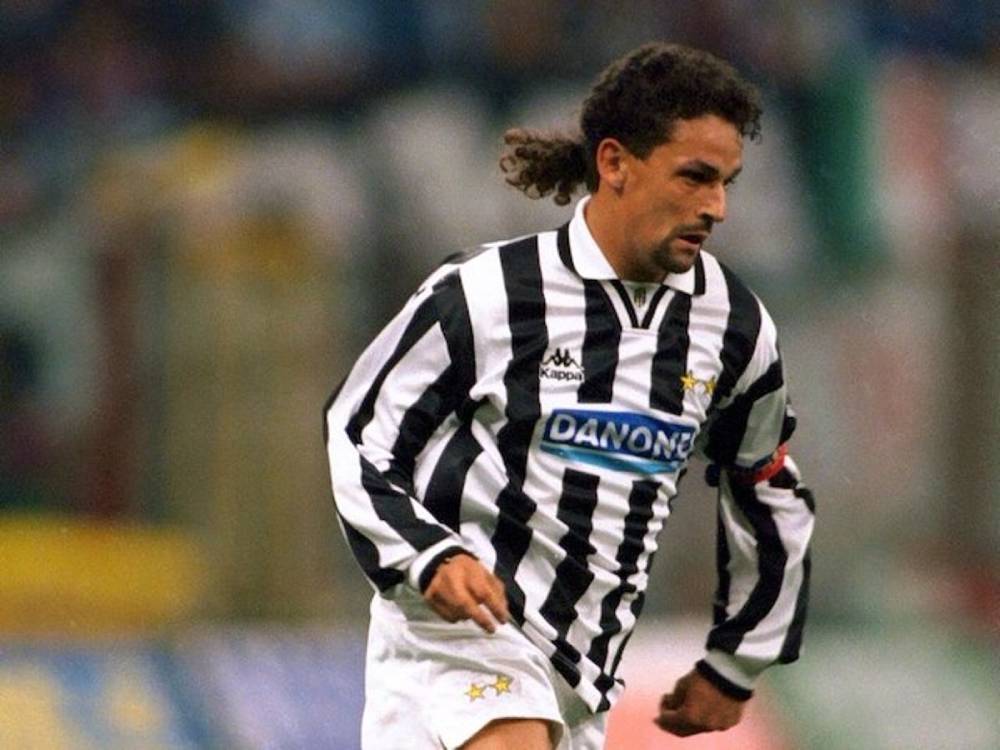
27. Roberto Baggio
Roberto Baggio was a true artist of the game. That is what he was, a player widely regarded as one of the greatest footballers ever to step onto a pitch.
The “Divine Ponytail” left his mark on football history. A classic number 10, he dazzled fans with his elegance and vision, delighting teammates by creating chances and providing assists with remarkable ease. Had it not been for persistent knee injuries, his career might have reached even greater heights. Still, he enjoyed a rich and successful career, playing exclusively in Italy.
In total, he made 490 appearances and scored 220 goals. He won the UEFA Cup with Juventus in 1993 and also claimed the Ballon d’Or the same year.
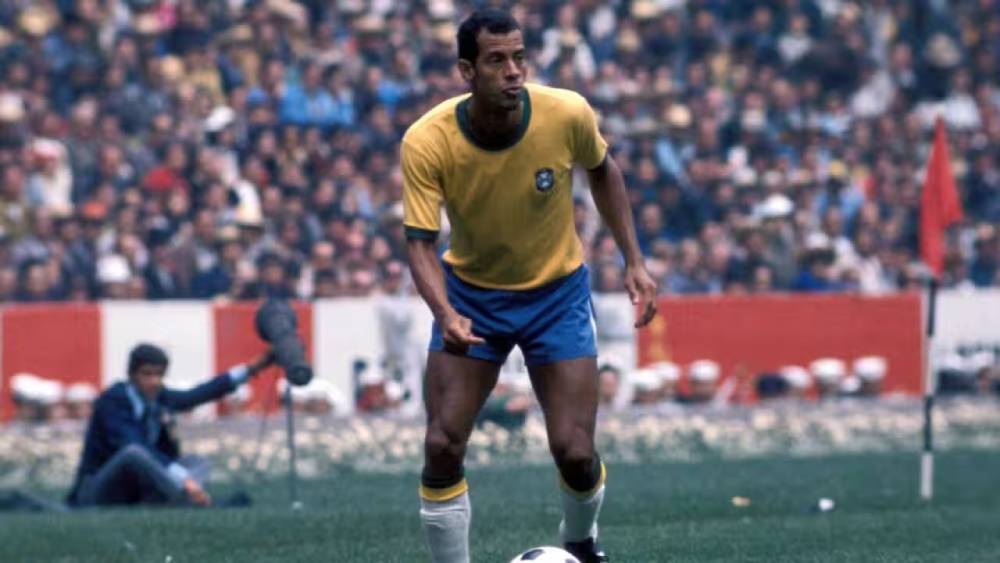
26. Carlos Alberto
Carlos Alberto Torres, commonly known as Carlos Alberto, is considered one of the greatest players of all time. He captained the Brazil national team to victory at the World Cup 1970 and scored one of the most iconic goals in World Cup history against Italy in the final.
He was also included in the official World Cup All-Time Team of the 20th century.
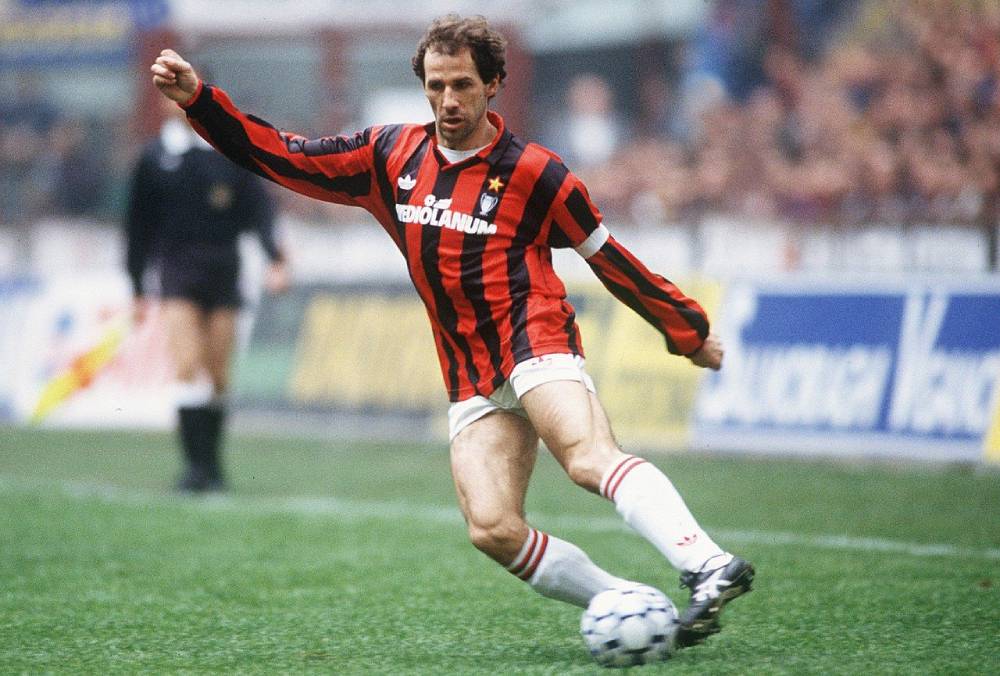
25. Franco Baresi
Franco Baresi is one of the greatest footballers of all time. As even Diego Maradona once admitted, he was the only player to ever take the ball from him without making contact.
One of the finest players ever to wear the shirt of AC Milan, he is so iconic that his number 6 shirt was retired by the club after his retirement. Baresi was one of the greatest defenders in football history. He spent his entire 20-year career with Milan, alongside the Italy national football team as well, and became a symbol of loyalty and excellence.
He won six league titles, three European Cups, and was named AC Milan’s player of the 20th century.
He passed away at the age of 66 in July 2026.
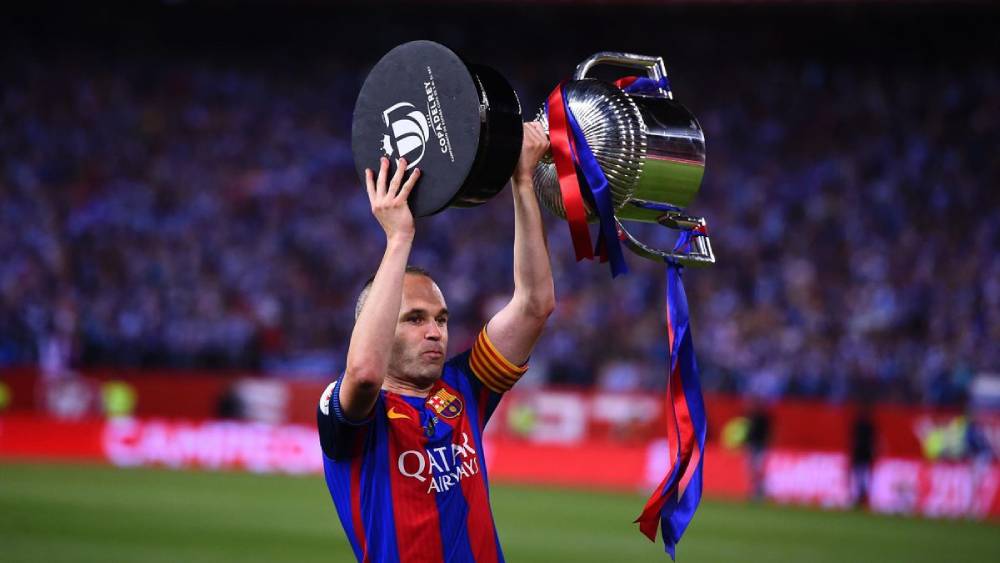
24. Andrés Iniesta
Andrés Iniesta was a player who left his mark everywhere he played, especially with Barcelona and the Spain national football team, redefining the way midfielders operate alongside Xavi Hernandez.
He is one of the most decorated players in football history, having won everything there is to win: domestic leagues, domestic cups, European titles, Champions League trophies, a World Cup 2010, and the Euro 2008 and Euro 2012.
He famously scored the winning goal in the 2010 World Cup final against the Netherlands.
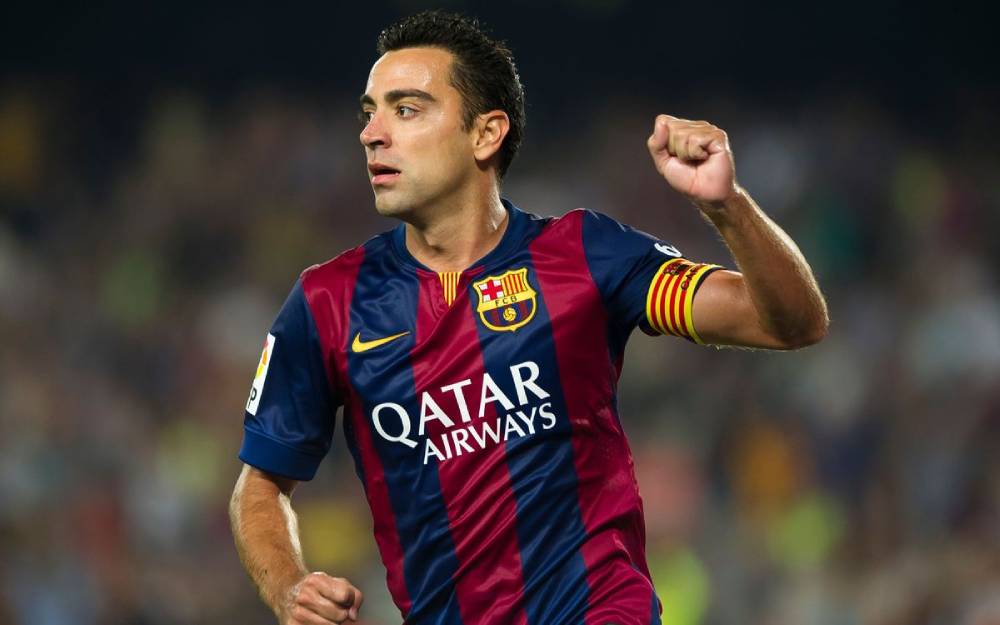
23. Xavi
Xavi Hernández was the other half of the duo with Andrés Iniesta, both at Barcelona and with the Spain national football team. He essentially redefined the role of the deep-lying playmaker, bringing structure, control, and strategic intelligence to midfield. The entire Barcelona system that dominated European football was built around Xavi’s ability to dictate tempo and control possession, and the same was true for Spain’s national team during their golden era.
He won four Champions League titles, eight La Liga titles, three Copa del Rey trophies, two European Championships, and one World Cup 2010.
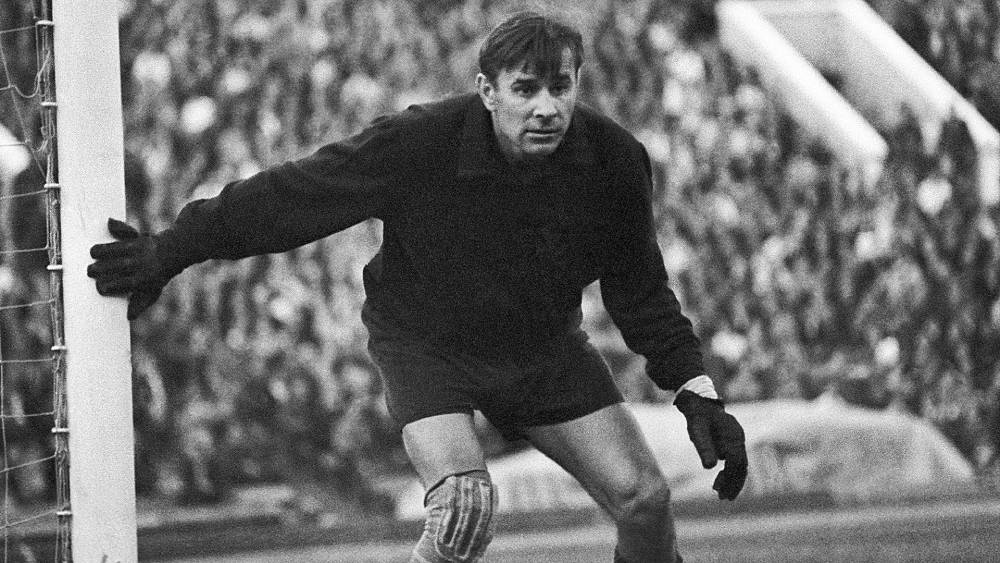
22. Lev Yashin
Lev Yashin was one of the greatest goalkeepers in football history.
Nicknamed the “Black Spider,” he always wore black and, when he came off his line and spread across the goal, he looked like a spider covering its web, an intimidating and iconic presence. He spent his entire career at Dynamo Moscow from 1950 to 1970 and played for the Soviet Union national football team, elevating the goalkeeper position to a completely new level.
He remains a reference point for generations of goalkeepers and is still the only goalkeeper in history to have won the Ballon d’Or (1963).
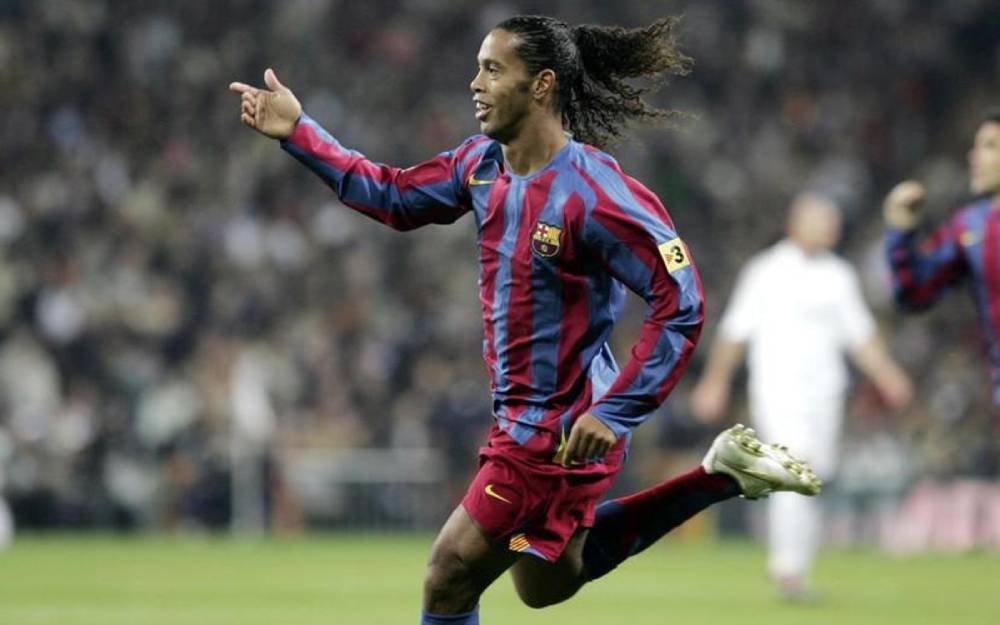
21. Ronaldinho
Ronaldinho was a true magician of the game, an artist on the pitch. His technical ability, dribbling, ball control, feints, and magical passing operated on another level. In essence, he had no real rival when at his best. It takes something special to be applauded by the entire Santiago Bernabéu Stadium while wearing the shirt of Barcelona. An achievement only he and Diego Maradona can truly claim.
He won the World Cup 2002 with Brazil, the Champions League 2006 with Barcelona, and the Ballon d’Or in 2005.
Top 20 Footballers
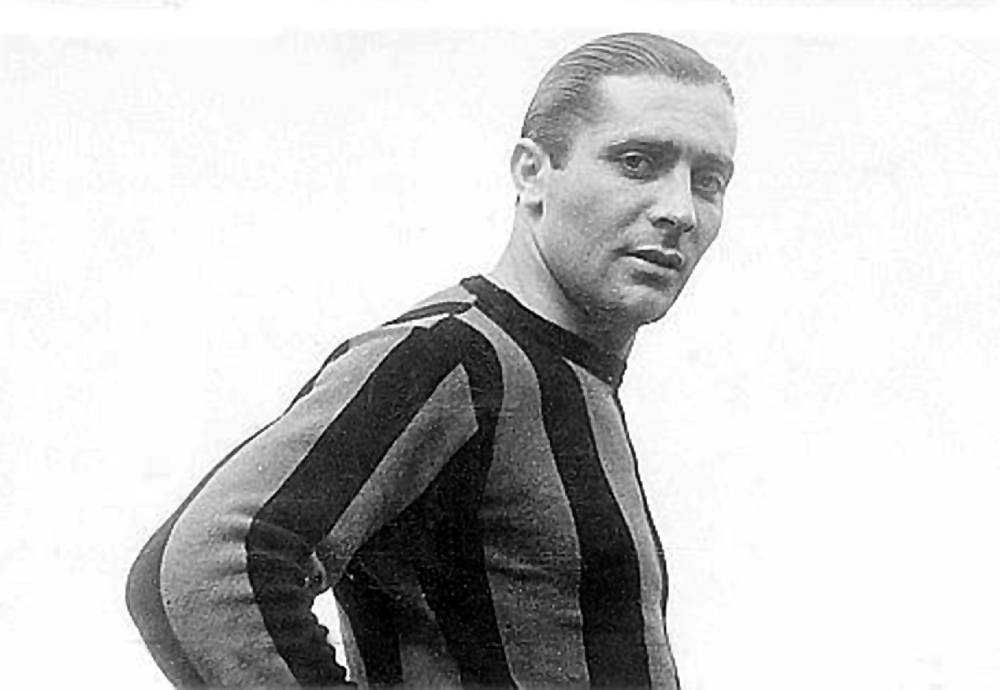
20. Giuseppe Meazza
Giuseppe Meazza is considered by older generations to be the greatest Italian footballer of all time, and certainly one of the greatest in world football history.
The diminutive Italian striker played for Inter Milan from 1927 to 1940, scoring 240 goals in 348 appearances. During that period, he also won the World Cup 1934 and the World Cup 1938 with the Italy national football team. He also had short spells with AC Milan and Juventus.
His nickname was “Balilla,” meaning “the little boy.”
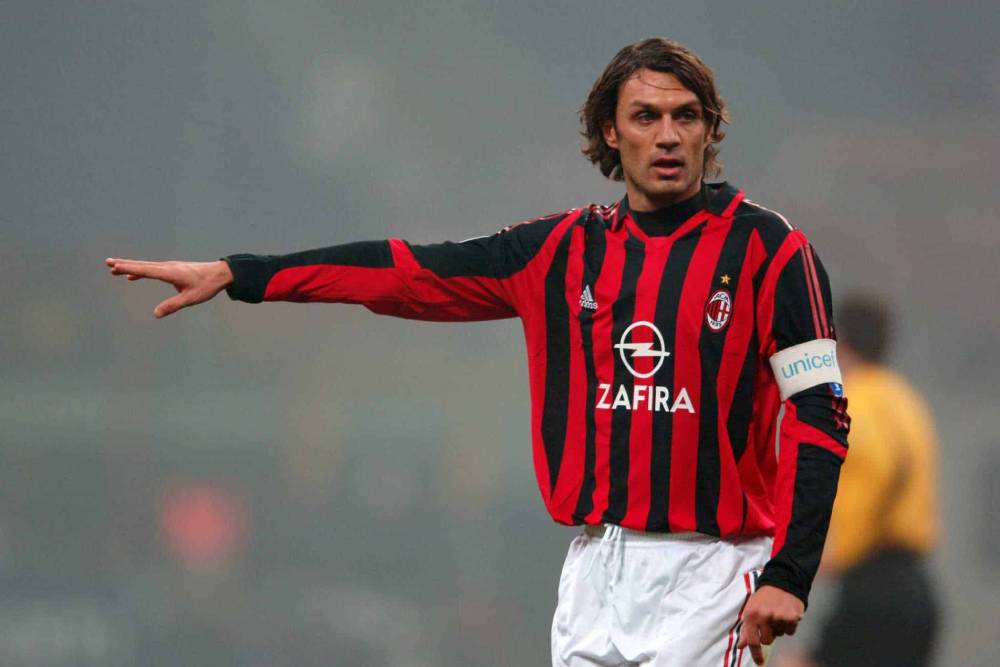
19. Paolo Maldini
Before Euro 1996, Nike famously ran an advertisement showing “The goalkeeper of Italy: the easiest job in the world,” alongside a photo of Maldini, an illustration of just how dominant he was. He played 25 years of professional football, from 1984 to 2009, all with AC Milan, winning five Champions League titles and seven Serie A titles.
He is universally regarded as one of the top two or three defenders in football history, and one of the greatest players of all time.
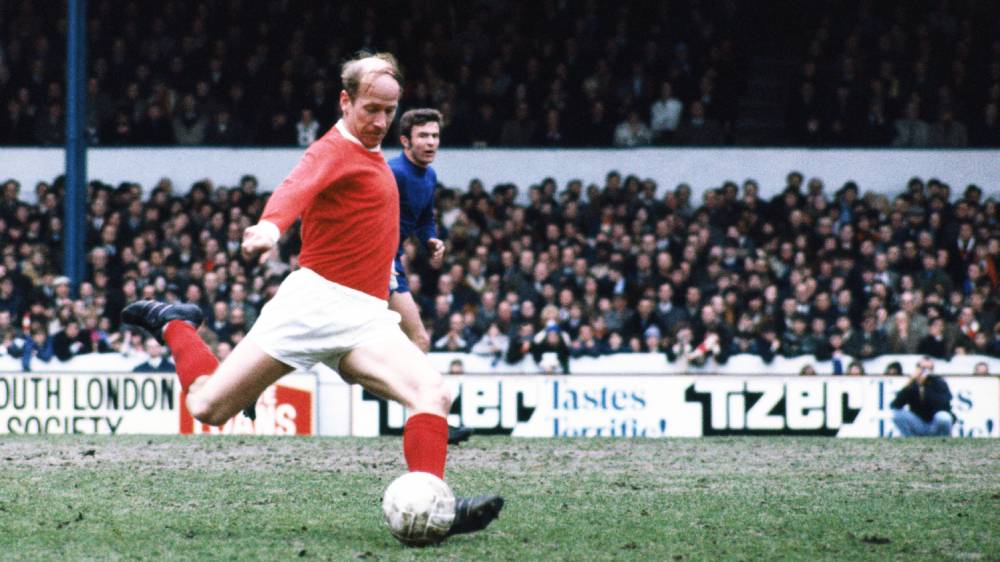
18. Bobby Charlton
Bobby Charlton survived the Munich air disaster in 1958 and went on to become one of the greatest players in the history of Manchester United, England, and world football in general. He was a complete attacking player, a midfielder who could operate equally effectively as a playmaker or a forward.
He scored 200 goals in 606 appearances for Manchester United, with whom he won the European Cup 1968. He also became a world champion with the England national football team in the World Cup 1966.
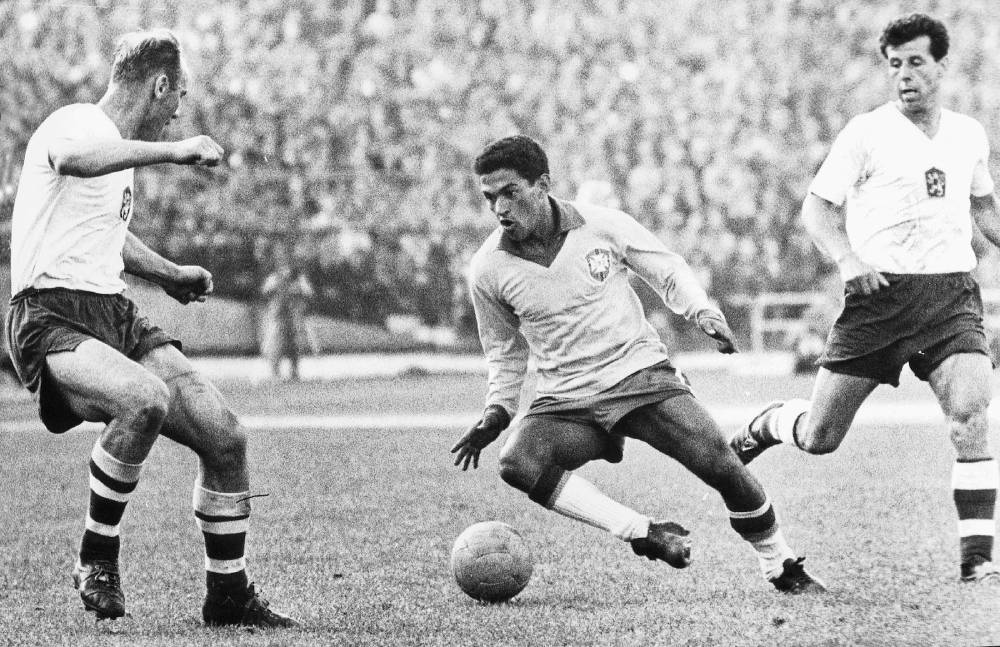
17. Garrincha
His right leg was 6 centimetres shorter than his left. In addition, his right foot turned outward, while his left foot turned inward. He preferred playing football on the beach with friends rather than training. Indeed, he rarely trained at all. None of this, however, stopped him from becoming one of the greatest footballers of all time.
For many, he remains the best dribbler in football history. He won the World Cup with Brazil in 1958 and 1962.
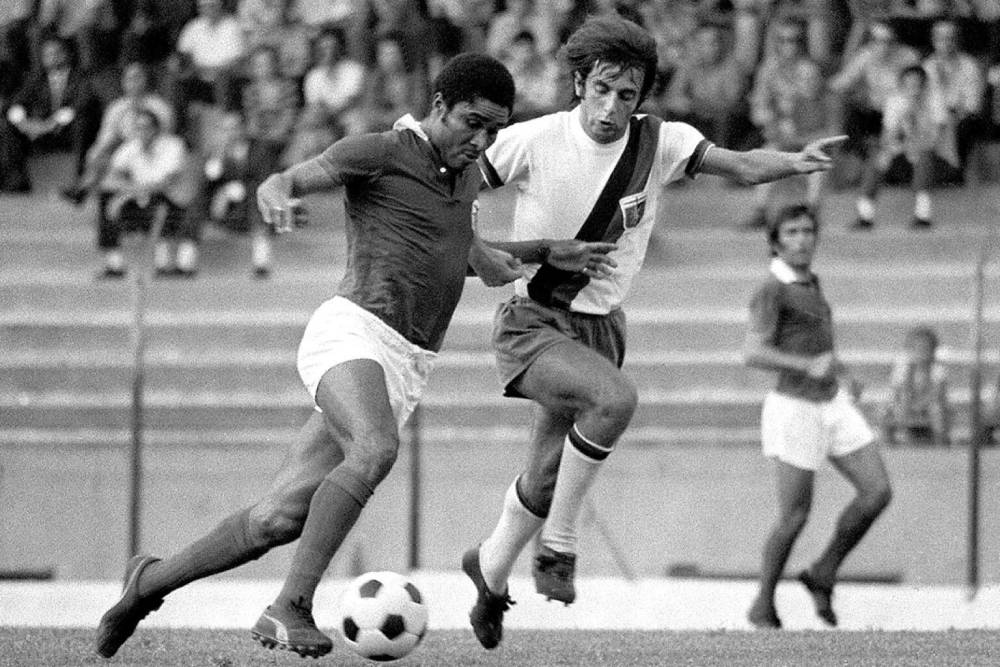
16. Eusébio
Eusébio was one of the two greatest players ever produced by Portugal, the other being Cristiano Ronaldo. Born in Mozambique, he quickly acquired Portuguese nationality and is regarded as a Portuguese legend.
Known as the “Black Panther,” he made his name with Benfica, where he played from 1961 to 1975. During that period, he won the European Cup 1962, 11 league titles, and the Ballon d’Or in 1965. Alfredo Di Stéfano described him as the greatest footballer of all time.
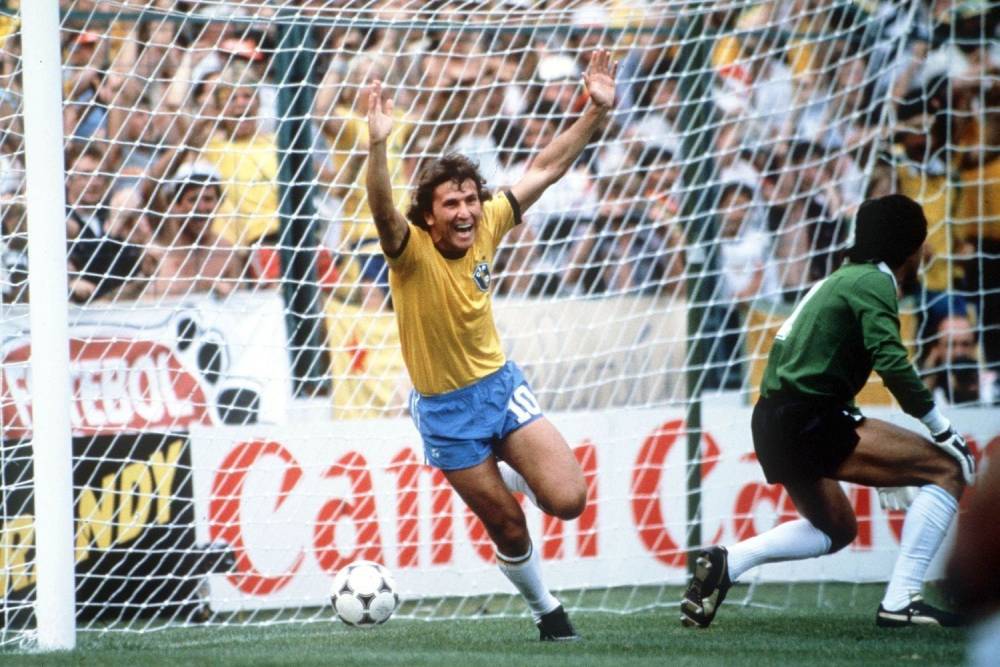
15. Zico
Zico was a player who did extraordinary things with the ball, so much so that many said he “spoke” to it. A true artist of the game.
He stood out with Flamengo, where he played for 12 years between 1971–1983 and again from 1985–1989. He won three Brazilian league titles (Campeonato Brasileiro Série A), along with six Rio de Janeiro state championships (Campeonato Carioca), a Copa Libertadores, and the Intercontinental Cup, famously delivering a legendary performance against Liverpool in 1981.
He was also a key figure for the Brazil national football team, especially in the 1982 World Cup squad in Spain, widely regarded as one of the most unfortunate teams never to win the tournament.
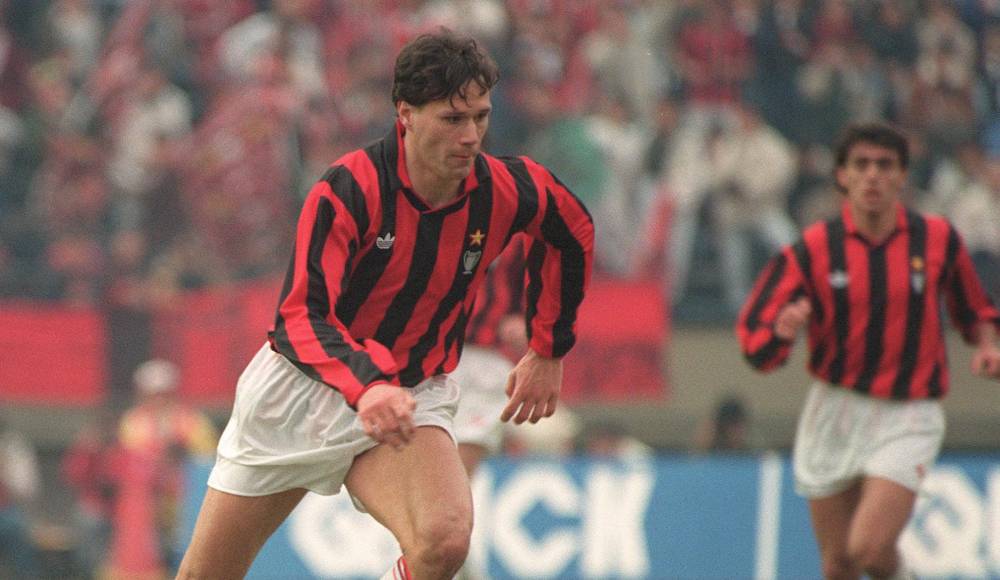
14. Marco van Basten
Marco van Basten retired at the age of just 28, having already achieved almost everything in the game.
He won two European Cups in 1989 and 1990 with AC Milan (and was part of the squad in 1994, though he did not play due to injury), a Cup Winners’ Cup with Ajax, four league titles with Milan and three with Ajax, the Euro 1988, and three Ballon d’Or trophies, as well as FIFA’s World Player of the Year award.
He is widely regarded as one of the greatest strikers ever, but a serious ankle injury in 1993 forced him into early retirement. Many believe that without it, he would have ranked even higher among football’s all-time greats.
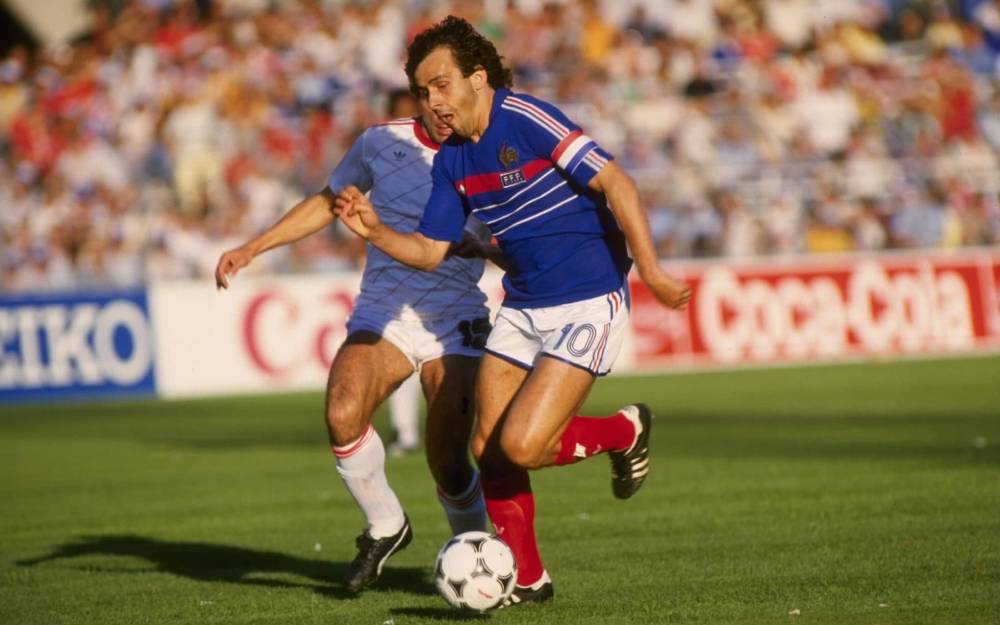
13. Michel Platini
Michel Platini is perhaps better known to younger generations for his time as UEFA president, although that period was later overshadowed by controversies and legal issues. However, his legacy was built on the pitch, where he was one of the most intelligent and prolific midfielders in football history. Many consider him the greatest goal-scoring midfielder of all time.
He won the Ballon d’Or three times in a row (1983, 1984, 1985) while playing for Juventus FC, during an era when Serie A was the strongest league in the world.
He also won the European Cup Winners’ Cup 1984, the European Cup 1985, and the Euro 1984 with France national football team.
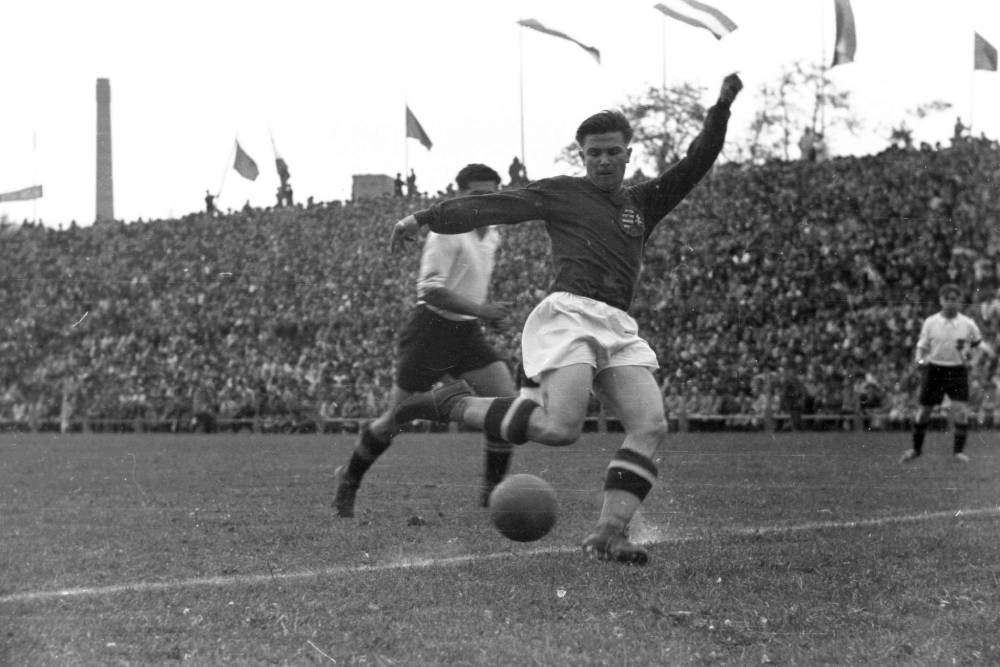
12. Ferenc Puskás
Ferenc Puskás, the “Galloping Major,” was considered in his era the first true global superstar of football. Although his build was not very typical for a footballer, the Hungarian player had a low center of gravity and very strong legs. In particular, his left leg was… lethal.
He effectively wore three jerseys during his career: Honvéd, Real Madrid, and the Hungary national team (he also made four appearances for the Spain national team, whose nationality he eventually acquired). With Honvéd and Real Madrid, he made 544 appearances between 1943 and 1966, scoring 548 goals! For Hungary, he scored 84 goals in 85 appearances. Truly astonishing numbers!
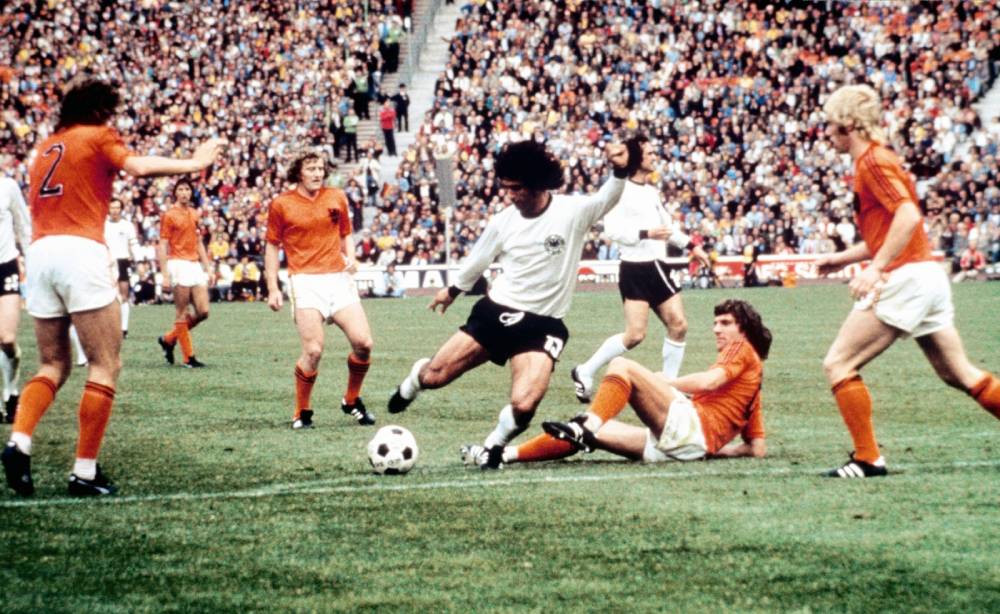
11. Gerd Müller
Gerd Müller, nicknamed “Der Bomber,” embodied goal scoring in its purest form. Scoring was not just his strength, it was his second nature. We may be talking about the greatest goalscorer of all time, the man who scored 398 goals in 453 appearances for Bayern Munich and 68 goals in 62 matches for the German national team.
He won the World Cup 1974, the Euro 1972, three European Cups with Bayern Munich (1974–1976), and four Bundesliga titles.
Not bad at all…
Top 10 Footballers
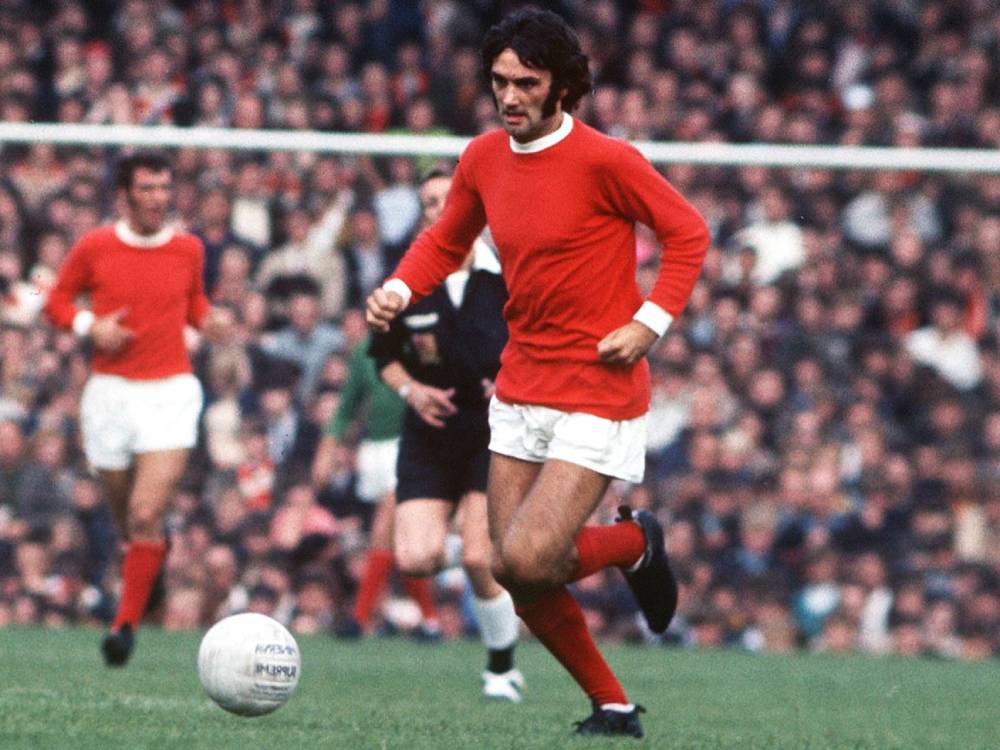
10. George Best
George Best was exactly what his surname suggests in terms of talent in English football.
He was arguably the greatest footballing talent ever to come out of Northern Ireland and the wider British Isles. To this day, many still regard him as one of the most naturally gifted players in the history of the game.
However, his career was also marked by self-destruction, and he ultimately paid the price for his lifestyle off the pitch, particularly due to alcohol addiction.
He spent the majority of his career at Manchester United, where he played from 1963 to 1974. With the club, he won the European Cup 1968 and two English league titles in 1965 and 1967.
He passed away on November 25, 2005, at the age of 59.
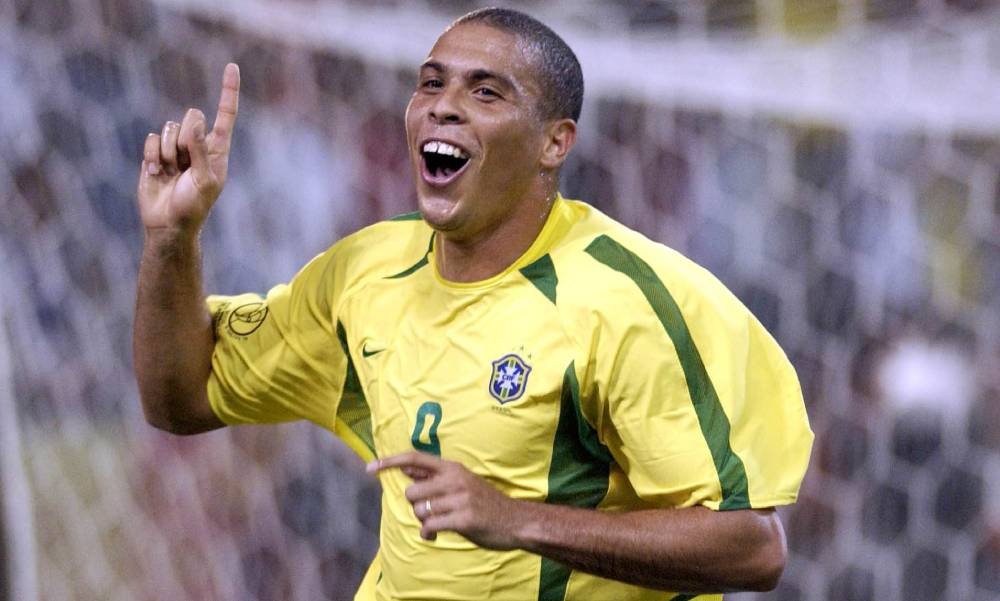
9. Ronaldo
Ronaldo Nazário, known as “O Fenômeno,” needs no introduction. He could easily have been placed at number one on this list had it not been for the serious knee injuries that ultimately derailed him physically and psychologically. He was the complete striker, technically brilliant, powerful, and always a step ahead in reading the game before the ball even reached him.
He won the Cup Winners’ Cup with Barcelona in 1997, the UEFA Cup with Inter in 1998, two World Cups with Brazil in 1994 and 2002, and two Ballon d’Or awards in 1997 and 2002.
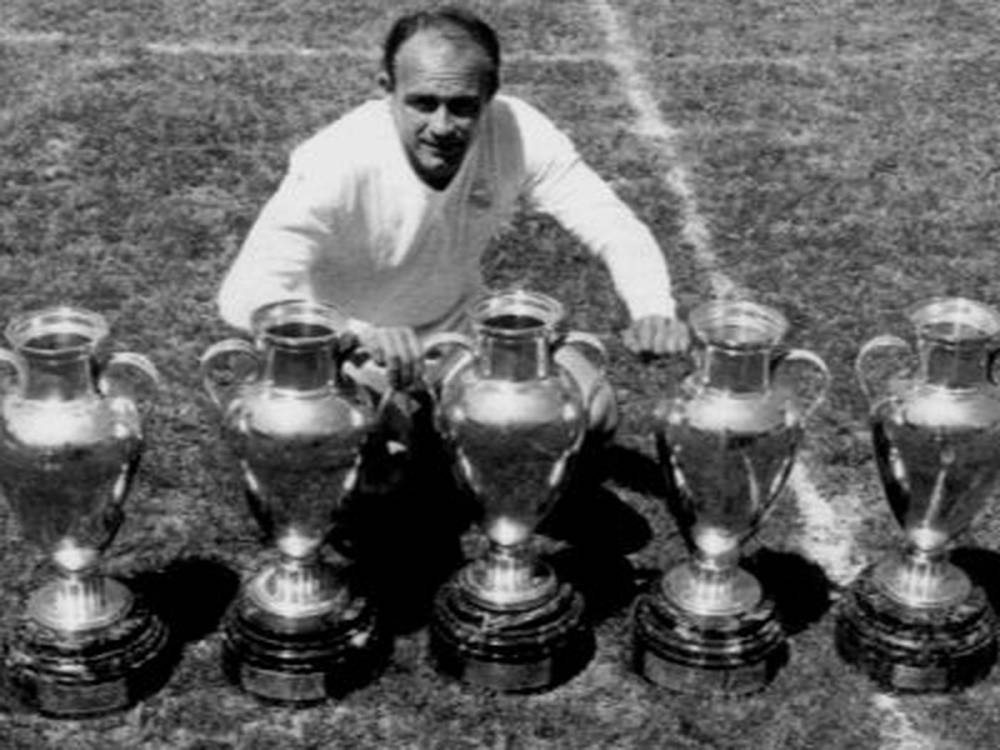
8. Alfredo Di Stéfano
Alfredo Di Stéfano was one of the first true global superstars of football history, and not without reason. For younger readers, it is worth noting that he won five consecutive European Cups with Real Madrid, leaving a legacy that defined an era.
As Pelé once said: “People argue about whether Pelé or Maradona is better. The better and more complete player is Di Stéfano.”
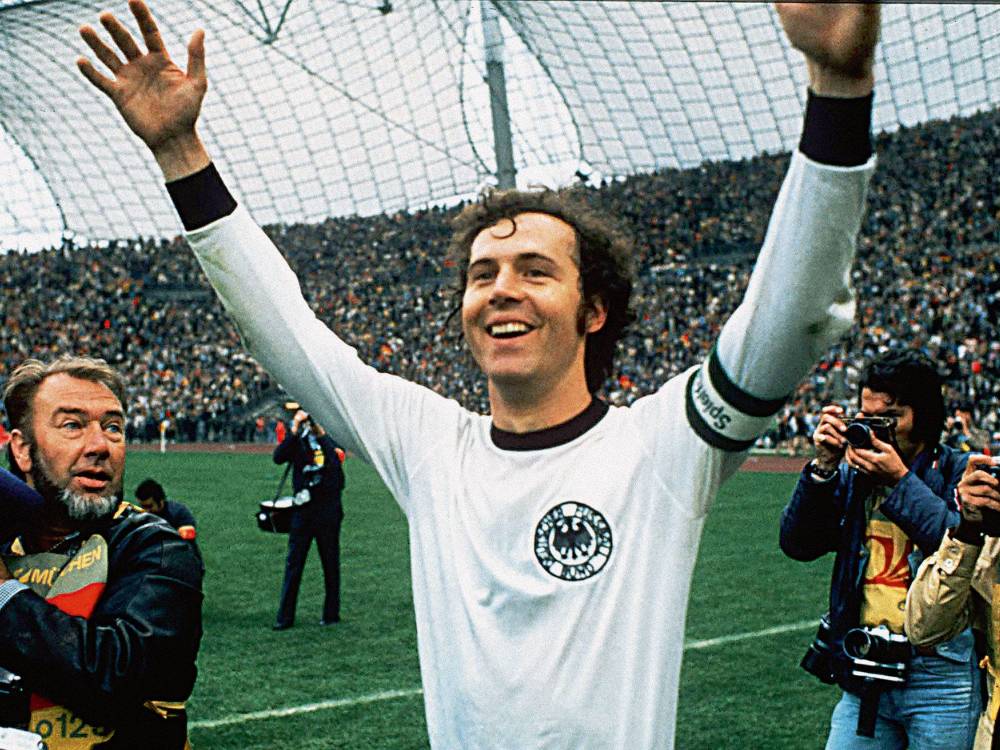
7. Franz Beckenbauer
Franz Beckenbauer, “Der Kaiser,” is widely regarded as one of the most complete footballers of all time. He was a true leader in defence, and across the entire team, combining elegance, intelligence, and an elite winning mentality. A flawless professional, he achieved almost everything in the game.
He won European Cups, domestic league and cup titles with Bayern Munich and Hamburger SV, as well as the World Cup 1974, the Euro 1972, and two Ballon d’Or titles (1972 and 1976).
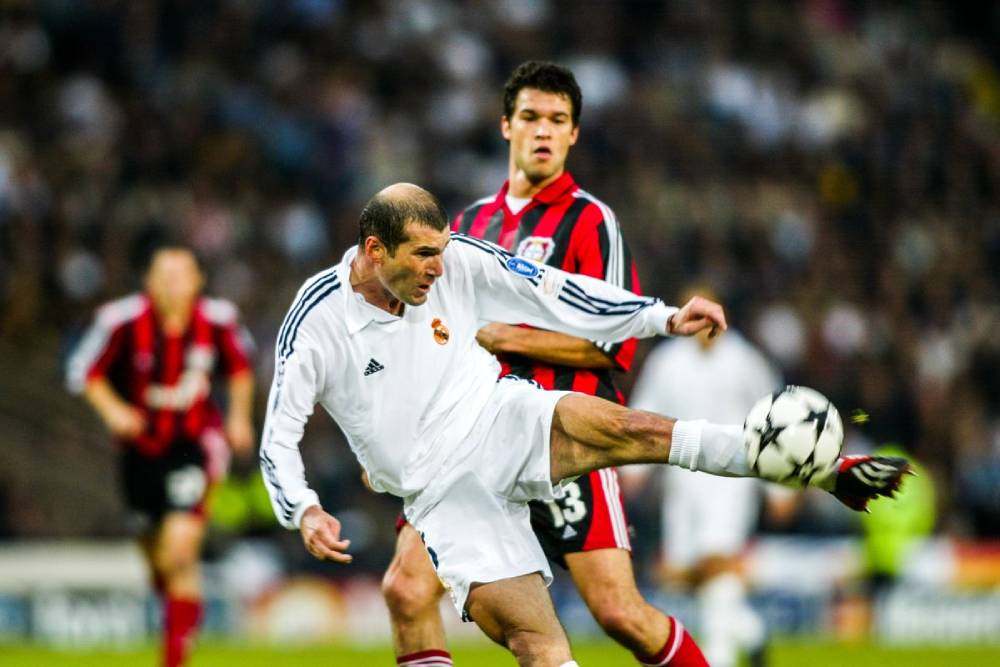
6. Zinedine Zidane
Zinedine Zidane is beyond any doubt one of the greatest footballers ever to step onto a pitch. Talented, intelligent, and charismatic. There are countless ways to describe “Zizou” and none of them would be an exaggeration.
He led France national football team to victory in the World Cup 1998 and the Euro 2000. He also scored one of the most iconic goals in Champions League final history for Real Madrid.
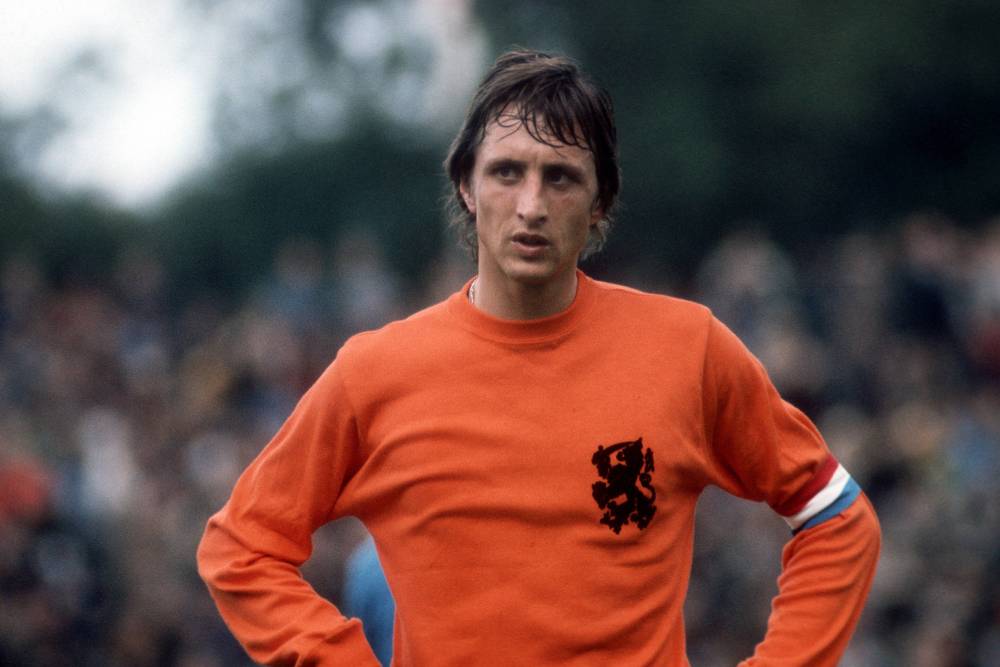
5. Johan Cruyff
Johan Cruyff was a player far ahead of his time. He is widely regarded as the most influential footballer in the history of the game. No one has shaped football like the “Flying Dutchman,” whether with Ajax, Barcelona, or the Netherlands national football team. He is also considered by many to be among the most talented players ever.
In terms of honours, he won three European Cups, one European Super Cup, one Intercontinental Cup, and three Ballon d’Or titles, among many others.
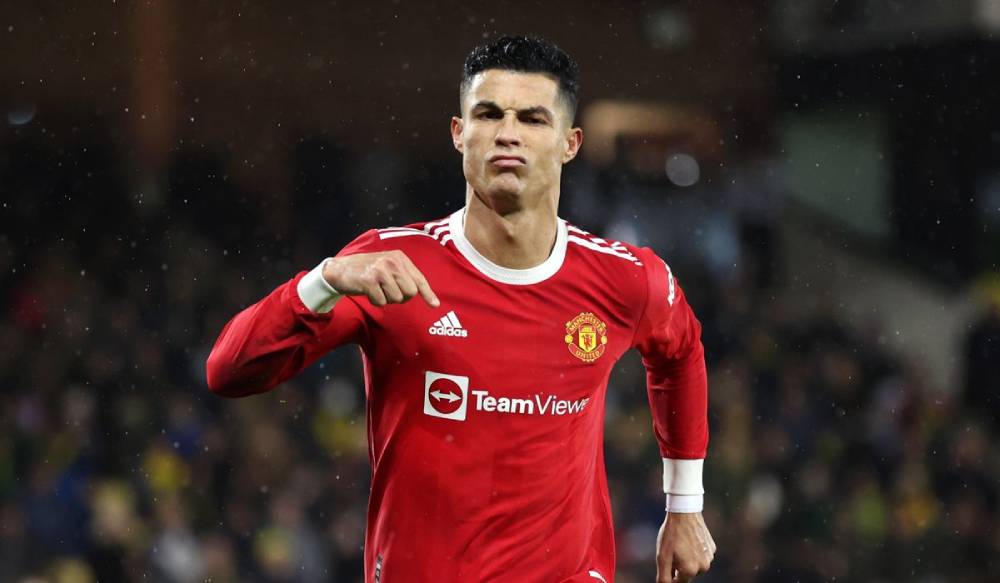
4. Cristiano Ronaldo
Cristiano Ronaldo was for many years the main rival to Lionel Messi. He is one of the greatest forwards in football history. An elite athlete and professional, his longevity and discipline have allowed him to break one record after another while remaining at the very top level for nearly two decades.
His honours include five Champions League titles, league championships with Manchester United, Real Madrid, and Juventus, the Euro 2016 with Portugal, and five Ballon d’Or trophies.
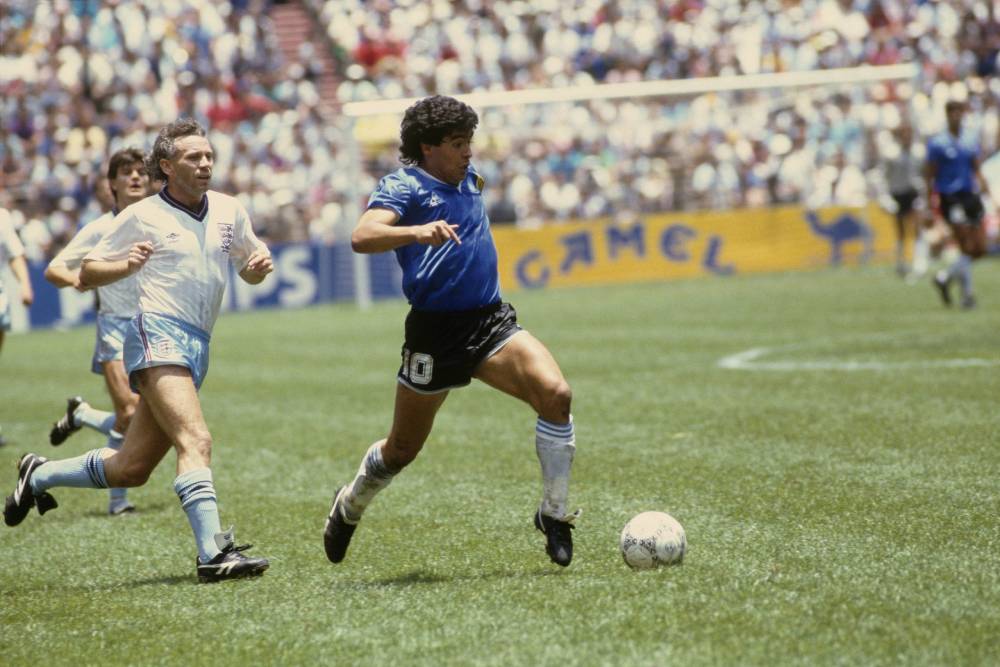
3. Diego Maradona
Maybe we should have three number ones on the list. Or maybe not. Diego Maradona certainly deserves to be there. What can you even say about Dieguito?
He single-handedly won a World Cup, scored two of the most iconic goals in football history, and left the entire world in awe with his achievements, all while wearing the shirt of an underdog Napoli side. That alone says it all.
Entire generations grew up with Maradona, and even those who never saw him live have been able to admire his greatness through video footage. Fortunately for younger fans, platforms like YouTube still preserve his legacy.
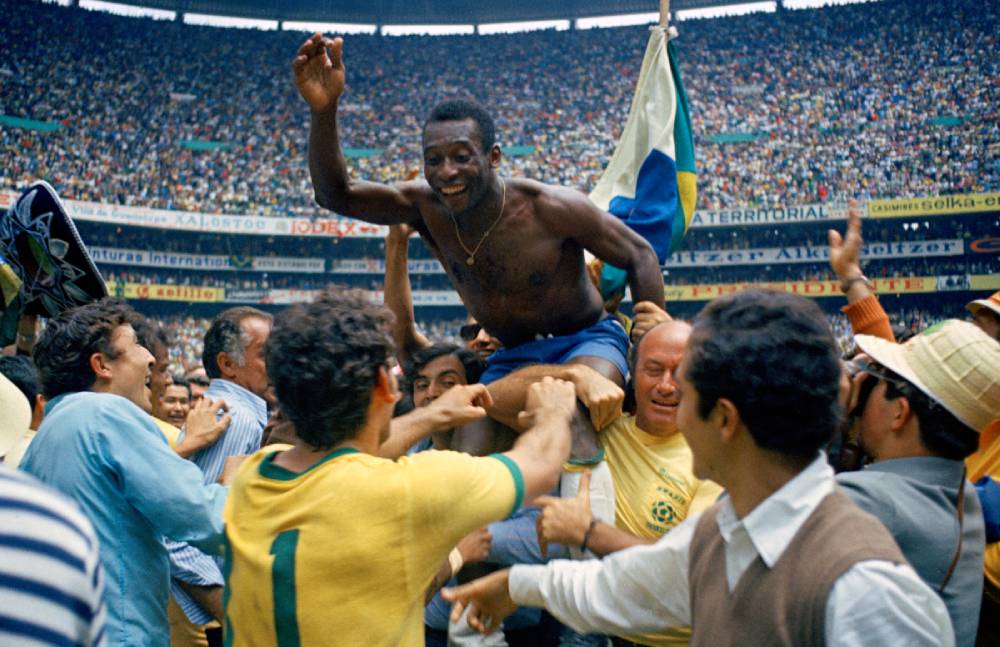
2. Pelé
His name is synonymous with the word “football.” Pelé, or Edson Arantes do Nascimento, captivated the world with his talent and carried Brazil on his shoulders, winning three World Cups in 1958, 1962, and 1970.
Throughout his career, he scored more than 1,000 goals for the Brazil national team, Santos, and the New York Cosmos.
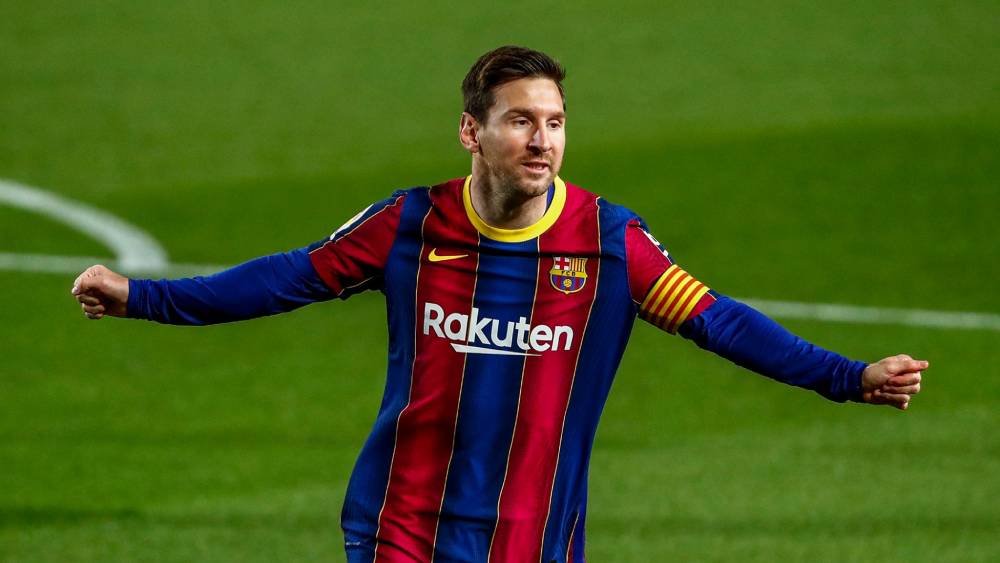
1. Lionel Messi
No one would have expected that in our era we would witness one of the greatest footballers of all time.
Our generation is lucky to have seen Lionel Messi in action, a truly extraordinary footballer. One of his achievements worth mentioning is scoring 91 goals in a single calendar year, surpassing Gerd Müller’s record of 85.
Overall, in his Barcelona career he scored 474 goals in 520 appearances. As for titles and honours:
One World Cup, four Champions League titles, 10 league titles, and seven Copa del Rey trophies, along with eight Ballon d’Or awards. With Paris Saint-Germain he won two league titles, while he also claimed an MLS title with Inter Miami. At the 2026 World Cup he led Argentina to the final. He played in three finals in total across the six World Cups he participated in. A deep bow to the greatest Leo!
Frequently Asked Questions (FAQ)
Is Lionel Messi the greatest footballer in history?
Based on his remarkable consistency over a full 22 years—primarily with Barcelona and Argentina, and to a lesser extent with Paris Saint-Germain and Inter Miami—he truly stands as the greatest. He won everything at both club and international level, and individually produced numbers that surpass human imagination. Beyond that, there are the countless moments of magic he gifted us from an artistic point of view throughout his career. His overall legacy places him above any other footballer.
Is Messi better than Maradona?
For die-hard Maradona fans around the world, especially in Naples, there is no one greater in history than Diego. Messi played more years at the highest level and won more titles, so by the end of his career he rightfully stands at number one. Maradona, however, remains the greatest personality the game has ever produced.
Is Messi better than Pelé?
In the debate between Pelé and Maradona, which dominated world football for years, the answer is “Messi”! Pelé won three World Cups, but he never played anywhere outside Brazil. He was never tested in more demanding conditions, whereas Messi performed at the highest level throughout his entire career.
Is Johan Cruyff the greatest footballer in history?
He is undoubtedly the most influential figure in the history of the sport. He contributed to its evolution both as a player and as a coach. The modern football we enjoy today, especially the philosophy faithfully followed by Barcelona, is very much a product of Cruyff.
What criteria are used to select the 100 greatest footballers of all time?
The strong imprint each of these 100 left behind. Longevity in individual performance and the winning of titles are the other key criteria, provided they also had an influential and leadership presence in the game.